
A utility token’s made by creating and rolling out a digital coin on a blockchain, this kind isn’t just cash, it unlocks tools, perks, or actions in an online space. Teams working on these tokens care more about actual uses, how rewards are set up, safety rules, legal fit, plus solid backend systems to run lasting Web3 apps and groups.
What is a utility token?
A utility token’s a digital thing built on blockchain tech, giving folks entry to features, deals, perks, decision power, or functions within one particular network. They typically pop up on established networks such as Ethereum, BNB Chain, Polygon, or Solana instead of being tied to stock or financial assets.
Key characteristics include
- Coming from just one kind of setup like a dApp store, a game world, or a software service
- For making payments, getting into votes, earning stakes, or grabbing loyalty perks, all within that system
- Run through code that sets how tokens move, rewards work, or supplies change
Learn why more Startups are moving towards Utility Token
Everyday situations where it actually works
Today’s utility coins work across many Web3 setups along with online ventures
- Get into paid content, member lists or private groups with special passes
- Purchase tokens inside apps work as cash for small tasks or sending money across borders without hassle
- Governance tokens let people weigh in on new features, set fees, or shape what the community suggests, using votes built into the system. Each choice flows from user input, not top down calls
- Rewards plus perks from staking, cashback deals, also referrals. Users create stuff that earns more. Playing brings bonuses too
These examples pop up in DeFi, gaming, or social apps, also in toolsets for creators and business software. Tokens here tie together users, coders, maybe funders, through common rewards
Utility token vs security token vs coin
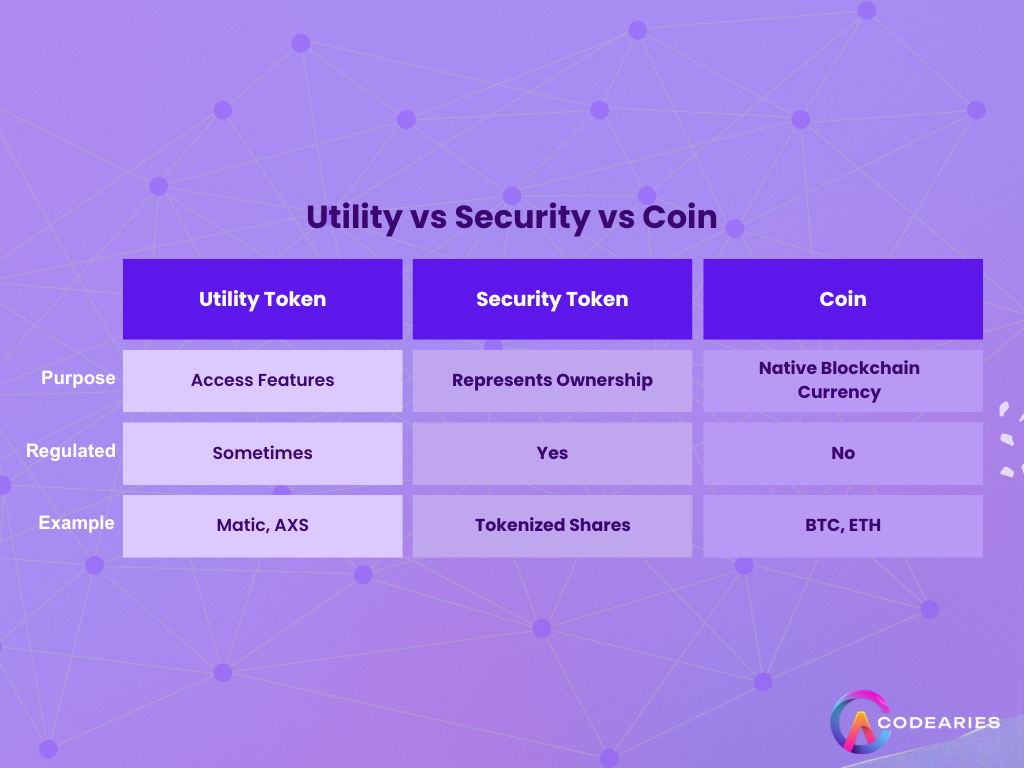
A coin such as Bitcoin or built in network tokens typically acts as the main money on a blockchain, handling fees while also holding value. Security tokens show proof of ownership or a share in earnings, commonly regulated like traditional investments across different regions. On the flip side, utility tokens are made mostly to unlock features and let users interact with services, rather than hand out business stakes, aiming at usefulness instead of returns but rules can still apply depending on how they’re used.
End to end utility token development process
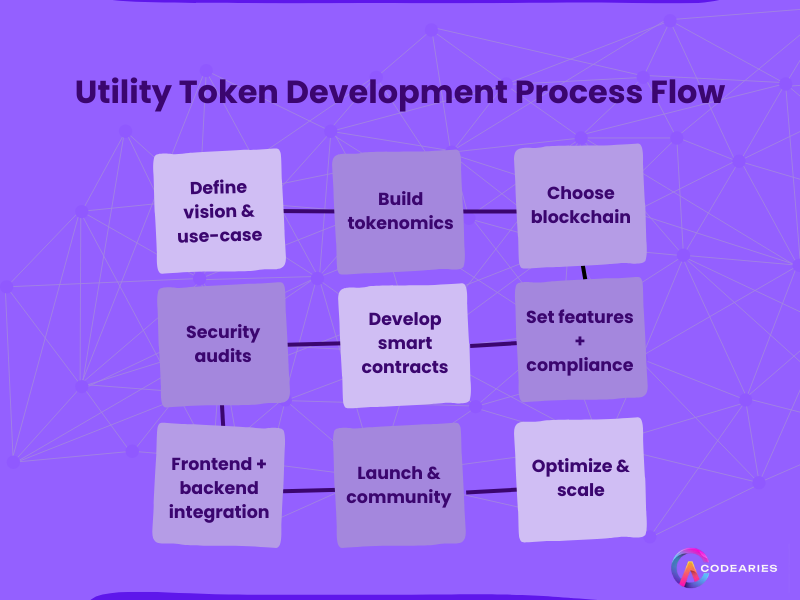
A full ride building a utility token usually moves through clear phases, starting with a thought, then shaping it up, getting things running, plus fine tuning after release
1 Define vision use case and value
Begin by spelling out the issue clearly, pair it with who’s actually using the thing, that way the token isn’t just tossed in later like an afterthought
- Explain what a user gains from having the token, something they’d miss out on if they didn’t have it
- Figure out if the service is about handling logins, managing money stuff, giving perks or some blend
- Trace where tokens go, users, platforms, partners, or treasury. Watch movement from one spot to another. See who sends them next. Follow the path through different hands. Notice shifts between groups over time
2 Design tokenomics and economic model
Tokenomics keeps things running, without it, value can’t last or stay steady over time
- Detect overall supply, set, rising, or shrinking with potential ways tokens get destroyed
- Give tokens to the team, then split some to investors, also set aside for the community fund. Send part to reward users throughout the network while adding rest into trading pools
- Set emission timelines along with vesting periods plus hold restrictions to prevent quick sell offs.
- Set up reward cycles, try staking that builds trust levels or gives perks based on how much rep you earn.
3 Choose blockchain platform and token standard
Picking a good chain means thinking about price, how it feels to use, safety stuff, also which networks you can connect to
- Ethereum along with EVM based networks using ERC20 or alike offer solid support plus access to tools, though gas costs can shift now and then
- BNB Chain Polygon Avalanche and other L2 or sidechains offer lower fees and faster confirmation while keeping EVM compatibility
- Solana or comparable fast networks rely on unique coding tools and rules, these fit well with rapid-action uses such as video games
4 Define feature set and compliance boundaries
- Choose what tools run on chain, like transfers or staking, or stay outside it, pick who controls access apart from that logic
- Put in place ID checks or permissions when required by local rules
- Check nearby rules about digital coins, so you don’t wrongly get tagged as a security
5 Smart contract architecture and development
Smart contracts set how tokens work, while defining supply limits along with extra features
- Go with known token types, ERC20, BEp20, or similar, to work smoothly with wallets and exchanges
- Go for tools that actually work like Hardhat or Truffle not just hype ones. Use OpenZeppelin’s code to stay safe. Hook up wallets without taking risks
- Set up pieces for minting, while also handling burns, include pauses where needed. Use blacklists if required, along with staking rules connected to decision making controls. Add fee systems tied to upgrades, but only when it makes sense
6 Security checks plus code validation
Security matters big time, glitches hit wallets hard, wrecking user confidence along the way
- Run basic checks inside, link pieces together, try on test network to make sure everything works fine
- Try outside checkers if cash permits, good for tricky stake setups or rule decisions
- Use solid methods, role limits, time locks, multi signature checks, for team controls plus tracking triggers
7 Frontend backend and ecosystem integration
Utility tokens grow strong once built right into actual apps
- Link web or mobile apps to smart contracts, try tools like web3js, ethersjs, or alternatives
- Set up sleek wallet steps, guide users through setup using clean visuals plus instant updates along the way
- Plug the token into payment steps, use it for subscriptions, unlock in game buys, manage control panels, also hand out rewards
8 Token launch community building and liquidity
How you start matters, community support shapes how fast it spreads, while trust keeps prices steady
- Set up even giveaway events, like discounts, token drops, missions, or switching old Web2 rewards
- Set up chat spaces on apps like Discord, Telegram or X, share clear guides, plans plus regular updates now and then
- Put up starting funds on certain DEXs or exchanges when trading fits the plan, make it clear the token’s worth comes from what it does, not price guesses. Use different platforms depending on where users are active instead of assuming one size fits all. Keep messages straightforward so people get how value builds over time through use. Shift focus from quick gains to real world function by showing practical cases early. Update regularly based on feedback rather than sticking rigidly to old promises
9 Post launch monitoring optimization and scaling
Once it’s live, attention turns to tracking performance data while updating tools
- Follow live wallet moves through network actions or user habits over time
- Adjust token rules through voting, keep things reliable without losing confidence
- Set up links between chains while adding fresh features as things evolve
Recommended tech stack for utility token development
A solid set of tools for today’s token systems usually means mixing blockchain platforms with backend services, cloud setups, alongside data tracking
Core blockchain layer
- Ethereum BNB Chain Polygon Avalanche or similar for EVM compatibility and tooling support
- Solana or similar fast networks when you need speed in certain cases
Smart contract development
- Languages such as Solidity for EVM and Rust for Solana supported by frameworks like Hardhat Truffle Foundry and anchor like tools on non EVM chains
- Leaning on trusted code, say, OpenZeppelin, to handle tokens, set user roles, or manage updates safely
Infrastructure and backend
- Run your own node or pick a provider for steady RPC connections plus catching events easily
- Small services managing tasks outside the blockchain, like verifying users, also sending alerts when needed while feeding data into analysis tools
Frontend and wallets
- Web tools like React or Vue, along with ethersjs or web3js, help talk to smart contracts
- Wallet integrations with MetaMask WalletConnect Coinbase Wallet and mobile friendly options
Monitoring and security
- Check block explorers to track big transfers, use alerts for spotting odd activity or manager moves
- CI setups run checks on code contracts, plus they scan for issues while cleaning up syntax
Utility token development cost overview
Prices change a lot based on how tricky the project is, where the team’s from, safety needs, or what legal path you take
- A basic ERC20 token, or something alike, built from common blueprints usually costs a couple grand, especially if small crews handle it without complex tweaks
- Fully built projects featuring detailed token setups, staking systems, decision making frameworks, tight tech links, security checks, plus organized rollouts usually cost anywhere from 20k up past 100 grand once pros and top devs get involved
Major expenses come from things like
- Smart contracts built with clear rules that handle staking, let users help run things, work across different blockchains, while staying flexible for updates
- Outside checks that test safety, along with hacking challenges where people find flaws for rewards
- Legal setup guidance plus checks across different areas rules
- Linking platforms with dashboards, while building outreach that pushes token use through tailored engagement loops
Common errors, what to watch out for, also smart moves that help
Mixing up token value rules, skipping solid safety steps also building something nobody actually wants that’s where most stumble.
- Tokens without a solid purpose or ones that are too complex, struggle to keep interest
- Bypassing rules might lead to legal trouble, particularly if tokens act like investments
- Putting too little into audits means hacks can happen, which wipes out money while wrecking trust
Top tips for projects
- Begin with what matters to the business and how people actually use things, skip the noise. Build the tech piece only once you know its role
- Stick to trusted tools, pick well checked code bases also go for safe, no fuss setups to shrink exposure
- Explain how tokens work using clear dashboards, share details through open docs, while letting the group help decide things together
What Codearies does when building utility tokens
Codearies works across the entire blockchain spectrum, guiding utility token projects from initial planning through launch while handling technical setup alongside real world deployment, so you’ve got support every step of the way. Instead of juggling multiple teams, one group manages your product’s backbone plus its public rollout. They don’t just build systems, they shape how people actually use them. From coding smart contracts to setting up user incentives, everything ties together under a single workflow. No extra fluff, no vague promises, just focused execution that adapts as your project grows
Codearies can support clients through the complete lifecycle
- Finding direction plus shaping plans: This is when the crew lines up company targets, maps how users move through the app, then figures out exactly what the token should do in the system so it actually works for people instead of just trading hot air
- Token supply rules, how rewards grow over time, ways fees work, plus who decides what, all built to last, stay fair, follow partner advice whenever it’s needed
- Smart contracts built on top chains: Like Ethereum based platforms or new growing systems, using safe code practices along with trusted, reviewed tools
- Security checks get built in from the start: Codearies sets up contract tests, manages the frontend wallet experience, keeps an eye on performance. Then they team up with marketing and community folks to handle listings, run campaigns, drive user growth
Since Codearies handles blockchain, AI, websites, apps, and promo work, one crew can link a client’s token to actual goods, live dashboards, data tools, also plans for scaling, no more letting the token float apart from everything else
Frequently asked questions
Q1 What’s a utility token when building it for your company?
A utility token built for your company lets you create a digital coin on the blockchain, this unlocks features, handles transactions, supports decision making, or gives incentives within your app. That way, people enjoy actual benefits, while you open fresh ways to grow involvement and income
Q2 What’s the price to create a utility token using Codearies?
Costs depend on chain selection feature complexity audits and integration scope but in general simple standard utility tokens are far cheaper than end to end platforms with staking and governance so Codearies starts with a discovery call and then shares a transparent budget and roadmap based on your needs.
Q3 Which blockchain and tech stack does Codearies recommend?
Codearies usually picks Ethereum like networks, like, Ethereum itself, Polygon, or BNB Chain, thanks to solid tools and deep markets. It builds with up to date tech, Solidity for smart contracts, Hardhat for testing, OpenZeppelin for security, React for front end, plus trusted node services. The specific combo shifts based on speed needs, budget limits, and what the project’s environment demands
Q4 Does Codearies assist with token structure plus rules friendly setup?
Yep, Codearies sets up token structures that keep rewards steady plus allow fair control. They team up with your lawyers to dodge setups risking tokens being seen as securities where it counts
Q5 After launching utility tokens, does Codearies give follow up help?
Codearies might handle updates after launch, check performance tweaks, adjust agreements when needed, bring in fresh tools like reward setups, multi network links, or user perks, not just to keep things running, but to match how your project grows and what folks actually want
For business inquiries or further information, please contact us at