
Creating an app for ride sharing involves linking people who drive with spare seats to others heading the same way, cutting down on expense, travel time, and pollution. Success depends on solid planning around features, building a system that grows smoothly as users join, plus understanding how much it’ll really cost to go from basic version to full release.
How a car pooling app works
A car sharing app links people giving lifts with others heading that way, using GPS based fares and chat inside the app. One side lists trips, times, and open spots, the other checks options, picks a match, reserves space. Money moves through the platform after rides happen, feedback follows, keeping things smooth and reliable
Main users work within the system
- Riders looking up trips then reserving them
- People behind the wheel sharing rides while picking up reservations
- User boss handling posts, cash stuff, also rules checks
Also learn How AI and Data Sharing Are Making Car Pooling Apps Smarter.
Key things a ride sharing app needs
Passenger app features
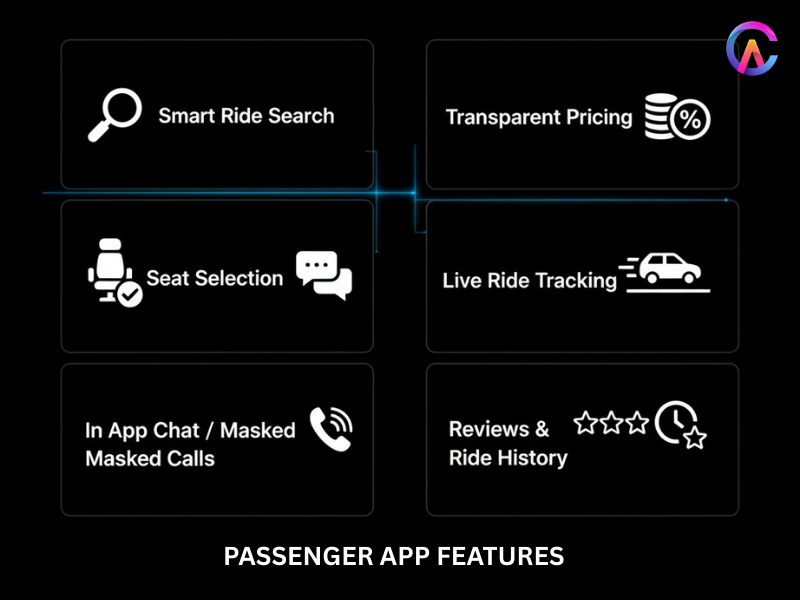
- Sign up, log in, then confirm your account using a number or email plus an ID scan to build confidence.
- Ride lookup starts with where you are, where you’re headed, when, what time, then toss in preferences like cost, extra miles, user score, or female only rides if that’s available nearby.
- Ride info page shows driver’s photo, vehicle specs, where you’re picked up plus dropped off, expected arrival moment along with price split overview.
- Choose your spot when you book, pick it up where it suits you best, talk through the app or use hidden calls.
- Paying by card, wallet or local options, once you book, get your receipt right away while refunds work automatically behind the scenes.
- Check scores, trips taken, top picks also places you keep going back to when heading out regularly.
Driver app features
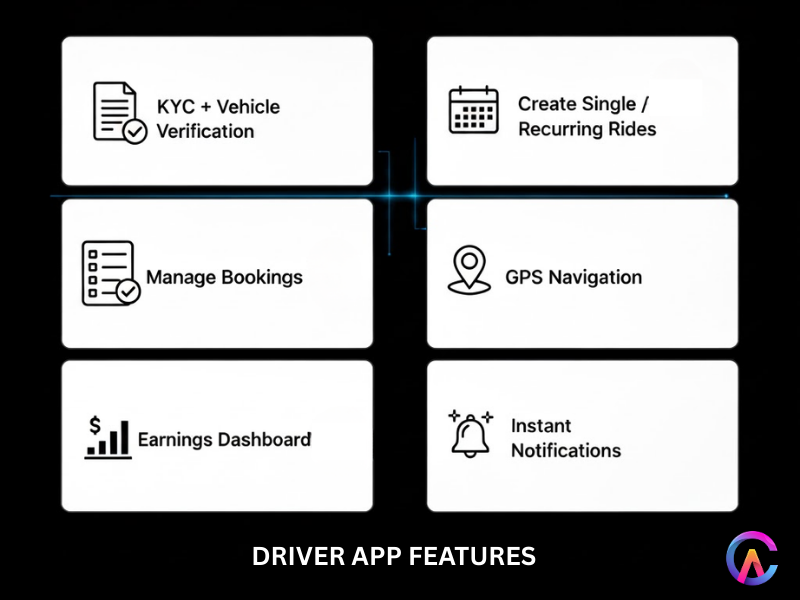
- New drivers checked through ID scan, their license looked at, also car details confirmed, keeps things safer while following rules
- Ride setup for one time trips or regular day to day travel, pick your path, reserve spots, set departure times, plus decide cost per seat
- Booking tool lets you pick or skip rides through chat. Move around the app to grab jobs. Start trips your way. Finish them when ready
- Earnings tracker shows finished jobs, future pickups, also cashout methods
Admin panel
- User control setup for people driving or getting rides, includes checking identities, dealing with conflicts, also help when needed
- Listings plus feedback control for ride services, vehicle checks, user ratings, or issue reports
- Pricing fees along with commission terms, special offers plus buddy invites
- Analyzing how full trips are, what they earn, also any safety issues, helps shape updates to services and rules
Design plus tools for an app that shares rides
Car pooling apps rely on live tracking, solid user pairing, plus safe money transfers, so their design should focus heavily on speed, protection, and room to grow
High level architecture
- App for riders on phones, also a separate one for drivers, both work smoothly. The team uses a website to manage things behind the scenes
- API part managing logins, connecting riders with drivers, reservations, costs info, also alerts
- Live updates on where you are, how your ride’s going, or messages, whenever you need them
- Data storage for users, plus ride details, along with route info, transaction records, or log files, also analytics data
Popular tools you might use
- Mobile frontends using native Android Kotlin or Java native iOS Swift or cross platform frameworks like React Native or Flutter
- Use Node.js or Python tools or stuff like them, to handle lots of tasks at once, plus run jobs behind the scenes without slowing things down
- Databases such as PostgreSQL or MongoDB, both handle location searches to find routes or nearby spots using tools that fit how far things are
- Live chats update instantly through WebSockets, while Socket.io helps messages flow smoothly without delays. On top of that, Firebase handles real time data push for alerts and conversations. Updates pop up right away thanks to these tools working together behind the scenes
- Geolocation using Google Maps API or Mapbox for mapping routing and ETAs
- PayPal, Stripe or local options, handle safe transactions when money’s shared around
- Use cloud setups like AWS or something alike, to handle scaling, balance loads, keep an eye on performance, also set up backups
Key architecture concerns
- Finding quick matches by checking how far, when delays happen, alternate routes, also whether seats are free each trip
- Firm safeguards, like check routines during crises along with tracking records
- Data privacy settings for place codes or financial details
Sharing ride apps: what it takes to build one, money wise
Guesses from several carpooling app handbooks suggest price swings a lot based on what functions are included, how broad the plan is, also where the builders are located
A basic carpooling app, ones that let people sign up, post rides, look for trips, book seats, pay easily, plus leave reviews, typically runs between $20K and $60K. Fancy versions? They include smart match systems, dynamic pricing, live data tracking, heavy duty server setups, those jump to $60K, sometimes way past $200K
Main cost drivers
- Feature depth comes with chat alerts, solid security tools also smart pairing options
- How many platforms, Android, iOS, web, and if they’re built specifically for one or work across several
- UI plus UX intricacy, screen count, alongside tailored design tasks
- Area based pay per hour plus how skilled the team is when building a ride share app
Ways to make money from ride share apps
Car pooling along with ride sharing apps often mix several ways to earn money
- Fee taken from every ride that connects a rider with a driver
- Fees drop if you drive a lot, or ride often, with special access based on how much you use it, sort of like getting faster pickups when you’re always online
- Fees for listings or boosted trips help you show up more in the app
- Working together with big companies, their work sites, or gatherings, where tools manage planned rides people share
What Codearies does when you’re making a ride share app
Codearies steps in from start to finish when building a carpooling app, guiding you through design, turning ideas into reality, getting the product live, while making sure it grows alongside your target audience and revenue strategy.
Once we figure out who you’re building for, Codearies looks at how people move around their city, what rules apply, so we can shape real use cases. That info turns into straightforward paths users will take, core functions, ways to earn revenue, first for your basic ride share version, then beyond. Our design team crafts rider and driver apps along with backend systems that make listing trips, finding matches, reserving seats, and monitoring progress feel smooth. Safety stays front and center via identity checks and open profile details that build confidence from the start
Codearies builds ride share apps using up to date tech setups. Their backend systems grow as you scale, working alongside map tracking, payments, plus chat features, so users get smooth booking and routing without hiccups. Once live, they keep tweaking things, speed fixes, usage reports, tool upgrades. New stuff rolls out now and then, like group rides for companies, paid plans, or smart matching that boosts shared trips and earnings.
FAQs
Q1 So you wanna kick off a carpooling app with Codearies, where do you begin?
The first move’s a chat, Codearies checks your car share idea, local rules, cash limits then maps out a step by step plan starting small, building up to full ride sharing tools
Q2 What’s the price to build a car sharing app using Codearies?
Carsary’s pricing fits typical market rates for ride share apps, basic versions kick off around twenty grand, full featured cross platform builds cost more. They’ll send you a clear quote once they know your needs and what matters most
Q3 What tools does Codearies use for ride-share apps?
Codearies usually picks today’s mobile tools either built in ones or shared across platforms. Instead of that, they team them up with backends such as Node.js. Alongside, there’s either a classic database or a flexible NoSQL option tagged in. On top of it, features like maps pop up, payment systems hook in, plus live chat runs smooth. Each pick fits how fast things should work and what you can spend
Q4 Can Codearies implement advanced safety and matching features?
Codearies could include tools like profile verification, user ratings, emergency info setup, match by route tech, plus live location updates, features folks now expect on rideshare or carpool apps
Q5 Is there help from Codearies after launching a car share platform?
Codearies gives you updated tools to watch how things run, while helping your carpooling app grow safely. It handles extra people and trip paths without breaking a sweat. New work commutes? No problem. Shifting to city to city rides? That’s covered too, thanks to smart upgrades built in along the way
For business inquiries or further information, please contact us at