
Creating a live selling app similar to Whatnot involves mixing instant video streams, live bidding, messaging, online shopping, also group interaction into a single tool, so makers can display items then sell them fast as people tune in and place bids. For your shopping livestream app to work well, you need quick response streaming, an easy checkout path, solid oversight tools plus backend systems ready for sudden jumps in users watching at once or making purchases
To understand what is whatnot? and the rise of live social selling. Read this Blog.
How a live selling platform works
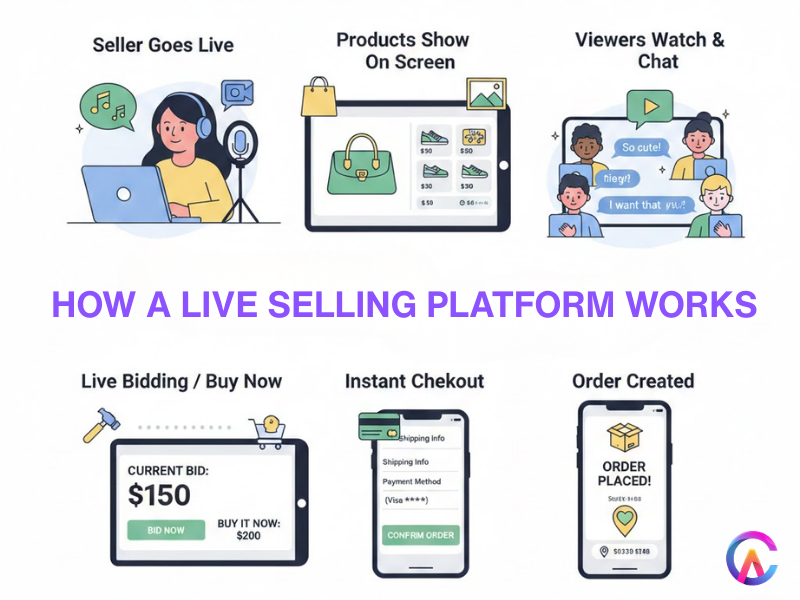
A live selling setup helps vendors go on air, showcase items, host quick sales or bidding rounds, while folks viewing can reply instantly, quiz the seller, offer prices, then buy right there. Off camera, it handles streaming tech like signal processing, format conversion, smooth broadcast, tracks stock levels, updates costs, processes transactions, follows up with data, all linked smoothly behind the curtain
Core actors
- People jumping on live sales often snap up items when hosts say go, either by bidding or grabbing them straight away
- Sellers that plan events keep track of stock while running real time sales
- Staff handling category setups, fee issues, while keeping rules followed
Key things needed for a live shopping app like Whatnot
Buyer side features
- Sign up fast with simple steps, then pick what you like to see stuff tailored just for you, broken down by topic or who’s hosting
- Watch live streams, find hot shows, catch coming events by category, get alerts if your preferred creators start broadcasting
- A top notch video player that runs smooth, no lag. It shows product cards right in the stream, bidders can watch action unfold in real time. People place live offers while viewing. There’s also a quick purchase button for fast checkout
- Live chat replies with instant surveys, let shoppers quiz hosts while building connections on every stream
- Tap once to buy, your info’s stored, so it’s quick. Pick how you pay from several ways instead. See past buys anytime after that. Follow your package every step along the way
Seller features
- Seller sign up checks along with shop creation including logos, bios, types of goods, plus rules
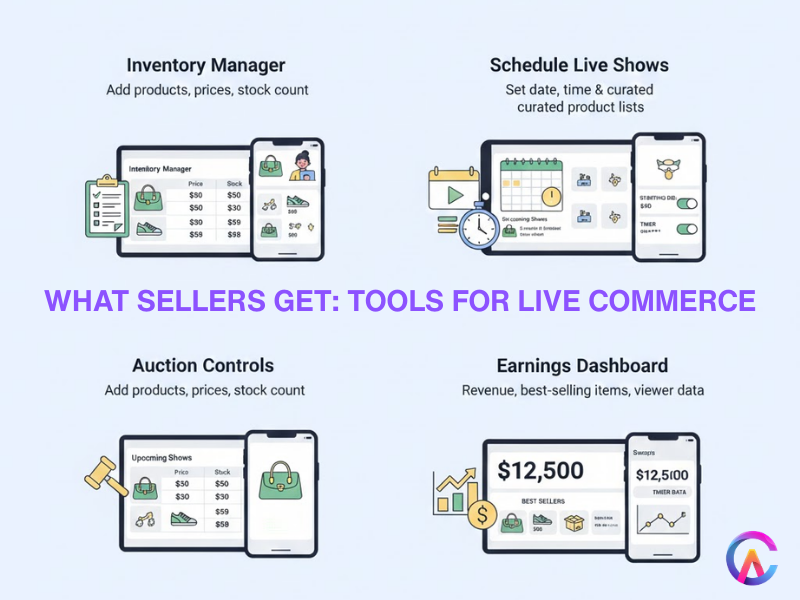
- Keep your product list updated, add pictures, details, prices, inventory levels, also labels that fit live events
- Set up live event timings using ready made layouts, while linking items plus setting opening prices early
- Start prices set the stage. Then bids rise step by step. A timer runs down, no delays. The hidden floor price stays secret till met. Winners pop up once it’s done. No manual picks, the system decides fair. Orders form right after, no extra clicks
- Dashboards track earnings by performance, spotting best selling items while revealing viewer trends
Admin features
- User seller plus tools for moderating content, like banning, muting, handling reports, queuing issues, with systems to manage disputes
- Category handling charges follow guidelines on commissions while promotional efforts run separately
- Keep an eye on streams to catch glitches or failed payments, this keeps things running smooth
Tools and setup behind live shopping apps
A Whatnot style platform works like live video plus shopping online, so the setup needs fast response times, handles many users at once, while keeping payments safe and reliable.
Live feeds plus instant updates
- Go with WebRTC, or something like it, when you want super fast video chats. Because bidding and quick replies demand near instant feedback, speed matters most here. Pick tools that cut delays way down. Real time feels smoother when lag barely exists. Interaction flows better without waiting around
- Use WebRTC or low latency HLS alongside adaptive bitrates, this way people on slow or fast connections see steady video without timing issues during live bids
- Rely on CDNs or streaming platforms to handle encoding, storage, plus reach across regions when traffic jumps
Online shop systems along with support tools
- Microservices split things like live chats, product listings, user orders, payment handling, also alerts into separate pieces
- REST or GraphQL APIs that let web and mobile apps access functions, using tokens to verify users while handling roles separately
- Relational databases handle orders, payments, then payouts, meanwhile, searchable shops keep product info handy along with show details
- Payment gateways hook up with payout systems that handle different currencies, while tax rules apply across borders, commissions divide like a marketplace would.
Client programs or dashboards
- Apps or websites made using up to date tools, these support live video, pop up chats, scrolling item lists, also let users bid in real time
- Live updates for chats and alerts through web sockets or cloud based message tools
Non functional requirements
- Firm protection for payment accounts, along with fraud prevention that works hand in hand with systems filtering out harmful material
- Watch systems using logs, while checking performance stats alongside traces, to manage speed issues instead of just failures
Development cost for a live selling platform like Whatnot
Price changes based on how big the project is, number of users at once, what devices it works on, also which tools need to connect
Industry numbers for online sales plus live video setups show a simple version, just live feed, item display, messaging, basic payment, usually costs between $40k and $80k. A step up, with bidding features, user tailoring, phone apps, data tools, might run $80k to $150k or higher. Full scale systems meant for worldwide use, meeting varied legal rules, linking deeply with other software, often go past $200k, particularly if the stream setup or auction mechanics get tricky
Biggest cost drivers
- Pick your streaming setup along with how many viewers each event needs to handle
- Web, Android, iOS, each with unique client setups, along with special tooling made for creators
- Depth in auctions means custom insights, also smart tools that work on their own
- Ongoing infrastructure setup, plus media storage fees, along with CDN charges and backup help expenses
What Codearies does to help you set up a real-time sales system
Codearies might handle everything tech wise when setting up a live shopping system, guiding your project from concept to launch, shaping an app or site that fits your audience, using today’s streaming tools alongside solid online sales tech
In discovery plus planning, Codearies teams up with you to pin down who’s buying, how it earns, what rules apply, then turns those into a straightforward plan for features real users need, whether they’re selling, shopping, or managing. Instead of cluttered layouts, their design crew builds clean screens so viewers find videos, items, and talk boxes fast across phones and browsers, matching your look while pushing action
On the tech end, Codearies sets up fast live video streams using current standards while also building safe server systems that handle products, stock levels, sales data, and payments, linking it all smoothly for a real time shopping flow. Once things go live, they help fine tune speed, track user behavior, and roll out new functions like rewards setups, smart item suggestions driven by AI, or tools for streamers, all helping your platform expand alongside audience growth and income goals
FAQs
Q1 What is the first step to start a live selling project with Codearies?
The initial phase involves a chat, Codearies checks out your market focus and how you plan to run live sales, then maps a gradual path starting with a basic version, building up toward a complete streaming storefront
Q2 What’s the price to create a live shopping app using Codearies?
Prices change based on tools, systems, and size, often similar to what you’d see with tailored online stores or streaming setups, basic versions start around a few grand, while bigger setups across multiple areas can hit six digits, then Codearies sends a clear breakdown once they know what’s needed
Q3 What tools does Codearies use for live shopping apps?
Codearies uses today’s frontend tools, web or mobile, with a backend that grows as you do, tied together by fast data flow systems like WebRTC or ultra low delay HLS through CDNs, while weaving in messaging features alongside payments secured just right for your speed and cost goals
Q4 Could Codearies handle live auctions along with instant messaging?
Yes, Codearies sets up live auctions featuring countdown clocks, instant bids, skip the line purchase options, built in messaging plus emoji responses, letting shoppers talk to vendors while racing to grab goods kinda like on Whatnot
Q5 Is help available after launch for Codearies’ live shopping tools?
Codearies keeps an eye on upkeep while rolling out fresh tools, think better streaming stats views plus income boosting upgrades, to help your livestream store grow steadily without hiccups
For business inquiries or further information, please contact us at