
Taxi apps have completely transformed how we get around cities ever since Uber and Ola introduced their on demand services. Fast forward to 2026, and the industry is entering a groundbreaking phase, driven by electric vehicle fleets, smart AI pricing algorithms, and self driving ride hailing systems. These innovations are coming together to create efficient, sustainable, and passenger focused mobility solutions that cut emissions, reduce costs, and offer unmatched convenience. As urban areas struggle with traffic jams, pollution, and limited infrastructure, taxi apps are stepping up as intelligent solutions that merge cutting edge technology with real world benefits.
You check this blog to learn how taxi apps are build.
This thorough exploration dives deep into each trend, covering everything from technology implementations and economic factors to challenges, global case studies, and how businesses can thrive with expert partners like Codearies.
EV Fleets Electrifying Taxi Operations
Electric vehicles are at the heart of the sustainable evolution of taxi apps, as battery powered fleets take the place of fossil fuels, providing zero emissions, lower costs, and an enhanced experience for riders. With battery prices dropping below $100 per kWh and charging infrastructure expanding, full scale adoption is becoming a reality.
Key EV fleet technologies and strategies include
- Dedicated EV Models: Compact and efficient vehicles like the Tesla Model 3, Rivian R1T, BYD e6, and Hyundai Kona Electric are designed for high usage, short trips, and quick charging.
- Wireless and Ultrafast Charging: Inductive road charging stations and 350kW DC fast chargers can recharge 80 percent of a vehicle’s battery in just 15 minutes, minimizing downtime.
- Battery Health AI: Predictive maintenance keeps an eye on battery degradation, schedules optimal charging, and extends battery life beyond 500,000 kilometers.
- Vehicle to Grid (V2G): Idle electric vehicles can send power back to the grid during peak times, helping to stabilize renewable energy sources and create new revenue streams for operators.
- Fleet Management Platforms: Real time tracking, vehicle swapping, and dynamic assignment ensure that 95 percent of vehicles are utilized effectively.
Global leaders are making waves in the electric vehicle (EV) scene. Uber Comfort Electric is rolling out an impressive fleet of 50,000 EVs across 50 cities, while Didi Chuxing dominates China with the largest EV taxi fleet, boasting over 2 million vehicles. In India, Ola Electric is producing affordable scooters and cars tailored for markets with a high density of two wheelers, and in Europe, Bolt is pushing for EV adoption in cities like Tallinn, Paris, and London.
The numbers clearly favor EVs. With fuel savings hitting 60%, maintenance costs dropping by 40%, and tax incentives enhancing profitability, it’s a win win. Riders are treated to a quiet, smooth ride with instant torque and the added perk of HOV lane access, making EVs even more appealing.
AI Pricing Dynamic and Transparent Fare Models
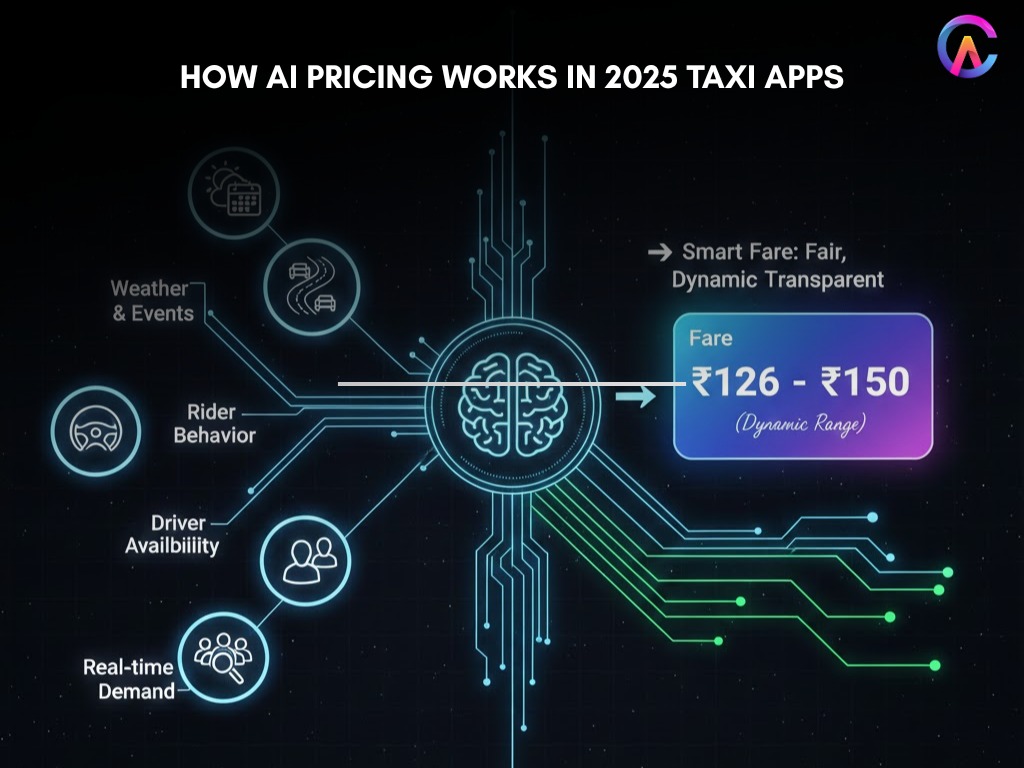
When it comes to pricing, AI is shaking things up with dynamic and transparent fare models. Gone are the days of static surge pricing, now, sophisticated real time algorithms are at play, balancing supply and demand, rider behavior, and other external factors to ensure optimal matching and revenue.
Here are some of the advanced AI pricing features:
- Demand and Supply Forecasting: Machine learning helps predict surges from events, weather, rush hours, concerts, and social media buzz, allowing drivers to position themselves strategically.
- Personalized Dynamic Pricing: Riders see fares tailored to their loyalty, trip history, payment method, and even their willingness to wait or share a ride.
- Transparent Yield Management: Similar to airlines, this approach optimizes revenue by offering discounts during low demand periods while capturing peak pricing when demand is high.
- Carpool and Subscription Pricing: AI calculates savings for shared rides, offers unlimited monthly plans, and encourages off peak travel.
- External Factor Integration: Fares are dynamically adjusted to account for tolls, traffic, insurance, fuel costs, and carbon taxes.
Platforms are innovating at a rapid pace. UberX Share leverages AI for carpool pricing, while Lyft Priority smartly balances wait times and fares. In India, Rapido uses hyperlocal AI for auto rickshaws, and Ola Micro provides budget friendly options. In Latin America, services like 99 and InDriver allow riders to negotiate fares within AI suggested ranges.
AI pricing can boost revenue by 25%, cut rider drop offs by 30%, and enhance driver satisfaction through more predictable earnings.
Autonomous Ride Innovation Driverless Taxi Future
Autonomous vehicles are set to revolutionize the industry by eliminating driver costs, operating around the clock, and opening up new possibilities from robotaxis to goods delivery, transforming the way we use taxi apps.
Here are some breakthroughs driving this autonomy:
- Level 4 and 5 Autonomy: These vehicles can navigate complex city streets without any human help, thanks to advanced technologies like LiDAR, radar, cameras, and neural networks.
- Swarm Fleet Orchestration: AI manages thousands of autonomous vehicles, optimizing their routes, reducing unnecessary travel, and effectively dealing with challenges like construction or pedestrians.
- Sensor Fusion and HD Mapping: By combining data from multiple sensors, we can create incredibly accurate 3D maps that are updated in real time through fleet learning.
- Safety and Redundancy: With triple backup systems, remote human intervention, and extensive simulation training, these vehicles surpass human safety standards.
- Passenger Experience AI: In car companions take care of entertainment, navigation, comfort, and emergency responses.
Waymo One is leading the charge with 50,000 paid rides each week in Phoenix, San Francisco, and Los Angeles. Cruise is operational in San Francisco, while Baidu Apollo Go serves ten cities across China. Tesla’s Robotaxi Network is set to launch in 2026 with millions of vehicles on the road. Zoox and Motional are currently testing purpose built robotaxis that don’t even have steering wheels.
With autonomy, costs can be reduced by 70%, enabling 24/7 service and opening up new markets such as transportation for the elderly, late night rides, and expansion into suburban areas.
Convergence Ecosystem Impacts and City Integration
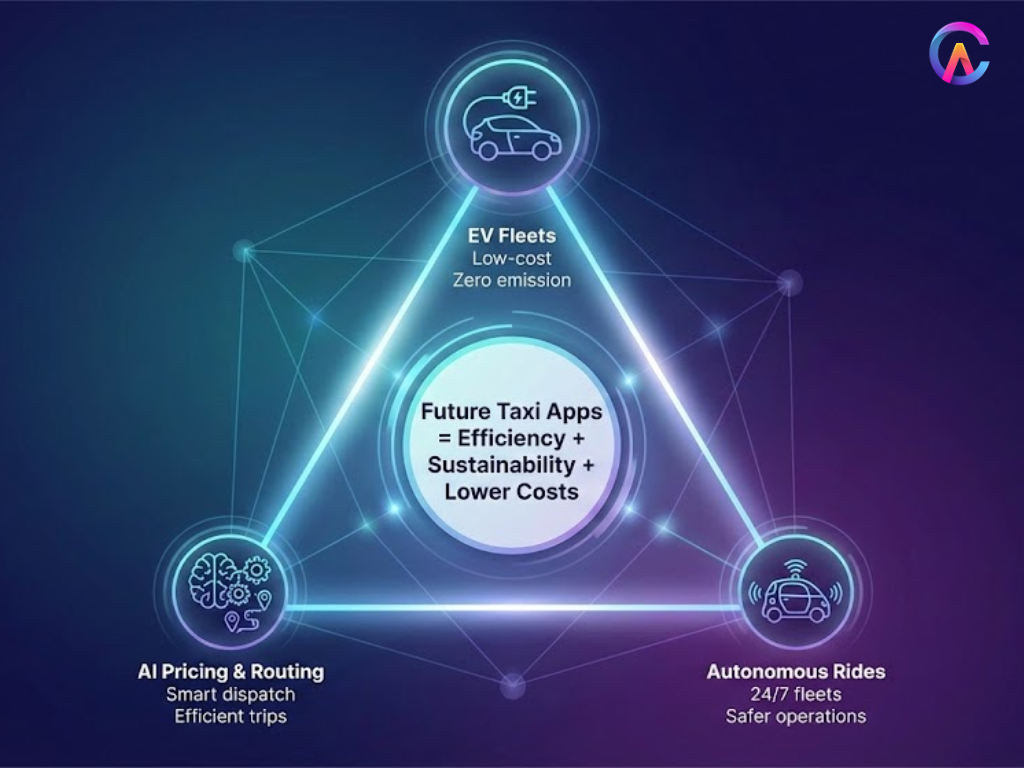
Trends are coming together in powerful ways. AI is managing electric vehicle (EV) robotaxi fleets alongside micromobility options like e-bikes, scooters, and public transit, all wrapped up in user friendly multimodal apps. Meanwhile, blockchain technology is ensuring the authenticity of carbon credits and ride histories, while the Internet of Things (IoT) is fine tuning charging and maintenance processes.
Cities are reaping the rewards with less congestion, a 20% reduction in emissions, and developments focused on transit. The economic landscape is shifting, creating new jobs in areas like autonomous vehicle oversight, charging infrastructure, and fleet management, although some drivers may find themselves displaced, highlighting the need for reskilling programs.
Passengers stand to gain from lower fares, safer rides, and smooth door to door travel experiences.
However, there are challenges to tackle, including getting regulatory approval, building public trust in safety, ensuring data privacy, and making necessary infrastructure investments. Solutions could involve phased testing partnerships and clear safety reporting.
How Codearies Powers Your Taxi App Revolution
Codearies is at the forefront, providing comprehensive technology for the next generation of taxi platforms, expertly handling EV AI pricing and autonomy.
Solutions include
- EV Fleet Orchestration: All in one platforms for scheduling charging, vehicle to grid (V2G) interactions, predictive maintenance, and catering to rider EV preferences.
- AI Pricing Engines: Tailored machine learning models for dynamic, personalized, surge free, and transparent fare optimization.
- Autonomous Vehicle Integration: APIs for seamless orchestration and fallback systems for hybrid human and autonomous vehicle fleets.
- Multimodal Super Apps: Integrated interfaces that combine taxi services, micromobility options, public transit, and delivery.
- Sustainability Analytics: Real time tracking of emissions, integration of offsets, and green KPI dashboards.
- Global Scalability: Solutions that comply with various regulations, markets, and vehicle types.
From the initial concept to millions of rides, Codearies is building taxi apps that are ready for the autonomous, electric, AI driven future.
Frequently Asked Questions
Q1: How does Codearies help EV taxi fleets become profitable?
By integrating AI, we can reduce costs by 40%, increase utilization by 25%, and tap into incentives for the best return on investment.
Q2: Can AI pricing be effective in regulated fare markets?
Absolutely, Our transparent and compliant models adjust to fare caps while maximizing revenue through increased volume and customer loyalty.
Q3: When can we expect autonomous taxis to go mainstream?
We anticipate that Level 4 fleets will start scaling between 2026 and 2028, with full robotaxi dominance expected by 2030 in cities that have approved them.
Q4: How does Codearies assist two wheeler taxi markets?
We offer specialized AI for routing, battery optimization, and rider matching for scooters, autos, and bikes.
Q5: What sustainability features does Codearies offer?
We provide carbon dashboards, vehicle to grid (V2G) capabilities, EV mandates, offset partnerships, and tools for reducing emissions across multiple modes of transport.
For business inquiries or further information, please contact us at