
Website security has evolved from just a technical checkbox to a crucial skill for business survival. As we head into 2026, cyber threats are becoming more sophisticated, with AI powered attacks and vulnerabilities in the supply chain and human engineering. The average cost of a data breach is projected to hit 4.88 million dollars, increasing by 15 percent each year. Small businesses are particularly at risk, with many shutting down permanently after a single breach, facing website downtime and a loss of trust that leads to immediate revenue loss. It’s essential to master the protections needed to safeguard digital assets, customers, and revenue, while also ensuring business continuity and compliance to future-proof operations.
HTTPS Encryption Foundation Modern Websites
HTTP Strict Transport Security (HSTS) is a game changer, enforcing HTTPS everywhere to prevent downgrade attacks and SSL stripping. This protects 95 percent of web traffic from being exposed to malicious interception. By 2026, TLS 1.3 will be mandatory, offering perfect forward secrecy with ephemeral keys, meaning that if a session is compromised, an attacker won’t be able to decrypt past or future traffic. Browsers will mark HTTP sites as “Not Secure,” instantly destroying trust and causing bounce rates to soar by 40 percent.
Certificate transparency monitoring is vital in preventing rogue certificates from malicious actors who might impersonate legitimate sites. Automated certificate management through services like Let’s Encrypt and the ACME protocol allows for free SSL rotation with zero downtime. HSTS preloading in browsers like Chrome, Firefox, and Safari ensures maximum protection is achieved effortlessly.
With free SSL certificates being rotated automatically, browsers establish trust instantly, which can improve SEO rankings since Google prioritizes HTTPS sites. This leads to a 20 percent traffic advantage that can be secured permanently, ultimately boosting conversion rates as security and trust signals work together harmoniously.
Web Application Firewall Essential Protection Layer
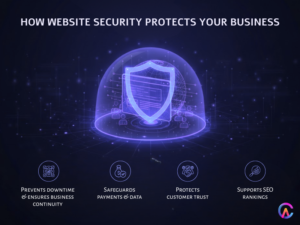
Cloudflare, AWS Shield, and Imperva WAF are all about blocking the OWASP Top 10 vulnerabilities like XSS, SQL injection, CSRF, and broken authentication. They use real time machine learning and threat intelligence to tackle zero day exploits and sophisticated attacks on the spot. With rate limiting and bot management, they can tell the difference between genuine traffic and malicious crawlers, while DDoS protection can handle up to 100 Gbps of volumetric attacks, ensuring that websites stay up and running even during crises, keeping revenue safe and uptime at a guaranteed 99.99 percent.
Custom rulesets are designed to block specific attack signatures and address industry specific threats, particularly in healthcare, e-commerce, and fintech, targeting vulnerabilities with precision while minimizing false positives. This way, legitimate traffic flows smoothly, optimizing conversions while maintaining top notch security performance.
WAF analytics help uncover attack patterns, their geographic origins, and types, allowing for continuous improvement of the security posture. This proactive approach ensures that emerging threats are neutralized before they can cause harm, guaranteeing business continuity.
Access Control Zero Trust Architecture
The zero trust model operates on the assumption that a breach has already occurred, requiring continuous verification of identity and device context before granting access. This approach eliminates the outdated implicit trust of legacy perimeter security, which has proven to be ineffective in today’s cloud and hybrid environments. Multi factor authentication (MFA) with phishing resistant hardware keys, following the FIDO2 WebAuthn standard, achieves a remarkable 99.9 percent prevention rate against account takeovers, completely eliminating risks from password spraying and brute force attacks.
Role based access control (RBAC) adheres to the least privilege principle, granting granular permissions to API endpoints and admin panels while keeping customer data segmented. This effectively contains insider threats and lateral movement, ensuring that even if a single account is compromised, it won’t jeopardize the entire infrastructure or expose sensitive information to malicious actors.
Session management employs secure cookies with HttpOnly, Secure, and SameSite attributes, along with CSRF tokens, rotation, and timeout policies to thwart session hijacking and fixation attacks. This approach guarantees a seamless user experience while implementing multilayered security that is reliable and effective in production environments.
Input Validation Output Encoding OWASP Compliance
Client side validation can be bypassed by malicious actors, making server side validation, mandatory whitelist filtering, parameterized queries, and prepared statements essential to completely prevent SQL injection. XSS attacks are neutralized through output encoding, with context aware HTML, JavaScript, and URL JSON escaping libraries like DOMPurify ensuring that marked safe content is rigorously sanitized, rendering attacker payloads harmless in an instant.
When it comes to file uploads, validation is key. This includes MIME type scanning, virus scanning, size restrictions, and renaming uploaded files to prevent directory traversal and the execution of malicious scripts disguised as legitimate files. For API security, using OAuth2, OpenID Connect, and JWT Bearer tokens with scopes and claim role based authorization, along with rate limiting, helps prevent API abuse and effectively protects against denial of service attacks.
Content Security Policy Attack Surface Reduction
Content Security Policy (CSP) is crucial for reducing the attack surface. CSP headers restrict the origins from which resources can be loaded and limit inline scripts and styles, significantly reducing the risk of XSS attacks, whether reflected, stored, or DOM based. This dramatically narrows the execution scope for potential threats. With nonces and hashes, developers gain granular control over which legitimate scripts are allowed, while automatically blocking any malicious payloads. Reporting endpoints and developer dashboards provide visibility into attack attempts, enabling continuous improvement.
Implementing a Strict Dynamic CSP with nonce based script loading allows legitimate dynamic content while automatically blocking any scripts injected by attackers. Modern browsers like Chrome, Firefox, and Safari enforce CSP, ensuring maximum protection is achieved with minimal complexity in implementation.
Secure Headers Modern Browser Protection
The X Frame Options header helps prevent clickjacking by blocking iframe embedding from malicious sites, effectively stopping phishing overlays in their tracks. Meanwhile, the X Content Type Options header enforces MIME type rules, ensuring that any malicious content trying to masquerade as legitimate files is blocked, which dramatically enhances browser security.
The Referrer Policy is all about controlling the leakage of referrer information, protecting sensitive URLs, and minimizing cross site tracking. This not only helps with privacy compliance under GDPR and CCPA but also builds user trust and significantly reduces bounce rates.
With the Permissions Policy, you get granular control over website permissions for features like camera, microphone, and geolocation. The default setting is to deny access, ensuring maximum protection while providing users with intuitive controls that create a seamless experience.
Regular Security Testing Vulnerability Management
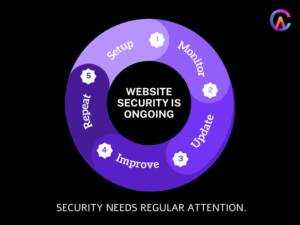
Regular security testing and vulnerability management are crucial. We conduct penetration testing and quarterly vulnerability assessments using tools like OWASP ZAP and Burp Suite, along with automated scanning in our continuous integration pipeline. This shift left security approach allows developers to receive immediate feedback, prioritize remediation, and proactively fix vulnerabilities, preventing production incidents entirely.
For dependency scanning, we utilize npm audit, Snyk, and Dependabot to keep third party libraries secure and guard against supply chain attacks. We’ve eliminated vulnerabilities like Log4Shell and SolarWinds, maintaining code health by automatically patching dependencies, which maximizes developer velocity and optimizes security.
Lastly, our static application security testing (SAST) with tools like SonarQube and Semgrep, combined with dynamic analysis (DAST) and production monitoring, creates a multilayered defense. This depth of protection effectively neutralizes sophisticated attacks, ensuring that a single layer failure won’t lead to a catastrophic breach.
Secure Development Lifecycle DevSecOps Integration
When it comes to shift left security, developers are the ones who ensure code quality and set up security guardrails. They utilize IDE plugins, pre commit hooks, linters, and security scanning tools to create an automated developer experience. This way, security is seamlessly integrated into coding workflows, making it frictionless and perfectly maintained.
For infrastructure code security, tools like Terraform and CloudFormation come into play. They help with IaC scanning to prevent misconfigurations, control cloud sprawl, and detect compliance drift, all while automatically remediating issues. This ensures that environments are consistent and that production maintains an identical security posture without a hitch.
When it comes to container security, following Docker best practices is key. This includes image scanning, vulnerability management, and runtime protection. Solutions like Aqua, Sysdig, and Prisma Cloud work to secure containerized environments and effectively protect microservices and Kubernetes clusters, ensuring that cloud native applications remain safe, scalable, and reliable.
DDoS Protection Business Continuity Guaranteed
Layer 3, 4, and 7 DDoS attacks can be quite the challenge, whether they’re volumetric, protocol based, or application layer attacks. These sophisticated multi vector attacks can overwhelm infrastructure, but with services like Cloudflare, AWS Shield, and Akamai, you can absorb and mitigate them with enterprise grade protection that can handle up to 100 Gbps. Both SMEs and larger enterprises can rest easy knowing they’re protected equally effectively.
With always on DDoS protection, proactive threat intelligence, and global scrubbing centers, attacks are absorbed at the edge of the network, leaving origin servers untouched. This ensures 100 percent uptime, protecting revenue and assuring business continuity even in crisis situations, while restoring customer trust and confidence immediately.
Backup Disaster Recovery Business Resilience
Immutable backups and air gapped storage are essential for defeating ransomware. With encryption and verified restore points, daily incremental backups can achieve an RPO of just 15 minutes and an RTO of 4 hours, guaranteeing enterprise grade resilience and business continuity during crises, significantly minimizing revenue loss.
Multi region geo redundant storage active active failover zero downtime deployments global CDN content acceleration user experience consistent worldwide performance optimized perfectly availability zones regions infrastructure resilient failures contained isolated effectively.
Compliance Privacy Regulations Enterprise Ready
GDPR, CCPA, LGPD, data minimization, privacy by design, consent management, automated data subject rights, DSAR fulfillment within 72 hours, cookie consent banners, and granular controls for blocking first and third party trackers. All of this helps build user trust, reduce bounce rates significantly, and improve SEO rankings while strengthening compliance signals.
We also have SOC2 Type II, PCI DSS, and ISO 27001 audit ready controls with continuous monitoring, evidence collection, and automated compliance to eliminate fatigue. Certification is maintained effortlessly, and we pass regulatory scrutiny with confidence, securing institutional partners and enterprise contracts for the long haul.
Website Performance Security Synergy
There’s a symbiotic relationship between security and performance, slow, insecure websites get abandoned in a heartbeat, while fast, secure sites build trust and generate revenue consistently. With HTTP2 and HTTP3 multiplexing, connection coalescing, and TLS 1.3 0-RTT, we achieve a perfect balance of optimized performance and security, enhancing user experience and dramatically lifting conversion rates.
Edge security through Cloudflare Workers allows for serverless functions and security logic execution, all within a 50ms global edge network. Our origin servers are protected, performance is optimized, and latency is minimized, ensuring a consistent, lightning fast, and secure user experience worldwide.
Website Monitoring Alerting Proactive Defense
With real user monitoring (RUM), synthetic monitoring, uptime monitoring, and error tracking, we can detect performance degradation and alert you instantly. Developer dashboards and executive summaries quantify business impact, allowing for effective prioritization of remediation and proactive incident prevention, maintaining uptime at an impressive 99.99 percent and continuously protecting revenue.
Our SIEM integration for security information event management includes compliance logging, audit trails, and anomaly detection. With behavioral analytics, we can detect sophisticated attacks early and neutralize them effectively, ensuring breaches are prevented completely and business continuity is guaranteed.
How CodeAries Delivers Enterprise Website Security
CodeAries offers a robust website security framework designed to safeguard your digital assets, boost revenue, and maintain customer trust in production environments. With features like HTTPS, HSTS, and TLS 1.3, we ensure that encryption is enforced everywhere, eliminating unencrypted traffic and providing trust signals that give you an SEO advantage, your security is locked in for the long haul.
Our Web Application Firewalls provide protection against the OWASP Top 10 threats, with features like rate limiting, bot management, and DDoS mitigation. Thanks to real time threat intelligence, we can block attacks instantly, maintaining an impressive uptime of 99.99%. This means your revenue is protected, and business continuity is assured even in crisis situations.
We implement a zero trust access model with multi factor authentication (MFA), role based access control (RBAC), and session management, ensuring granular permissions to contain insider threats and prevent lateral movement. If a single account is compromised, we have measures in place to stop a cascade effect, effectively protecting your infrastructure. Our input validation, Content Security Policy (CSP), and secure headers help minimize the attack surface, neutralizing sophisticated exploits while keeping legitimate traffic flowing smoothly.
With our penetration testing and vulnerability management, we embrace a DevSecOps approach that shifts security left. Automated scanning in CI/CD pipelines means security is embedded right into developer workflows, allowing for immediate remediation and maintaining code quality to prevent production incidents proactively.
Our immutable backups ensure disaster recovery with a recovery point objective (RPO) of just 15 minutes and a recovery time objective (RTO) of 4 hours. With geo redundant storage and active active failover, we guarantee zero downtime, while our global CDN optimizes performance across resilient availability zones, effectively isolating and containing failures to ensure business continuity.
We also prioritize compliance with frameworks like GDPR, CCPA, SOC2, and PCI-DSS, offering consent management and Data Subject Access Request (DSAR) fulfillment. Our audit ready controls help you pass regulatory scrutiny, restoring institutional confidence and securing enterprise contracts, which significantly expands your revenue opportunities.
By combining performance and security, we leverage HTTP3, edge computing, real user monitoring (RUM), and synthetic monitoring with SIEM integration. With an uptime of 99.99%, we create lightning fast, secure, and trusted websites that are optimized for conversions, transforming them into revenue generating machines. Contact CodeAries today to establish your secure digital presence.
Frequently Asked Questions
Q1: Why is HTTPS essential for modern business websites?
It encrypts data to prevent interception, builds trust, boosts SEO rankings, and enhances conversion rates. Browsers now flag HTTP as “Not Secure,” which can lead to skyrocketing bounce rates. CodeAries implements HSTS and TLS 1.3, ensuring that production websites are secure and trusted right from the start.
Q2: What does a Web Application Firewall protect against?
It guards against the OWASP Top 10 vulnerabilities, including XSS, SQL injection, CSRF, and DDoS attacks. With features like rate limiting and bot management, it provides real time threat intelligence to block sophisticated exploits instantly, maintaining uptime and protecting revenue. CodeAries offers enterprise grade WAF configurations that are reliable and guaranteed for production environments.
Q3: How does zero trust improve website security?
By continuously verifying identity, device, and context, it eliminates implicit trust, containing insider threats and lateral movement. Permissions are granular, ensuring that a single breach doesn’t lead to a cascade of issues. CodeAries’ zero trust frameworks, including MFA and RBAC, are production ready and can be deployed instantly.
Q4: Why is regular security testing critical for businesses?
It helps identify vulnerabilities proactively, preventing incidents in production. Maintaining OWASP compliance is essential, and with a DevSecOps approach, security is embedded into developer workflows, allowing for immediate remediation and ensuring code quality. CodeAries provides penetration testing and automated vulnerability management to keep production websites secure and reliable.
Q5: What backup strategy can prevent ransomware damage?
Using immutable backups and air gapped storage, with an RPO of 15 minutes and RTO of 4 hours, ensures geo redundancy and verified integrity. This strategy effectively defeats ransomware and minimizes revenue loss during crisis situations. CodeAries’ disaster recovery frameworks are resilient, reliable, and guaranteed for production environments.
For business inquiries or further information, please contact us at