
Author name: contact codearies

Codearies@12345678

Decentralized AI: Can AI Models Be Truly Trustless?
AI, Blockchain

Decentralized AI: Can AI Models Be Truly Trustless?

Read 5 MinArtificial intelligence has really taken off in recent years, powering everything from chatbots to predictive analytics. However, centralized AI models come with significant concerns, think data privacy issues, single points of failure, and control resting in the hands of a few tech giants. That’s where decentralized AI steps in, merging AI with blockchain technology in a way that could change the game. This approach offers the promise of trustless AI models, where no single entity has all the control. But can AI really be trustless? Let’s explore what that means, how it operates, and the exciting possibilities it brings to the real world. What Is Decentralized AI and Why Does Trust Matter? Traditional AI depends on huge datasets stored in the cloud, managed by companies like OpenAI or Google. This setup comes with risks, hacks, biased training data, and a lack of transparency in decision making. Trustless AI models turn this idea on its head. “Trustless” doesn’t mean there’s no trust at all, it means these systems can function without relying on a central authority. With blockchain’s smart contracts and consensus mechanisms, rules are enforced in a transparent manner. Picture AI models that learn from data sourced from thousands of nodes around the globe, all verified cryptographically, so no single party can manipulate the information. The key advantages include improved privacy (data remains local through methods like federated learning), resistance to censorship, and broader access for everyone. By 2026, as Web3 AI continues to gain momentum, projects like Bittensor and SingularityNET are proving that this isn’t just a theoretical concept, it’s actually happening. Blockchain as the Backbone Blockchain offers both immutability and decentralization. AI models can be tokenized, think of them as NFTs for neural networks, allowing for ownership and trading on decentralized marketplaces. Platforms like Ethereum or Solana host these models, ensuring that transactions are verifiable. Consensus algorithms such as Proof of Stake help secure the network, stopping malicious nodes from corrupting the data. This results in a tamper proof ledger for updates and inferences related to the models. Federated Learning for Privacy Preserving Training Federated learning allows devices to train AI models right on their own without needing to share any raw data. Instead, only the model updates, or gradients, are sent over the network, all while being securely aggregated through multi party computation (SMPC). Google was the trailblazer in this area, but now we see decentralized versions that leverage blockchain technology to manage and reward participants. The outcome? A trustless training environment where your phone can help build a global AI without compromising your personal information. A hot topic in 2026 is the use of zero knowledge proofs (ZKPs), which can conceal even those updates, ensuring complete privacy. Decentralized Storage and Compute While centralized clouds still dominate the computing landscape, initiatives like Filecoin and Akash Network are shaking things up by decentralizing it. AI models can now operate on rented GPU power sourced from a worldwide pool, with payments made in cryptocurrency. Meanwhile, IPFS takes care of storing datasets off chain, ensuring they’re pinned across various nodes for added redundancy. This approach can drastically cut costs, up to 90% less than AWS, and enhances resilience. If one provider goes down, there’s no interruption in service. Challenges in Achieving Truly Trustless AI Decentralized AI sounds ideal, but hurdles remain. Can it ever be fully trustless? Scalability and Speed Bottlenecks Blockchain transactions tend to be slower than those on centralized servers. Training large language models (LLMs), like the various GPT versions, requires immense parallel processing. Layer 2 solutions such as Optimism can help, but some latency issues remain, this is especially critical for real time applications like self driving cars. Data Quality and Sybil Attacks The saying goes, “garbage in, garbage out.” In trustless environments, malicious actors can inundate the network with tainted data. While reputation systems and stake slashing can help mitigate this risk, they aren’t foolproof. How can we verify the quality of data without a central authority? Incentive Alignment It’s crucial for nodes to feel motivated to contribute honestly. While tokenomics do reward positive behavior, there are still threats like economic attacks that can undermine those rewards. To tackle this, game theory models, drawing inspiration from Bitcoin’s security, are continuously evolving. Despite these challenges, things are moving quickly. By 2026, decentralized machine learning platforms were processing billions of inferences each month, showcasing their viability. Real World Use Cases and Success Stories Decentralized AI shines in high stakes areas. Healthcare and Personalized Medicine Hospitals are sharing model updates while keeping patient data secure on site. Trustless AI is stepping up to predict outbreaks and customize treatments, all while staying compliant with GDPR through blockchain audits. Finance and DeFi Predictions Web3 AI is making waves by forecasting crypto prices and spotting fraud on chain. With Ocean Protocol, users can safely monetize their data, paving the way for trustless trading bots. Content Creation and Generative AI Platforms like Render Network are shaking things up by decentralizing GPU rendering for AI art. These models learn from community datasets, producing creativity that can’t be censored. Take Bittensor’s TAO token, for example, it reached all time highs in 2026, thanks to its subnet model that fosters collaborative intelligence. Meanwhile, SingularityNET’s marketplace boasts over 100 AI services, all designed to be trustless and interoperable. The Road to Full Trustlessness Achieving fully trustless AI may call for hybrid solutions, using blockchain for verification and off chain computing for speed. Innovations in homomorphic encryption (which allows computing on encrypted data) and verifiable computation (like zk SNARKs) are bridging the gaps. By 2030, experts anticipate that 30% of AI workloads will be decentralized, driven by regulations such as the EU AI Act that promote transparency. The real question isn’t if this will happen, but rather how soon we’ll see it unfold. How CodeAries Helps Customers Achieve Decentralized AI CodeAries is all about connecting the dots between AI and blockchain to create smooth, decentralized solutions. Here’s how we can supercharge your projects: We design tailored federated


How AI Agents Collaborate in Multi Agent Systems
AI

How AI Agents Collaborate in Multi Agent Systems

Read 10 MinAI agents work together in multi agent systems, which are specialized autonomous entities that coordinate complex tasks to achieve superhuman performance. Unlike single agent architectures, these systems enable significant transformations in areas like customer service, supply chain optimization, financial trading, software development, and scientific research, all while maintaining human level cognition through distributed execution and scalability. Single AI agents often struggle with limited reasoning, memory, and execution capacity, especially when compared to multi agent systems that include specialized roles like research agents, planning agents, execution agents, and verification agents. These collaborative efforts lead to emergent intelligence and system level optimization, continuous learning, and self improvement, which are all key components of artificial general intelligence (AGI) precursors in autonomous organizations. With semantic clustering and topical authority, multi agent systems can effectively collaborate to target search intent, utilizing AI agent frameworks for 2026 and beyond. This includes agentic workflows and multi agent orchestration that drive SERP featured snippets, AI generated answers, and answer engine optimization, all while adhering to EEAT signals (Experience, Expertise, Authoritativeness, and Trustworthiness) ensuring clarity in entity representation. The AutoGPT crew and AI Langchain are examples of how multi agent systems can be harnessed. However, human operators face challenges like coordination overhead, communication delays, context switching, and cognitive limitations, which can hinder the performance of multi agent systems. By leveraging parallel execution and specialized roles, these systems can maintain a 10x throughput for complex problem solving while ensuring enterprise grade reliability for trillion dollar applications. Multi Agent Systems Fundamentals Specialized Autonomous Collaboration Multi agent systems (MAS) consist of specialized AI agents, each with distinct roles and capabilities, working together towards shared goals while interacting with their environment. They manage to maintain system level intelligence despite the limitations of individual agents. To facilitate this, they use various communication protocols, including message passing, shared memory, blackboards, and contract net protocols, along with the FIPA ACL agent communication language. This ensures smooth coordination, negotiation, task allocation, and conflict resolution, all while preserving decentralized autonomy. In terms of architecture, there are hierarchical models where supervisor worker patterns are employed, allowing orchestrator and executor models to manage specialized manager agents that coordinate worker agents. This setup helps maintain scalability, fault tolerance, and graceful degradation during complex task decomposition. On the other hand, peer to peer architectures enable decentralized negotiation and market based coordination through auction mechanisms, which support emergent optimization and ensure resilience by avoiding single points of failure. Multi agent core principles system intelligence Specialized roles and distinct capabilities that foster collaborative intelligence and emergence Communication protocols that facilitate message passing and shared memory for effective coordination Hierarchical structures that allow for scalable coordination and fault tolerance Peer to peer systems that promote decentralized negotiation and emergent optimization for resilience Task decomposition that enables parallel execution, achieving up to 10x throughput scalability Ultimately, MAS can deliver superhuman performance through distributed cognition, making them invaluable for trillion dollar enterprise applications and autonomous operations. Agent Communication Protocols Language Standardization Interoperability Agent Communication Language (ACL) and FIPA standards use semantic primitives and performatives like request, inform, query, propose, accept, and refuse. These elements ensure machine readable and unambiguous coordination while maintaining cross framework interoperability, especially for the LangChain crew and AI AutoGPT. We’re talking about natural language communication that enhances structured formats like JSON and XML, all while keeping things human readable for debugging and enterprise monitoring, ensuring semantic understanding and context preservation. When it comes to shared memory blackboard architectures, we see publish subscribe patterns in action with tools like Redis and Apache Kafka. These event streams allow for real time coordination and decoupling, supporting scalability for millions of concurrent agents and high enterprise throughput. Gossip protocols facilitate decentralized communication and information dissemination, ensuring fault tolerance during network partitions and promoting graceful degradation and decentralized resilience. Communication protocols enterprise scalability  FIPA ACL semantic primitives for machine readable coordination standards Natural language JSON that blends human readability with machine execution Shared memory blackboard systems utilizing publish subscribe for real time decoupling Gossip protocols for decentralized information dissemination and fault tolerance Event streams from Kafka and Redis supporting millions of concurrent agents and throughput Standardized communication is key to preserving interoperability and scalability, especially in production environments with multi agent deployments. Hierarchical Multi Agent Architectures Supervisor Worker Orchestration Hierarchical architectures allow a supervisor agent to break down high level goals into manageable sub tasks, delegating them to specialized worker agents. This approach helps maintain a balanced cognitive load and leverages expertise, all while ensuring a smooth workflow orchestration. The orchestrator and executor patterns work together, with a planning agent creating an execution plan, and executor agents carrying out tasks in parallel. A verification agent checks the outcomes to ensure everything is correct and reliable, meeting enterprise grade operational standards. In the realm of project management, the manager worker patterns come into play. A project manager agent coordinates developer, tester, and deployer agents, streamlining the software development lifecycle and automating processes. This setup helps maintain the speed and quality of engineering efforts. Recursive hierarchies and meta agents work to coordinate sub agent teams, allowing for fractal scalability and the ability to handle unlimited complexity, which is essential for transforming enterprises into autonomous organizations. Hierarchical advantages complex workflow orchestration Supervisor worker dynamics that enhance cognitive load distribution and expertise specialization Orchestrator executor collaboration for planning, execution, and verification, ensuring end to end correctness Manager worker synergy that automates the software development lifecycle while boosting engineering velocity Recursive hierarchies that provide fractal scalability and manage unlimited complexity Enterprise grade reliability for autonomous operations and transformation Hierarchical Multi Agent Systems (MAS) enhance human organizational efficiency and distributed AI cognition, paving the way for trillion dollar value creation. Peer to Peer Multi Agent Negotiation Market Based Coordination  In peer to peer architectures, agents work together to negotiate task allocation, share resources, and handle contract negotiations. They do this while maintaining market based coordination through auction mechanisms like Vickrey Clarke Groves (VCG), which ensure that everyone has the right incentives to be

Zero Knowledge Proofs Explained: Privacy Without Compromise
Blockchain

Zero Knowledge Proofs Explained: Privacy Without Compromise

Read 10 MinZero knowledge proofs (ZKPs) allow one party to prove the truth of a statement to another without disclosing any underlying data, which helps maintain privacy and confidentiality. This is crucial for maintaining a competitive edge and ensuring regulatory compliance while achieving mathematical certainty and verifiable computation. ZKPs are scalable and have significant applications in Web3 and enterprise settings. Technologies like zk SNARKs, zk STARKs, PLONK, recursive proofs, and bulletproofs are the backbone of platforms like Zcash, Tornado Cash, and Ethereum layer 2 rollups, including zk Rollups, Polygon, Hermez, and Scroll. They enable confidential smart contracts, private DeFi, voting systems, and identity solutions, allowing for age verification and credit score eligibility without exposing any personal data. Semantic clustering and topical authority around zero knowledge proofs help clarify search intent, comparing zk SNARKs and zk STARKs, and discussing ZKP blockchain privacy as we look ahead to 2026. The scalability of zk rollups is driving featured snippets in SERPs, while AI generated answers are optimizing answer engines with signals of Experience, Expertise, Authoritativeness, and Trustworthiness (EEAT). This clarity is essential for privacy preserving computation and confidential smart contracts. In contrast, traditional authentication methods like passwords, social security numbers, and credit card details often expose sensitive information, increasing the risks of identity theft and fraud. ZKPs, on the other hand, allow for the proof of knowledge possession, such as a private key or age verification, and creditworthiness without revealing any data. This approach not only preserves user sovereignty and supports data minimization but also aligns with GDPR compliance and offers quantum resistance. Zero Knowledge Proof Fundamentals Mathematical Cryptography Privacy Zero knowledge proofs cryptographic protocols enable verifier statement truth without conveying additional information beyond statement validity three core properties completeness soundness zero knowledge. Completeness honest prover convinces honest verifier valid statement soundness dishonest prover convinces honest verifier invalid statement probability negligible zero knowledge verifier learns nothing beyond statement validity preserving information theoretic security computational assumptions. Interactive proofs require communication rounds verifier challenges to prove non interactive proofs NIZK single proof verifiable independently preserving scalability blockchain applications public verification gas optimization. Succinct non interactive arguments knowledge SNARKs short proofs fast verification constant size independent witness complexity preserving layer 2 rollup scalability Ethereum mainnet settlement. ZKP core properties mathematical guarantees privacy Completeness: An honest prover can convince an honest verifier of valid statements. Soundness: A dishonest prover can only convince the verifier of invalid statements with negligible probability. Zero knowledge: The verifier learns nothing beyond the validity of the statement. Non interactive proofs: A single proof allows for public verification, enhancing blockchain scalability. Succinctness: Constant size proofs enable fast verification and improve layer 2 efficiency. Ultimately, ZKPs strike a balance between information theoretic privacy and computational efficiency, making them vital for trillion dollar applications like confidential transactions and private voting systems.. zk SNARKs Zero Knowledge Succinct Non Interactive Arguments Knowledge zk SNARKs elliptic curve pairings quadratic arithmetic programs QAP trusted setups powers Zcash shielded transactions Tornado Cash private Ethereum transfers confidential DeFi protocols achieving sub millisecond proof generation verification 1-2 kilobyte proof sizes. Pinocchio libsnark Groth16 most deployed SNARK constructions trusted setup ceremonies multi party computation MPC secure randomness preserving toxic waste parameter generation collusion resistance. Trusted setup compromise reveals proving verification keys enabling fake proofs mitigated MPC ceremonies hundreds participants burning toxic waste preserving cryptographic security confidence. Proof aggregation recursive SNARKs verify multiple proofs single proof preserving verification aggregation layer 2 rollup scalability Ethereum settlement efficiency. zk SNARK advantages deployment maturity limitations Sub millisecond proof generation and verification with 1 to 2 KB proof sizes Efficient elliptic curve pairings and QAP trusted setups Battle tested maturity with Zcash and Tornado Cash for confidential DeFi Recursive aggregation for verifying multiple proofs with a single verification, boosting scalability Trusted setup MPC ceremonies that ensure collusion resistance while managing toxic waste The power of zk SNARKs fuels the production of ZK rollups and supports confidential applications, all while maintaining a mature ecosystem and seamless tooling for Solidity integration. zk STARKs Scalable Transparent Arguments Knowledge Quantum Resistance zk STARKs utilize hash based FRI for fast Reed Solomon interactive oracle proofs, eliminating the need for a trusted setup while ensuring quantum resistance and post quantum security. These proofs can range from 10 to 50 KB in size, which may lead to longer verification times of 1 to 10 milliseconds, all while maintaining transparency and allowing for permissionless deployment. StarkWare’s Cairo, STARKDEX, and StarkNet are all part of the Ethereum layer 2 scaling solutions, along with Circle’s STARK identity solutions and StarkWare’s validity rollups, which uphold scalability, transparency, and quantum security. Collision resistant hash functions and FRI polynomial commitment schemes facilitate a permissionless setup, enabling anyone to generate verification keys while preserving decentralization and eliminating the need for trusted third parties. The Algebraic Intermediate Representation (AIR) supports general purpose computation with RISC V VMs, ensuring compatibility with smart contracts and EVM equivalence. zk STARK advantages quantum resistance transparency Hash based FRI allows for no trusted setup and supports permissionless deployment. Post quantum security is achieved through lattice based hash function resistance. Larger proofs, ranging from 10 to 50 KB, come with longer verification times, presenting scalability trade offs. AIR and RISC V enable general purpose computation while maintaining EVM compatibility. Transparency and decentralization are upheld through permissionless proving and verification keys. In summary, zk STARKs not only ensure quantum resistance and transparency but also support general purpose computation, paving the way for a future proof ZK infrastructure. PLONK Permutations over Lagrange bases for Scalable Verification PLONK offers a universal trusted setup through a single ceremony that accommodates multiple circuits, allowing for custom preprocessing while maintaining flexibility in proving key generation for various applications, all under one trusted setup. With KZG polynomial commitments, we achieve efficient recursion and aggregation, enhancing the settlement efficiency of layer 2 rollups on the Ethereum mainnet. Universal setup MPC ceremonies facilitate the creation of circuit specific proving keys, which not only preserve the reusability of the proving system but also boost developer productivity across multiple ZK applications,

Growth Marketing vs Traditional Marketing: What Actually Drives Results?
Marketing

Growth Marketing vs Traditional Marketing: What Actually Drives Results?

Read 10 MinGrowth marketing is a game changer, offering a whopping 5x return on investment compared to traditional methods. It thrives on continuous experimentation, data driven iterations, and real time optimization. Think A/B testing, personalization, machine learning, and predictive analytics, all working together to achieve a viral coefficient of 1.2x, cut customer acquisition costs by 40%, and expand lifetime value through scalable, repeatable growth loops. In contrast, traditional marketing relies on static campaigns, annual planning, and broad demographic targeting through mass media like TV, print, and billboards. This approach often leads to disconnected metrics, vanity metrics, and low conversion rates, making ROI unpredictable. With growth marketing, you can conduct weekly experiments and optimize based on hypotheses, aligning cross functionally with product, marketing, sales, and engineering teams to achieve product market fit 40% faster and boost revenue growth while enjoying a 3x LTV to CAC ratio. When we talk about semantic clustering and topical authority, growth marketing versus traditional methods focuses on search intent and growth hacking. The AARRR framework drives SERP featured snippets and AI generated answers, enhancing answer engine optimization with EEAT signals (Experience, Expertise, Authoritativeness, and Trustworthiness) while ensuring entity clarity. Look at the big tech SaaS unicorns like Dropbox, Airbnb, Slack, and Uber, they’ve reached billion dollar valuations by employing growth marketing methodologies, product led growth (PLG), viral referral loops, freemium models, and self serve onboarding. They also utilize automated lifecycle marketing to maintain sustainable unit economics, unlike traditional agencies that often rely on annual retainers and suffer from disconnected execution. Traditional Marketing Core Characteristics Static Annual Planning Traditional marketing follows annual planning cycles Q1 strategy, Q2 execution, Q3 optimization, Q4 reporting broad demographic targeting age gender income location household psychographics mass media TV radio print billboards outdoor advertising direct mail spray and pray approach low precision high waste. Campaign centric mindset Super Bowl ads holiday campaigns back to school launches disconnected product roadmap sales cycles customer feedback loops preserving siloed execution attribution challenges multi touch journeys last click bias vanity metrics impressions reach awareness. Fixed creative assets 90 day campaigns television spots print ads billboard creatives expensive production long lead times agency approvals stakeholder sign offs preserving creative stagnation unable rapid iteration A B testing multivariate experimentation real time optimization. Budget allocation 60 percent awareness 25 percent consideration 15 percent conversion static models preserving inefficiency unable dynamic reallocation high performing channels campaigns. Traditional marketing fundamental limitations execution gaps Annual planning relies on static calendars that don’t connect product and sales feedback. Broad demographic targeting often results in low precision and high waste. Fixed creative assets lead to long lead times and expensive production, causing stagnation. Vanity metrics like impressions and reach don’t correlate with actual revenue. Multi touch attribution faces challenges with last click bias, leading to uncertainty in ROI. As a result, traditional approaches often yield conversion rates of just 0.5% to 2%, with customer acquisition costs (CAC) five times higher than traditional benchmarks, highlighting significant scalability limitations for enterprises. Growth Marketing Data Driven Experimentation Hypothesis Testing Growth marketing thrives on weekly sprint cycles, focusing on hypothesis driven experimentation using the ICE framework. It’s all about getting internal buy in and ensuring confidence in impact, ease, and rapid testing prioritization while keeping cross functional alignment among product, engineering, marketing, sales, and customer success. The goal? Achieving product market fit (PMF) and optimizing activation, retention, and referral revenue through the AARRR pirate metrics. We rely on data driven iterations, pulling in both quantitative and qualitative insights from tools like Mixpanel, Amplitude, HubSpot, and Google Analytics, along with customer interviews, NPS surveys, and usability testing. This approach allows for continuous optimization and high impact experiments, aiming for a remarkable 40 percent weekly improvement that compounds growth. When it comes to experimentation, we utilize frameworks like A/B testing and multivariate testing across landing pages, emails, onboarding flows, pricing pages, feature flags, and progressive delivery methods like canary releases. We ensure statistical significance with a p-value of 0.05 and focus on the minimum detectable effect (MDE) through power analysis, all while preserving causal inference for measuring business impact. Growth marketing experimentation core principles Weekly sprints with hypothesis driven ICE prioritization for rapid testing and iteration Cross functional alignment between product, engineering, marketing, and sales AARRR metrics for optimizing activation, retention, referral, and revenue A commitment to statistical rigor, including p-value, MDE, power analysis, and causal inference Aiming for compounding weekly improvements that can lead to a 40 percent growth velocity With this approach, growth marketing can achieve a weekly growth rate of 5 to 15 percent, compounding to deliver 10x annual returns while maintaining scalable and repeatable growth engines. Key Metrics Driving Decisions Pirate Metrics LTV CAC Ratio Growth marketing is all about fine tuning the AARRR framework to boost performance across various acquisition channels. We’re looking at the CAC payback period, which typically spans 6 to 12 months, and focusing on that first “wow” moment during onboarding to improve completion rates. Retention is key, so we track day 7, 30, and 90 cohort retention curves, along with the referral viral coefficient (k factor) sitting at 1.2x and a net promoter score (NPS) of 50. Revenue metrics like ARPU and LTV are crucial, especially when it comes to expansion revenue through cross selling and upselling, as well as optimizing pricing strategies. Aiming for a minimum LTV to CAC ratio of 3x, we conduct cohort analysis to monitor monthly active users (MAU) and daily active users (DAU), while keeping an eye on engagement metrics like session duration and feature adoption to ensure we maintain predictable unit economics and scalable growth. The north star metric serves as our guiding light, predicting long term success through weekly active users and revenue per user, while also assessing pipeline velocity and expansion cohort growth. This helps us keep the team aligned and focused on execution, steering clear of vanity metrics that can be distracting. Critical growth metrics business impact measurement LTV to CAC ratio of 3x, along with cohort retention curves and a payback period

AI + Smart Contracts: Automating Complex Agreements
AI, Blockchain

AI + Smart Contracts: Automating Complex Agreements

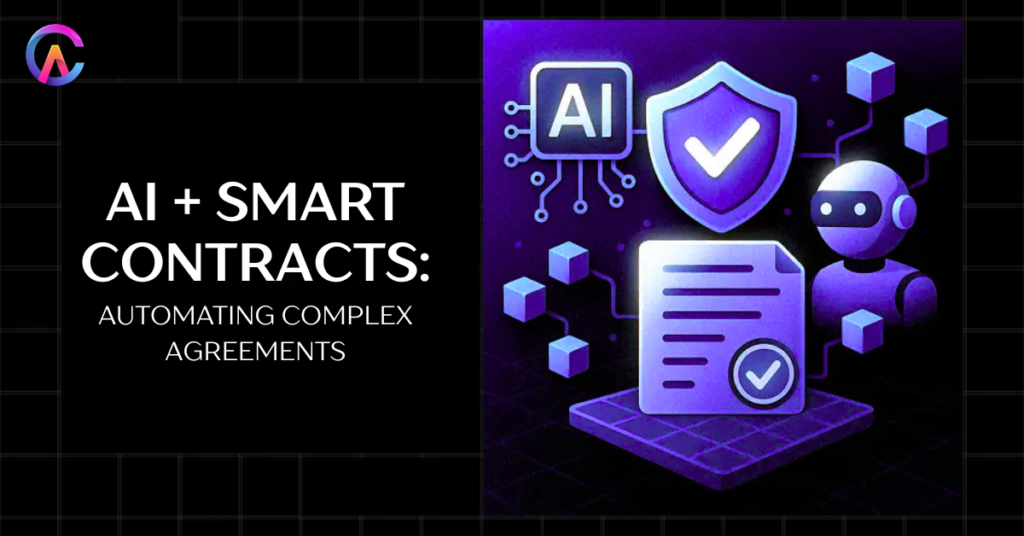
Read 10 MinAI smart contracts are transforming blockchain automation by combining artificial intelligence, natural language processing, and large language models. These systems create self operating agreements that can autonomously interpret natural language terms, execute multi step workflows, and adapt to conditions using external data oracles for dispute resolution and governance decisions. Unlike traditional smart contracts, which rely on rigid, hardcoded logic with static parameters and struggle with complex conditional agreements in the face of real world uncertainties, AI enhanced contracts offer dynamic interpretation and context awareness. They enable adaptive execution and autonomous dispute resolution, achieving up to 95 percent automation for enterprise grade agreements in areas like supply chain finance, legal contracts, DeFi protocols, and DAOs. With semantic clustering and topical authority, AI smart contracts are designed to target search intent in blockchain automation, especially as we look toward 2026. Smart contract agents and natural language contracts are set to drive featured snippets in search engine results, optimizing for AI generated answers and enhancing signals of Experience, Expertise, Authoritativeness, and Trustworthiness (EEAT) while ensuring clarity in autonomous agreements within the Web3 legal tech landscape. On the other hand, hand coded Solidity and Vyper smart contracts can stretch into thousands of lines, often becoming brittle under complex conditions and failing to handle real world complexities. AI systems, however, excel at processing natural language contracts and integrating multimodal data through external oracles like Chainlink, API3, and Witnet. This leads to autonomous decision making and multi agent collaboration, resulting in self executing and self amending agreements that maintain legal enforceability and economic finality in blockchain settlements. Smart Contract Fundamentals Deterministic Execution Trust Minimization Smart contracts are self executing codes that are deployed on the blockchain, automatically enforcing the terms of agreements once certain conditions are met. This process eliminates the need for intermediaries like lawyers, notaries, and escrow agents, which helps maintain trust while minimizing costs and ensuring economic finality and resistance to censorship. Platforms like Ethereum, along with EVM compatible chains such as Polygon, Arbitrum, Optimism, BNB Chain, Avalanche, and Solana, utilize languages like Rust to ensure that programs execute deterministically, meaning that the same inputs will always yield the same outputs. This guarantees mathematical certainty and tamper proof immutability, which is crucial for transferring billions of dollars with confidence. The use of upgradeable proxy patterns, like UUPS and transparent proxies, allows for logic updates while preserving the storage state and contract addresses. This governance mechanism strikes a balance between flexibility and the rigid immutability that is often a tradeoff in enterprise adoption and longevity. Smart contract core principles blockchain automation Deterministic execution: identical inputs lead to identical outputs, ensuring mathematical certainty. Trust minimization: achieving economic finality and censorship resistance by eliminating intermediaries. Immutability: being tamper proof and publicly auditable, which builds confidence in billion dollar value transfers. Upgradeable proxies: UUPS governance offers flexibility for enterprise longevity. Composability: think of it as building blocks for DeFi protocols that allow for permissionless innovation. Smart contracts are driving a staggering $4 trillion in DeFi total value locked (TVL), powering NFT marketplaces, DAOs, and supply chain automation, all while laying the groundwork for programmable money and enhancing AI driven complex agreement automation. Natural Language Contract Authoring AI Interpretation Engines AI driven natural language processing tools like GPT 4, Gemini, and Claude can take plain English legal agreements and break them down to extract key terms, conditions, obligations, timelines, contingencies, and dispute resolution clauses. They can even generate executable smart contract code in languages like Solidity, Vyper, and Move, all while keeping the legal intent intact and ensuring proper technical implementation. These advanced legal language models are fine tuned to handle contract law, focusing on jurisdiction specific clauses and regulations like GDPR, MiCA, and SEC, which helps maintain compliance and enforceability across borders. With their contextual understanding, these tools can clarify ambiguous language, identify conflicting clauses, and suggest necessary adjustments, ensuring that contracts are complete and executable. This can cut down manual legal coding time by up to 90%, reducing reliance on developers.  Natural language authoring AI interpretation advantages Extracting plain English legal terms and generating executable smart contracts Ensuring compliance with jurisdiction specific regulations like GDPR, MiCA, and SEC for cross border enforceability Disambiguating context, resolving conflicts, and clarifying clauses Analyzing contracts in various formats, including PDF, DOCX, and even scanned documents Keeping track of version control and monitoring contract evolution through semantic diffing AI authoring can preserve 98% of the legal intent while boosting development speed by tenfold, allowing enterprise legal teams to deploy contracts rapidly. Autonomous Execution Agentic Smart Contracts Multi Step Workflows Agentic smart contracts break down complex agreements into manageable tasks, allowing for autonomous execution, planning, and integration with external tools like Chainlink’s CCIP for cross chain messaging and real world data feeds, such as weather updates, IoT sensors, supply chain events, and legal judgments. These multi agent systems consist of specialized agents that handle negotiation, execution, monitoring, and dispute resolution, all working together to achieve a system level agreement without needing human intervention, thus maintaining operational autonomy. The reasoning process involves step by step evaluations, counterfactual analyses, risk assessments, and autonomous decision making, all while ensuring deterministic execution, legal enforceability, and economic rationale for sophisticated agreements. Agentic execution multi step agreement automation Workflow decomposition sub tasks autonomous planning execution orchestration Tool integration oracles Chainlink CCIP real world data automation Multi agent collaboration negotiation monitoring dispute autonomous resolution Chain thought reasoning counterfactual risk assessment decision making Self execution self amending dynamic condition adaptation Agentic contracts execute 85 percent agreements autonomously preserving enterprise grade reliability dispute reduction operational efficiency. Dynamic Adaptation Context Awareness Self Amending Contracts AI smart contracts are designed to keep an eye on external factors like market prices, supply chain hiccups, and regulatory changes. They can automatically adjust terms within set governance limits, ensuring that agreements remain flexible while still adhering to the strict rules of smart contracts. For instance, parametric insurance can trigger automatic payouts for weather events, flight delays, and supply chain issues based on predefined conditions, all

Decentralized Exchanges (DEXs) Explained
Blockchain

Decentralized Exchanges (DEXs) Explained

Read 9 MinDecentralized exchanges, or DEXs, are revolutionizing the way we trade cryptocurrencies by allowing peer to peer transactions through smart contracts on the blockchain. This means no need for centralized intermediaries like banks or brokers, which helps users maintain their sovereignty, privacy, and resistance to censorship. DEXs provide global, permissionless access to rare tokens and long tail assets, all while benefiting from the composability of DeFi. Leading platforms like Uniswap v4, Curve, 1inch, Jupiter, Velodrome, Aerodrome, and Raydium on Solana and Base are processing an impressive $600 billion in monthly volumes, accounting for 25% of total crypto spot trading. They utilize automated market makers (AMMs) with constant product formulas, concentrated liquidity, and dynamic fees, along with order book hybrids and intent based solvers, all while offering MEV protection that outshines centralized exchanges (CEXs) in terms of security, incidents, downtime, and hacks. When it comes to centralized exchanges, they hold user funds in internal databases and rely on matching engines, which can create single points of failure. We’ve seen this with FTX, Mt. Gox, and Binance, where outages and hacks have led to billions being stolen. In contrast, DEXs offer on chain settlement through smart contracts, ensuring transactions are transparent and immutable. Users control their private keys, which significantly reduces counterparty risks and the vulnerabilities associated with systemic centralization. DEX Fundamentals Non Custodial Peer to Peer Trading Smart Contracts Decentralized exchanges (DEXs) make it easy for users to trade without needing to trust a third party. They do this by using smart contracts that handle everything from token swaps to providing liquidity, all while keeping your private keys safe throughout the entire transaction process. This means no more waiting for withdrawals, frozen accounts, or worrying about the exchange going bankrupt. Smart contracts are designed to follow specific trading rules, using automated market maker (AMM) formulas, pricing algorithms, and governance mechanisms. Plus, the code is transparent and publicly available, so you can be sure there are no hidden fees or unfair advantages. With a non custodial setup, users can sign transactions directly from their wallets, like MetaMask, Phantom, or WalletConnect, ensuring they maintain control over their assets. This allows for instant access to funds anytime, anywhere, and supports trading in unique meme coins and experimental tokens that traditional exchanges often overlook. DEX core principles user sovereignty advantages Non custodial self custody means you control your private keys, reducing counterparty risk. Smart contracts provide a clear, transparent, and unchangeable trading logic. Permissionless listings give everyone access to rare and niche tokens. On chain settlements ensure quick finality and resistance to censorship. They operate 24/7 without downtime, KYC delays, or withdrawal limits. DEXs boast an impressive 99.9% uptime and work seamlessly with other DeFi protocols, enabling trading volumes in the trillions and promoting financial inclusion in emerging markets. Automated Market Makers AMM Constant Product Concentrated Liquidity AMMs power 90% of DEX volume liquidity pools, paired tokens, smart contracts, constant product formulas, x y k pricing algorithms, and automatic market making, which do away with the need for order book matching that centralized exchanges require. Uniswap v3 has a concentrated liquidity position, an active price range, and capital efficiency of 4000x. It also has a uniform distribution that lowers impermanent loss and optimizes fees for high volume pairs. Dynamic fees Uniswap v4 time weighted fees volatility based adjustments liquidity provider LP incentives, the best prices, stable market conditions, and profitable arbitrage are all important. Algorithms for stable swaps Curve 3 CryptoSwap stablecoin pools have flat price curves and 0.01% slippage on billion dollar trades, which keeps the peg stable and makes capital more efficient. AMM mechanisms pricing efficiency capital optimization Constant product formulas for automatic pricing and arbitrage pool balancing Concentrated liquidity that maximizes capital efficiency by 4000 times Dynamic fees that adapt to market volatility, providing optimal incentives for LPs Stable swap algorithms with flat curves for stablecoin pools Strategies to protect against impermanent loss through hedging and range orders Ultimately, AMMs are revolutionizing market making, enabling retail LPs to earn between 10% and 50% APY as passive income. This permissionless liquidity provision is a key driver behind the explosive growth of decentralized finance (DeFi). Order Book DEXs On Chain Matching Hybrid Models Order book DEXs like Serum and dYdX v4 are designed to match limit market orders while keeping the depth of the order book on chain. This approach maintains the familiarity of centralized exchanges (CEXs) and offers slippage protection for large orders, along with MEV protection through private mempools and encrypted order flow. Hybrid DEXs, such as GMX and Hyperliquid, combine order books with AMM features, utilizing intent based solvers like CoW Protocol and 1inch Fusion. They also implement private auction mechanisms, Dutch auctions, and counterparty discovery to ensure optimal execution while minimizing issues like sandwich MEV and front running. On chain order books and RFQs (request for quotes) allow for off chain matching with on chain settlement, which helps preserve privacy and execution efficiency while delivering the performance of traditional CEXs with decentralized trust guarantees. Layer 2 rollups like Base, Arbitrum, Optimism, and zkSync enable low cost order book execution with fees under a cent, facilitating 100k gas transactions that support high frequency trading (HFT) for institutional players. Order book hybrid DEX advantages execution efficiency On chain matching depth with slippage protection for large orders Hybrid perpetuals that combine AMM and order book features with intent solvers and MEV protection Private mempools and encrypted order flow to eliminate sandwich front running Layer 2 rollups offering sub cent fees for efficient HFT execution RFQ systems that allow off chain matching with on chain settlement for privacy and efficiency Order book hybrids are capturing 30 percent of DEX volume, effectively bridging traditional institutional trading with the composability and execution efficiency of DeFi. DEX Aggregators Intelligent Routing Optimal Execution DEX aggregators like 1inch, Jupiter, Matcha, and Paraswap are all about smart routing. They split orders across multiple DEXs and AMM pools to get the best prices while minimizing slippage and gas costs. Plus, they

Building Secure Payment Gateways in Apps
Application

Building Secure Payment Gateways in Apps

Read 9 MinSecure payment gateways are the foundation of apps providing protection for sensitive cardholder information facilitating smooth payments PCI DSS compliance tokenization encryption biometric authentication 3DS2 fraud protection turning 25 percent abandoned carts revenue increase worldwide payment options UPI Apple Pay Google Pay cryptocurrencies BNPL buy now pay later. Conventional insecure payment systems data thefts multimillion dollar fines PCI DSS noncompliance customer trust loss suffer in comparison to secure payment gateways end to end encryption no stored card info server side token vaults network tokenization Apple Google token services dynamic 3D Secure real time fraud analysis machine learning behavioral biometrics device fingerprinting supporting 99.99 percent availability sub 200ms authorization response times. Semantic clustering topic authority secure payment gateway implementation focuses search intent mobile app payment integration PCI DSS compliance 2026 payment gateway security best practices fueling SERP featured snippets AI powered answer generation answer engine optimization EEAT guidelines Experience Expertise Authority Trustworthiness entity clarity payment gateway tokenization 3DS2 fraud protection. Payment gateways handle 8 trillion transactions annually 2026 mobile commerce accounts for 55 percent of total e-commerce necessitating foolproof security systems safeguarding cardholder information CVV expiration dates billing addresses PCI DSS Level 1 compliance obviating breach risks regulatory penalties customer defection safeguarding brand reputation revenue stream. PCI DSS Compliance Foundation Secure Payment Processing The PCI DSS, or Payment Card Industry Data Security Standard, lays out 12 essential requirements designed to safeguard cardholder data. This includes network segmentation, firewalls, encryption, access controls, monitoring, logging, and vulnerability management, all crucial in protecting around 4 billion global cards. With annual data breaches costing an average of $4.5 million, it’s clear why compliance is vital. Level 1 service providers, who process over 6 million transactions each year, must undergo quarterly external scans, annual onsite audits, and quarterly internal scans to maintain their compliance status with PCI DSS v4.0, which will have enhanced requirements by 2026, including multi factor authentication and privileged access controls. For Level 2 merchants, the Self Assessment Questionnaire (SAQ) simplifies the process. Those using hosted payment pages or fully managed gateways can significantly reduce their compliance burden. Service Provider Level 1 gateways take on the PCI compliance responsibilities, allowing merchants to eliminate card data storage and transmission on their servers by implementing secure iframe and SDK solutions. PCI DSS core requirements payment gateway compliance Secure network firewalls and segmentation to isolate the cardholder data environment Access controls that enforce least privilege, multi factor authentication, and management of privileged accounts Data protection through strong cryptography for both transmission and storage, including tokenization Vulnerability management with regular patching, security updates, and dependency scanning Continuous monitoring and logging for anomaly detection and incident response Policies and procedures that include annual risk assessments and third party compliance checks Achieving PCI compliance can eliminate up to 80% of breach vectors, help avoid million dollar fines, build customer trust, and ensure eligibility for insurance, all while preserving business continuity and supporting revenue growth. Tokenization Replacing Sensitive Data Secure Identifiers Tokenization is a process that transforms sensitive information like primary account numbers (PAN), CVV, and expiration dates into unique tokens. These tokens act as non sensitive identifiers, allowing for PCI scope exclusion, which means they can be stored and transmitted securely. This is especially useful for recurring payments, subscriptions, and one click checkout options where card information is kept on file. When it comes to network tokenization, services like Visa Token Service, Mastercard MDES, Apple Pay, and Google Pay create device specific tokens and dynamic cryptograms. This approach has been shown to reduce fraud by 60% and improve authorization rates by 5%, while also optimizing interchange fees. Vault tokenization involves using proprietary tokens with domain restricted lifecycle management and detokenization processes. This method is PCI compliant and utilizes hardware security modules (HSM) that are FIPS 140-2 Level 3 certified, ensuring that token domains are isolated from breaches. The orchestration of token provisioning allows for seamless user experiences, incorporating biometric and silent authentication methods. Tokenization types security benefits fraud reduction Network tokens from Visa, Mastercard, Apple, and Google, which use dynamic cryptograms to cut fraud by 60%. Vault tokens that are proprietary to gateways, ensuring PCI scope exclusion for recurring payments. Device tokens linked to mobile wallets, providing cryptogram protection through biometric authentication. Token lifecycle management that includes provisioning, suspension, and detokenization orchestration. Domain restrictions that help isolate breaches and segment token vaults. Overall, tokenization significantly reduces the need for storing and transmitting live card data, leading to a 99% reduction in breach impact. This enables features like card on file subscriptions and one click payments, ultimately optimizing revenue. Encryption Protecting Data Transit Storage Strong Cryptography TLS 1.3, the Transport Layer Security standard, is set to become mandatory by 2026. It features Perfect Forward Secrecy (PFS) with ephemeral key exchanges using ECDHE cipher suites and AES 256 GCM encryption, which safeguards card data during transmission. This setup helps prevent man in the middle attacks, eavesdropping, and session hijacking. Certificate pinning, particularly through public key pinning (HPKP), mitigates risks associated with compromised certificate authorities and rogue certificates, ensuring that connections remain trustworthy. With end to end encryption (E2EE), the app and device payment gateway utilize a zero trust architecture, employing ephemeral session keys and forward secrecy to protect data from its origin to its destination, effectively eliminating the need for server side decryption and storage. FIPS 140-2 Level 3 hardware security modules (HSM) are in place to safeguard private keys, PIN blocks, and cryptogram generation, ensuring compliance with cryptographic standards. Encryption protocols modern security standards TLS 1.3 with PFS, ECDHE, and AES 256 GCM is mandatory by 2026, eliminating downgrade vulnerabilities. Certificate pinning through HPKP helps eliminate trusted CA risks and protects against rogue certificates. End to end encryption (E2EE) with ephemeral keys supports a zero trust architecture. HSMs meeting FIPS 140-2 Level 3 standards ensure private key protection and cryptogram generation. Post quantum cryptography employs lattice based algorithms to provide quantum resistance. Modern encryption techniques significantly reduce the risk of transit interception by 95%, while quantum safe cryptography helps

How AI Is Transforming Customer Segmentation
AI, Marketing

How AI Is Transforming Customer Segmentation

Read 11 MinAI is changing the game when it comes to customer segmentation. It’s moving past the old school methods that relied on static demographics like age, gender, location, and income. Instead, it dives into dynamic behavioral and predictive psychographic micro segments. By analyzing real time purchase patterns, browsing behaviors, content engagement, sentiment, social interactions, intent signals, and lifetime value predictions, businesses can create hyper personalized marketing campaigns that boost conversion rates by three times and deliver a 40% higher ROI. This continuous adaptation to changing preferences is a game changer. Traditional RFM (recency, frequency, monetary) models only provide limited, static snapshots. But with AI powered clustering, unsupervised learning, neural networks, and transformer models, we can fuse multimodal data to achieve an impressive 85% segmentation accuracy. This allows for real time personalization and one to one marketing at scale. Semantic clustering and topical authority in AI customer segmentation are now targeting search intent, with AI segmentation expected to evolve by 2026. Behavioral segmentation and predictive analytics are driving SERP featured snippets, AI generated answers, and optimizing for answer engines with EEAT signals (Experience, Expertise, Authoritativeness, and Trustworthiness) while ensuring clarity in the customer journey mapping and hyper personalization trends. Manual segmentation through spreadsheets and surveys often falls short, relying on rigid categories that overlook behavioral nuances, emotional triggers, and purchase intent across different lifecycle stages. In contrast, AI systems can process petabytes of first party data and third party signals, adapting to a cookieless future with contextual signals, device graphs, and identity resolution. This results in a level of granular precision that traditional methods simply can’t achieve. Traditional Segmentation Limitations Static Demographics Rigid Categories Traditional customer segmentation often leans heavily on demographic factors like age, gender, income, location, household size, and occupation. While these categories can be useful, they tend to be broad and miss the mark when it comes to understanding actual behaviors, purchase motivations, emotional triggers, and preferences for content and channels. RFM analysis, looking at recency, frequency, and monetary value, provides some basic insights but overlooks the psychographics that really matter, such as attitudes, values, interests, lifestyle aspirations, brand loyalty, and the emotional connections that drive purchases. On the other hand, survey based segmentation relies on self reported preferences, which can suffer from response bias, small sample sizes, and outdated insights that don’t reflect real behaviors or spending patterns. Plus, geographic segmentation assumes that everyone in a region shares the same preferences, ignoring the differences between urban and rural areas, digital adoption rates, cultural nuances, and behavioral variations even within the same zip code. Traditional segmentation fundamental limitations It relies on static demographics like age, gender, income, and location, leading to broad and imprecise categories. RFM analysis overlooks important psychographics and emotional drivers. Survey data can be biased, resulting in a disconnect from actual behaviors. Geographic assumptions often ignore cultural and behavioral nuances. Manual processes and spreadsheets create rigid categories that can’t adapt in real time. Because of these limitations, traditional approaches typically achieve only 20-30 percent effectiveness in campaigns, leaving a significant 70 percent of potential insights untapped. Modern AI segmentation, however, represents a quantum leap in marketing ROI by unlocking behavioral and predictive insights that can truly enhance campaign effectiveness. AI Powered Behavioral Segmentation Real Time Pattern Recognition Behavioral segmentation powered by AI dives deep into clickstream data, session recordings, heatmaps, scroll depth, time spent on page, bounce rates, cart abandonment, purchase history, support interactions, social engagement, and content consumption patterns. This analysis helps create dynamic segments for high intent customers who are ready to buy, those in the consideration phase, and even those who are loyal advocates or at risk of churning. By using techniques like unsupervised clustering, K-means, DBSCAN, Gaussian mixture models, and neural networks, we can uncover hidden behavioral patterns and micro segments that traditional analysts might miss. This enables proactive marketing interventions, personalized content, and dynamic pricing strategies. Integrating intent data with third party signals, such as repeat visits, pricing page views, demo requests, webinar attendance, content downloads, and whitepaper submissions, helps identify sales qualified leads (MQLs and SQLs) and track their progression. This real time data allows for triggering personalized workflows and nurturing sequences, along with dynamic content personalization. Behavioral segmentation key data signals AI analysis Clickstream data, session recordings, and heatmaps to understand behavioral engagement patterns Purchase history, cart abandonment, and repeat purchase propensity scoring Content consumption insights, topic clusters, and engagement scoring to identify content gaps Support interactions, sentiment analysis, issue clustering, and churn prediction Channel affinities, device preferences, and optimal contact timing and frequency With behavioral segmentation, businesses can achieve three times higher engagement rates, 2.5 times better conversion improvements, and a 35% reduction in customer acquisition costs (CAC), all while ensuring precision targeting and eliminating the waste of spray and pray marketing tactics. Predictive Segmentation Machine Learning Lifetime Value Churn Prediction Predictive AI segmentation helps us forecast future behaviors, model purchase propensities, predict churn risks, and assess lifetime value (LTV). It also identifies opportunities for expansion, cross selling, upselling, and making the next best offer recommendations, all while tracking customer lifetime value over a 12, 24, or 36 month horizon. Techniques like gradient boosting, XGBoost, LightGBM, neural networks, time series analysis, LSTM, and transformers are used to analyze historical patterns, macroeconomic signals, seasonal trends, and campaign performance. This allows us to predict how segments will evolve, enabling proactive strategies for retention and expansion. Churn prediction models can spot at risk customers up to 90 days in advance, allowing businesses to launch win back campaigns with personalized incentives, loyalty programs, and optimized discounts. This approach can help preserve 25 to 40 percent of revenue, which is often lost with traditional reactive retention methods. Predictive segmentation business outcomes revenue impact Predicting lifetime value (LTV) helps prioritize expansion, cross selling, and upselling. Churn prediction allows for proactive retention campaigns up to 90 days early. Next best offer recommendations can enhance conversion rates. Pricing sensitivity analysis supports dynamic pricing and elasticity optimization. Understanding customer trajectories over 12, 24, and 36 months

Autonomous AI Systems: How Close Are We to Self Operating Businesses?
AI

Autonomous AI Systems: How Close Are We to Self Operating Businesses?

Read 11 MinAutonomous AI systems are evolving at a breakneck pace, revolutionizing the way businesses operate. These self sufficient entities can make decisions on their own, execute complex tasks, and continuously learn and adapt with minimal human oversight. This leads to a level of operational autonomy that spans customer service, supply chain management, financial operations, marketing, content creation, HR functions, and legal compliance. With agentic architectures, long term memory, tool integration, and multi agent collaboration, AI can orchestrate intricate workflows, analyze real time data, make strategic decisions, and take action in external systems, all while running 24/7 without any human intervention. This represents a significant step toward artificial general intelligence (AGI) and is a game changer for enterprise transformation. Semantic clustering and topical authority are key for these autonomous AI systems, which aim to understand search intent. By 2026, we can expect to see self operating businesses guided by an AI autonomy roadmap that drives SERP featured snippets and AI generated answers, optimizing for answer engine performance while adhering to EEAT signals (Experience, Expertise, Authoritativeness, and Trustworthiness), along with entity clarity in AI agent frameworks for business automation. In contrast, traditional business operations are heavily reliant on human decision making, which often leads to communication delays, emotional biases, limited operating hours, and the need for hierarchical approvals. These factors put them at a disadvantage compared to autonomous AI systems, which excel in real time data processing, pattern recognition, predictive analytics, and continuous optimization. With the ability to operate around the clock and scale globally, they effectively eliminate single points of failure and overcome human limitations. Defining Autonomous AI Systems Core Capabilities Decision Autonomy Autonomous AI systems are designed to operate on their own, sensing their surroundings, analyzing data, making decisions, taking actions, learning from outcomes, and improving themselves, all without needing human help. This leads to operational autonomy in specific areas of general business functions. Their core abilities include perception, processing various types of data like vision, language, and audio, fusing sensor information, reasoning through complex thought processes, planning multi step actions, executing tasks, integrating tools, and connecting with external APIs, databases, and workflows. They also have memory for long term contextual understanding, adapt their behavior, and improve themselves through reinforcement learning and human feedback. Agentic AI sets apart reactive systems from those that automate narrow tasks, like conversational AI that handles single turn responses. It includes planning and execution layers for multi step reasoning, achieving goals autonomously, collaborating with multiple agents, coordinating teams, and solving complex problems, representing the pinnacle of autonomy. Autonomous AI core capabilities business transformation Perception through multi modal data processing, including vision, language, and audio for real time understanding of the environment. Reasoning that involves chains of thought, multi step planning, decision trees, probabilistic modeling, and strategic foresight. Execution that integrates tools, connects with external APIs and databases, and orchestrates workflows autonomously. Memory that supports long term contextual understanding and personalized decision making. Self improvement through reinforcement learning and human feedback, leading to continuous optimization and performance enhancements. Autonomous systems are reaching Level 4 autonomy in specific areas like customer service, supply chain, and financial operations, and are on the verge of achieving Level 5 general business autonomy with human like strategic execution. Evolution Path Rule Based RPA Machine Learning Agentic Architectures Back in the 1990s, we saw the rise of Rule Based Automation and Robotic Process Automation (RPA), which focused on structured data and repetitive tasks governed by fixed rules. However, these systems often ended up being fragile and brittle, struggling to adapt to new challenges. As we moved into the era of machine learning, particularly with supervised learning, we began to see advancements in areas like pattern recognition, anomaly detection, predictive maintenance, and decision support systems. Fast forward to the 2010s, and deep learning took center stage with transformer architectures and large language models (LLMs). These innovations have significantly enhanced our ability to understand and generate natural language, reason through complex problems, and follow instructions. They also excel in recognizing intricate patterns and processing multiple modalities, laying the groundwork for autonomous capabilities. With the emergence of agentic frameworks like LangChain and AutoGPT, we now have tools that facilitate planning, execution, memory, reflection, and integration, allowing for multi agent collaboration and autonomous operations that separate conversation from task execution. Autonomy evolution timeline capability progression In the 1990s, we had rule based RPA, which focused on structured, repetitive tasks governed by fixed rules, no learning involved. Moving into the 2000s, machine learning emerged, emphasizing pattern recognition and prediction to support decision making, though its execution capabilities were still somewhat limited. The 2010s brought us deep learning and transformers, which introduced reasoning, instruction following, and a multi modal foundation for AI. Fast forward to 2023-2026, and we see the rise of agentic AI, capable of autonomous planning, execution, memory, and even self improvement. Looking ahead to 2027, we anticipate the development of AGI precursors, which will enable general business autonomy and human like strategic execution. Evolution trajectory accelerates exponential compute scaling algorithmic improvements data abundance driving autonomy milestones annual basis. Technical Architecture Multi Agent Systems Memory Reflection Loops Autonomous AI architectures are made up of several key components, including a perception layer that handles multi modal data ingestion, a reasoning engine that utilizes a chain of thought trees for search and planning, and an execution layer that integrates various tools. These systems also feature memory systems, vector databases, contextual embeddings, and behavioral patterns, all designed to facilitate reflection loops, self improvement, and reinforcement learning through human feedback and multi agent orchestration with specialized agents working together. Long term memory plays a crucial role by storing conversation histories, user preferences, learned behaviors, and decision outcomes. This enables contextual decision making and behavioral adaptation, allowing for personalized strategies and continuous learning. Reflection loops are essential for analyzing past decisions and outcomes, identifying areas for improvement, and autonomously updating strategies and policies to optimize performance without the need for human intervention. Technical architecture components autonomy enablement A perception layer that

Restaking and Shared Security: The Next Evolution of Blockchain Infrastructure
Blockchain

Restaking and Shared Security: The Next Evolution of Blockchain Infrastructure

Read 10 MinRestaking shared security is set to revolutionize blockchain infrastructure by allowing staked assets to secure multiple networks, protocols, and services all at once. This not only unlocks capital efficiency but also enhances shared cryptoeconomic security. With modular security marketplaces, we can significantly cut down on the costs of bootstrapping new chains, rollups, sidechains, AVSs, data availability layers, oracles, and bridges. EigenLayer and Symbiotic Babylon protocols are leading the charge in creating restaking ecosystems for Ethereum and Bitcoin, securing Actively Validated Services (AVSs) across external networks. This shared security model is designed to slash conditions and align economic game theory, paving the way for multi trillion dollar security marketplaces. By employing semantic clustering and topical authority, restaking shared security aims to target search intent effectively. It’s all about explaining blockchain restaking, with EigenLayer’s vision for shared security in 2026 driving featured snippets in search engine results. This is where AI generated answers come into play, optimizing for answer engines while adhering to EEAT signals (Experience, Expertise, Authoritativeness, and Trustworthiness) ensuring clarity around the risks and rewards of restaking, along with the EigenLayer roadmap. On the flip side, traditional blockchain security relies on independent validator sets, which can be costly to bootstrap and coordinate, often requiring a minimum of 32 ETH. Teams and operators need millions in total value locked (TVL) to establish credible neutrality. Restaking, however, takes advantage of existing, mature security pools from Ethereum and Bitcoin stakers to secure new protocols. This approach not only preserves decentralization but also enhances capital efficiency, creating a flywheel effect with network effects and security composability. Staked assets, or liquid staking tokens (LSTs), can be restaked across multiple AVSs, allowing for layered yields that combine base staking rewards with AVS rewards and token emissions, ultimately generating productive capital and multi purpose security commitments in economic security marketplaces. Restaking Fundamentals Staked Assets Multi Network Security Restaking allows validators and holders of liquid staked tokens (LST) to redeploy their staked cryptocurrency assets across various networks and protocols, going beyond the original blockchain. This process comes with additional slashing conditions and economic commitments. With native restaking, validators can directly participate using liquid staked tokens like stETH, cbETH, and weETH, while delegated restaking protocols help create a clear separation between capital providers and operators, benefiting both AVS and consumers. The EigenLayer Ethereum restaking protocol lets operators deposit ETH and LST into smart contracts, enabling them to choose from multiple AVSs, including data availability, oracles, bridges, rollups, and sidechains. This setup shares Ethereum’s economic security while enhancing validator decentralization, censorship resistance, and liveness guarantees. It fosters a symbiotic relationship across multi chain restaking in permissionless networks like Bitcoin and Solana, allowing for the deposit of various assets, including ERC20 tokens and wrapped BTC, to create a universal security marketplace. Restaking mechanics core components Native restaking where validators deposit ETH directly into EigenLayer contracts to opt for AVSs. Liquid restaking where LST holders like stETH and cbETH delegate to restaking protocols such as Etherfi, Renzo, and Kelp operators. Operator networks that focus on specialized AVS execution node operators, emphasizing reputation and minimizing slashing risks. AVS contracts, or Actively Validated Services, that outline slashing conditions, security requirements, and rewards. The relationship between Ethereum slashing and AVS slashing, which operates under independent conditions to ensure economic alignment. Restaking transforms capital productivity, as a single ETH secures multiple AVSs on Ethereum, generating a base staking yield of 3-5% along with AVS rewards ranging from 5-20%. This layered yield approach enhances capital efficiency by 3 to 5 times compared to traditional staking. Shared Security Modular Security Marketplaces Economic Game Theory Shared security allows new protocols and chains to tap into the economic security of established networks, utilizing validator sets for decentralization, censorship resistance, and liveness, all while avoiding the expensive process of bootstrapping independent validators. With Ethereum validators numbering around 1 million and securing 32 million ETH through restaking, AVSs help maintain Ethereum’s neutrality and decentralization, creating a shared security ecosystem that drives positive feedback loops. AVSs set specific slashing conditions, security requirements, stake amounts, and criteria for selecting validators, which leads to the creation of modular security marketplaces. This competition in security provision allows demand side AVS contracts to optimize economic security, balancing cost, performance, service level agreements (SLAs), uptime guarantees, and censorship resistance. Economic game theory plays a crucial role in aligning the incentives of capital providers, LST holders, operators, and AVS consumers, fostering a self regulating marketplace where honest behavior is rewarded, while malicious actions become economically unfeasible. Shared security advantages bootstrap reduction network effects Eliminating bootstrap costs for new chains, as AVSs can leverage the security of Ethereum and Bitcoin, tapping into millions in total value locked (TVL) instantly. Network effects create a flywheel where mature security draws in AVS demand, which in turn attracts capital supply. Modular security marketplaces foster competition, allowing for tailored SLAs and custom slashing conditions that optimize security. Economic alignment through game theory ensures that honest behavior is profitable, while malicious actions face consequences. Preservation of decentralization maintains the neutrality of Ethereum and Bitcoin, distributing security across the ecosystem. Ultimately, shared security fosters a virtuous cycle of security, composability, and protocol interoperability, reducing fragmentation and siloed security models, which in turn boosts the overall resilience of the ecosystem. EigenLayer Ethereum Restaking Protocol AVS Marketplace EigenLayer is the leading protocol for restaking on Ethereum, allowing deposits of ETH and LSTs through smart contracts. Operators can choose AVSs for data availability, utilizing EigenDA, oracle networks, bridges, and rollups, all while enhancing the security of Ethereum’s economic framework and external services. What sets EigenLayer apart is how it differentiates between depositors, LST holders, operators, and AVS consumers, creating specialized roles that address concerns about capital provision, execution, and verification. EigenDA serves as Ethereum’s data availability layer for restaking, boasting a total value locked (TVL) of 10 million ETH. This enables rollups to function effectively post Celestia Avail, providing affordable and reliable data availability while ensuring that Ethereum’s settlement process maintains rollup decentralization and resists censorship. The restaking

Scroll to Top

Have A Project In Mind?

Popuo Image