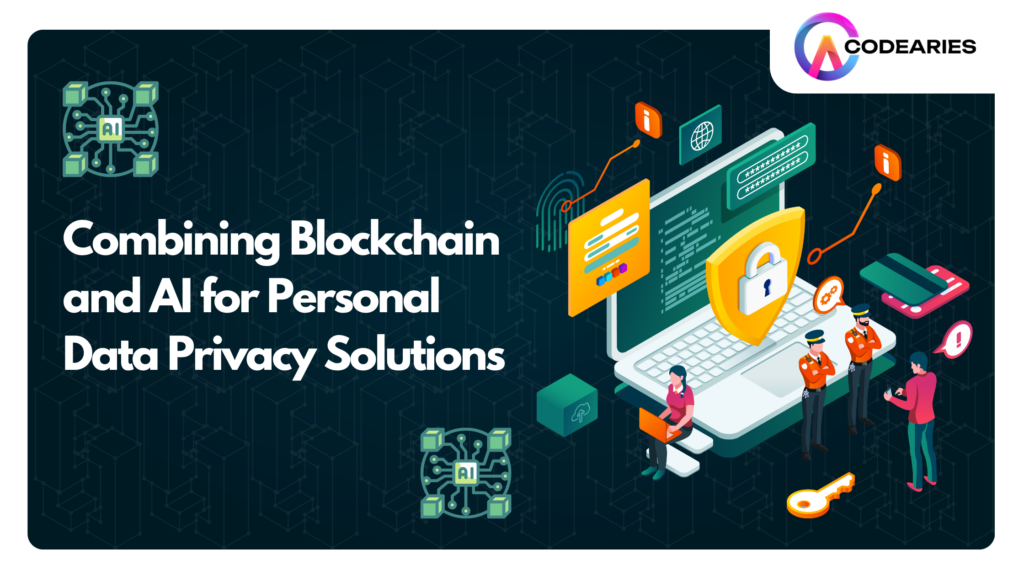
Combining Blockchain and AI for Personal Data Privacy Solutions
Read 6 MinPersonal data privacy is a growing concern in today’s digital world, highlighted by significant data breaches like those at Facebook and Equifax. As data becomes increasingly important in the digital economy, traditional security measures are proving inadequate against evolving threats. This article examines the current privacy landscape and explores how technologies like blockchain and AI can provide robust solutions, empower individuals, and redefine the future of data privacy. The Importance of Personal Data Privacy Personal data privacy has become a significant concern for individuals and organizations in the digital era. High-profile data breaches, such as those involving Facebook, Equifax, and Marriott, have exposed millions of users’ private information, leading to financial loss, identity theft, and erosion of trust in digital services. Current Privacy Issues in the Digital Age Today, data is often referred to as the new oil, underscoring its immense value in the digital economy. However, companies’ unregulated collection, storage, and sharing of personal data pose severe privacy risks. Issues like unauthorized access, data selling, surveillance, and cyber-attacks have made seeking more robust privacy solutions imperative. Need for Enhanced Privacy Solutions With increasing digital footprints, the need for enhanced privacy solutions has never been greater. Traditional data security measures, such as encryption and firewalls, are no longer effective to protect against sophisticated cyber threats. Blockchain and AI offer a promising approach to creating secure, decentralized, and intelligent privacy solutions that empower users to regain control over their data. The Impact of Blockchain on Data Privacy Blockchain technology is a key solution for data privacy challenges in today’s digital world. Its decentralized structure and immutable records greatly enhance data security and empower individuals to manage their personal information. The global data protection market size was valued at USD 131.82 billion in 2023. The market is projected to grow from USD 150.38 billion in 2024 to USD 505.98 billion by 2032, exhibiting a CAGR of 16.4% during the forecast period. Empowering Individuals Through Decentralization Blockchain’s decentralized framework means that data is stored across a network rather than a single server, making it more difficult for hackers to gain access. This architecture allows individuals to maintain data ownership without relying on third parties, reducing the danger of breaches and unauthorized access. Ensuring Integrity with Immutable Records Once data is recorded on the blockchain, it cannot be altered or deleted, creating a permanent and tamper-proof record. This feature is vital for maintaining data integrity and accountability. Additionally, blockchain enables the creation of audit trails, providing a transparent history of data interactions essential for compliance. The Role of AI in Enhancing Data Privacy Artificial intelligence (AI) is poised to transform data privacy by providing advanced data analysis and protection solutions. AI can facilitate adequate anonymization and proactive threat detection through its pattern recognition and data manipulation capabilities. Advanced Anonymization Techniques Leveraging AI Anonymization aims to obscure personal information, making it challenging to identify individuals. AI can enhance these methods through various innovative approaches: Differential Privacy: This method introduces controlled noise into datasets, making individual identification difficult while retaining overall data trends. AI can optimize the amount of noise added, balancing privacy and data utility. Generative Adversarial Networks (GANs): GANs can create synthetic datasets that mimic accurate data without revealing personally identifiable information (PII). This allows for safe AI model training on extensive datasets without compromising privacy. Homomorphic Encryption: This technique permits data processing in an encrypted state, maintaining privacy even when data is shared. AI can contribute to developing efficient algorithms for processing encrypted data across various applications. Proactive Threat Detection with AI AI can also be instrumental in identifying and mitigating potential privacy risks before they escalate. By analyzing historical data on privacy incidents, AI systems can learn to detect patterns indicative of privacy breaches, enabling organizations to respond more swiftly and effectively. Examples of AI-driven privacy threat detection include: Anomaly Detection: AI can monitor for unusual activities that may signal a privacy breach, such as unauthorized data access or atypical data usage patterns. Risk Assessment: AI tools can evaluate the likelihood of privacy breaches based on data sensitivity, existing security measures, and potential breach impact. Threat Intelligence: AI can gather and analyze information about emerging privacy threats, helping organizations stay proactive against potential risks. Use Cases of Blockchain and AI in Privacy The Concept of Decentralized Identity Management Decentralized Identity Management (DID) empowers individuals to control their personal information through blockchain technology, offering a secure and privacy-focused way to manage identity data. Protocols for Secure Data Sharing Blockchain enables secure data-sharing protocols, allowing individuals to share information with trusted parties while maintaining privacy. Key components include: Smart Contracts: Self-executing contracts that enforce data-sharing rules to ensure authorized access. Zero-Knowledge Proofs: Cryptographic methods that verify information without revealing the underlying data, preserving privacy. Homomorphic Encryption: This allows data to be processed while encrypted, safeguarding privacy even during sharing. AI-Enhanced Smart Contracts AI can improve smart contracts by enabling them to adapt to changing privacy needs. For example, AI-driven contracts can: Adjust Privacy Settings: Based on the recipient’s trustworthiness or data sensitivity. Detect Privacy Violations: By monitoring access patterns for unusual activity. Automate Compliance: With privacy regulations like GDPR. By combining blockchain and AI, decentralized identity management can revolutionize how we manage and share personal data, significantly enhancing privacy in the digital age. Benefits of Integrating Blockchain and AI: Enhanced Security and Privacy The combination of blockchain and AI offers significant advantages in security and privacy. By merging blockchain’s decentralized structure with AI’s analytical capabilities, organizations can create robust systems to protect personal data. Automated Compliance with Privacy Regulations Blockchain and AI streamline compliance with data privacy laws like GDPR and CCPA through: Consent Management: Smart contracts can record user consent for data collection, ensuring verifiable proof of compliance. Data Breach Notifications: AI can monitor blockchain records for unauthorized access, automatically notifying affected individuals and regulators when breaches occur. Data Retention: Smart contracts can delete data after a specified period, aiding compliance with retention laws. Enhanced User Control Over Personal Data These technologies