
Food Delivery Apps

The Future of Food Delivery: AI Kitchens Drone Deliveries and Hyperlocal Trends
AI, Food Delivery Apps

The Future of Food Delivery: AI Kitchens Drone Deliveries and Hyperlocal Trends

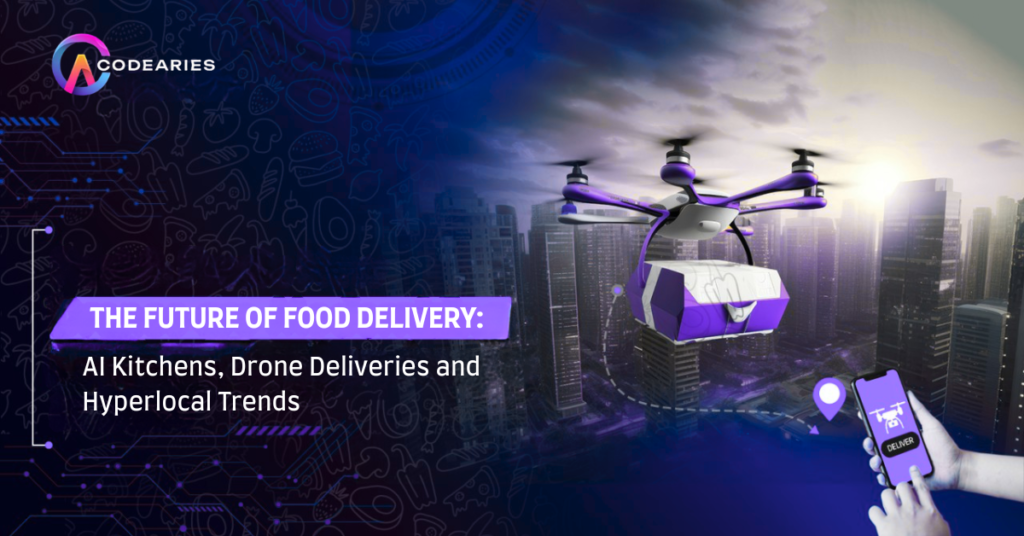
Read 6 MinFood delivery has come a long way, evolving from a simple convenience into a massive global industry worth hundreds of billions. It’s not just about getting your meals anymore, it’s about transforming urban lifestyles and opening up new economic opportunities. As we look ahead and beyond, this sector is on the brink of a revolutionary shift, fueled by advancements in artificial intelligence, autonomous delivery systems, and hyperlocal strategies. Imagine AI powered kitchens that fine tune menus and streamline operations, drones that cut down delivery times, and hyperlocal trends that emphasize fresh, community focused food. These innovations promise not just quicker meals but also smarter, more sustainable, and deeply personalized food experiences that change the way we eat, shop, and connect with our neighborhoods. This in depth exploration takes a closer look at the future of food delivery, breaking down the technologies, use cases, challenges, and opportunities that lie ahead. It also shines a light on how forward thinking businesses can spearhead this transformation. AI Kitchens Revolutionizing Food Preparation AI kitchens are at the forefront of food production automation, where machine learning, robotics, and data analytics come together to create ghost kitchens or dark kitchens that operate with unmatched efficiency, precision, and scalability. These facilities focus solely on delivery and takeout, eliminating the need for dine in seating. The core technologies driving AI kitchens include: Leading the charge in this space are innovators like CloudKitchens, founded by Uber’s Travis Kalanick, which utilizes AI to manage thousands of virtual brands from a single location. Then there’s Reef Technology, with its modular kitchen pods that can be deployed anywhere, all powered by AI driven operations. In Asia, companies like Zomato’s Hyperpure and Swiggy’s kitchen networks are leveraging AI to serve millions of meals daily at an impressive scale. The benefits of AI in kitchens go beyond just efficiency. These smart kitchens significantly reduce labor costs, operate around the clock, and can whip up hyper personalized meals, including custom nutrition plans or allergy safe dishes, all on demand. Drone Deliveries Taking Food to New Heights Drones are set to tackle traffic congestion and delivery delays, ensuring that food arrives hot and fresh in under 15 minutes. With regulatory approvals speeding up in the US, Europe, and Asia, what once seemed like science fiction is now becoming a part of our everyday lives. Some key advancements in drone technology include: Pioneers in this field are making strides. Wing, a subsidiary of Alphabet, is already delivering in Australia, the US, and Finland, while Zipline focuses on delivering medical supplies, with plans to expand into food delivery. Amazon Prime Air aims for 30 minute delivery times, and Manna Aero Drone is serving suburban Europe with deliveries in under 10 minutes. In India, Swiggy and Dunzo are testing drone deliveries in tier 2 cities. While challenges around regulations, battery life, and public acceptance still exist, the decreasing costs and advancing technology are positioning drones to become the backbone of last mile delivery by 2030. Hyperlocal Trends Redefining Neighborhood Food Ecosystems Hyperlocal delivery is all about sourcing, preparing, and delivering food within a tight radius, usually under 3 kilometers. This approach promotes fresh, sustainable, and community focused models. Defining characteristics include India is at the forefront of hyperlocal innovation, with companies like Blinkit, Zepto, and Swiggy Instamart achieving delivery times of under 10 minutes thanks to their dense networks of dark stores. In the US, DoorDash and Uber Eats are expanding their hyperlocal services, while in Europe, Gorillas and Flink are focusing on speedy neighborhood deliveries. Hyperlocal services also thrive on data. AI helps map demand density, optimize rider routes, and personalize offerings based on preferences at the block level, blending global reach with a personal local touch. Integration Convergence and Broader Impacts The real future lies in convergence. AI driven kitchens support drone fleets, hyperlocal networks utilize AI for dynamic pricing and rider assignments, and blockchain technology ensures transparency in the supply chain. Sustainability is a key driver, with electric vehicles, drones, and zero waste kitchens significantly reducing carbon footprints. Economic changes are also on the horizon, with job roles evolving from drivers to drone operators, AI technicians, and local food curators. This shift is accompanied by substantial growth in dark kitchen real estate and logistics technology. Consumer benefits are significant. Meals are delivered fresher, faster, and more tailored to individual preferences, all while cutting costs and minimizing packaging waste and traffic congestion. Challenges and Pathways Forward Regulatory challenges, particularly around airspace management and food safety standards, are slowing down the scaling of drones. AI kitchens are facing concerns about job displacement, and hyperlocal models often struggle to be profitable on a smaller scale. The way forward involves public private partnerships, workforce reskilling, and hybrid systems that combine human and AI efforts. Data privacy is also a major concern, as hyper personalization requires careful management of location, dietary, and behavioral data. How Codearies Powers the Future of Food Delivery Codearies empowers food businesses, restaurants, and delivery platforms with state of the art technology to excel in the age of AI, drones, and hyperlocal delivery. Our comprehensive support includes Join forces with Codearies to launch, deploy, and scale the next generation of food delivery solutions that not only satisfy customers but also lead the market. Frequently Asked Questions Q1: How can Codearies help startups enter the AI kitchen space? We offer complete robotic integration software development and AI optimization, cutting the time to launch by 50%. Q2: Are drone deliveries ready for widespread food use? Yes, in approved areas with growing capabilities. We seamlessly integrate compliant drone systems with your current platform. Q3: What makes hyperlocal delivery more profitable than broad delivery? Shorter routes mean lower costs, fresher food, and higher order values driven by neighborhood loyalty, resulting in better economics Q4: Can Codearies customize for specific cuisines or regions? Absolutely! Our AI tailors itself to local tastes, dietary needs, and cultural preferences for a truly authentic and personalized delivery experience. Q5: How does Codearies ensure sustainability compliance?
How to Build a Food Delivery App: Features, Tech & Development Cost
Food Delivery Apps

How to Build a Food Delivery App: Features, Tech & Development Cost

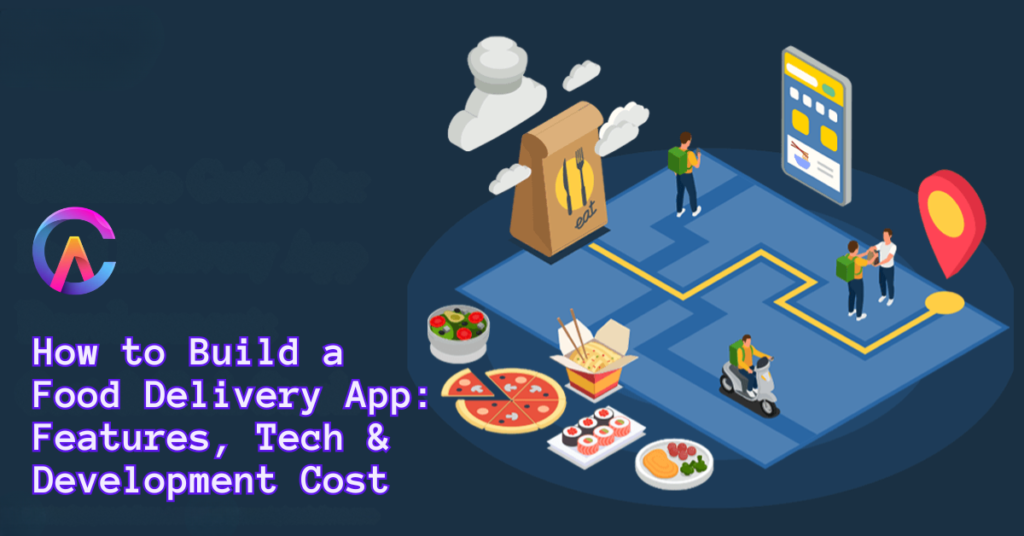
Read 6 MinCreating a food delivery app now involves setting up a full system where users, eateries, and couriers link through quick orders, hassle free payments, but live updates, all in one spot. Staying competitive calls for solid features, flexible technology, yet a good grasp of expenses tied to building such an app, so it evolves from basic version into a working, money making service How food delivery apps work Food delivery apps connect people looking for meals with eateries making them, while drivers, either company workers or outside helpers, take care of getting orders to doors. This setup links finding a spot, checking menus, placing orders, paying up, sending out food, watching its progress, plus sharing thoughts afterward, all through one smooth online process, letting everyone involved know their role right away Important parts of today’s meal delivery apps Read how AI and Data Analytics are revolutionizing food delivery apps. Key things your meal delivery app needs A solid food delivery app begins by outlining key features for each user, this keeps things smooth and dependable, no matter how big it grows Customer app features Food spot or seller dashboard Courier or delivery driver app Admin panel Smart tools plus what’s new  To get noticed in food delivery apps, companies are building smarter tools, using automated systems while opening extra ways to earn income Important advanced capabilities Emerging trends Tools needed to build a food delivery app Picking the correct tools for a food delivery app shapes how well it runs, its expenses, also whether it can grow into new areas easily Frontend and mobile Backend and database Infrastructure and integrations Food delivery app creation price Food delivery app price? It hinges on what kind you want, how many user types it supports, also features’ difficulty, look and feel, tools used, where coders are based. Stats reveal solid estimates once purpose is set Extra cost drivers What Codearies does when you’re making a food delivery app Codearies acts like your go to tech buddy, turning your food delivery concept into a live, sleek app. They use solid tools plus fresh design to build what works now. Starting small with an MVP? No problem. They plan each step ahead, so growing later feels smooth. From first sketch to full launch, they stay on track without fluff or fake promises During early talks, Codearies gets clear on who your users are, where they live, plus how your business actually makes money. After that, they sketch out how customers, eateries, or drivers move through the app – this shapes what features matter most at launch and down the line. Instead of copying others, they build mobile apps and control panels focused on people. Ordering feels natural, menus stay easy to scan, while live updates keep everyone in sync. The result? Your service runs just as smoothly as big name delivery platforms, but fits your local scene like a glove When building food delivery apps, Codearies picks up to date tools, like strong backend systems that grow with demand, safe payment options, map features, plus mobile interfaces ready for busy times. They don’t stop at coding, they help test, release, track performance, then keep refining things afterward. Whether it’s rolling out membership plans, rewards, or branching into groceries and meds, their updates match how you plan to scale FAQs Q1 So you wanna kick off a food delivery app with Codearies, where do you begin? The initial chat’s about figuring out what you want, Codearies checks your target audience, cash limits, so they can sketch a step by step path. This includes launching basic app functions first, followed by adding more down the line Q2 What’s the price to build a food delivery app using Codearies? Price changes based on what you need, how complex it is, or which team members are involved, yet Codearies fits into normal pricing, whether it’s a small startup version or a big system running across cities, once they check your needs, they send a clear breakdown Q3 How much time does making a food delivery app need? A simple version for a single city usually takes around two to four months. But fancier setups like ones with driver apps, deep data tools, or coverage across many areas, might need half a year or more. Time changes based on features and how fast users respond Q4 Can Codearies integrate AI and personalization into the app? Yes, Codearies could add smart suggestions powered by AI, better search tools that learn from users, along with custom deals based on past orders, these features tap into current habits seen in food apps aiming to boost interaction and sales Q5 Does Codearies provide post launch support and scaling? Codearies helps you tweak things after launch, like speed fixes or new tools with solid data checks, so your food delivery app gets better at turning clicks into orders, streamlining deliveries, while keeping more users around as time goes on For business inquiries or further information, please contact us at  contact@codearies.com  info@codearies.com

How AI and Data Analytics Are Revolutionizing Food Delivery Apps in 2025
AI, Data Analytics, Food Delivery Apps

How AI and Data Analytics Are Revolutionizing Food Delivery Apps in 2025

Read 4 MinFood delivery in 2025 isn’t just about speed, variety, or convenience. It’s an intelligent, personalized experience led by artificial intelligence (AI) and data analytics at every stage. From the moment a craving strikes to when the doorbell rings, smart systems work behind the scenes to optimize choices, pricing, delivery routes, customer service, and sustainability. The rise of AI and big data is reshaping the entire food delivery system. Let’s look at how this change affects businesses and diners, and how Codearies helps food platforms seize opportunities in this data-driven era. The New Food Delivery Landscape: Data-Driven, User-Focused 1. Personalized Food Recommendations Modern food delivery apps now act like personal assistants. AI learns a user’s taste preferences, allergies, order times, favorite cuisines, and reactions to past meals. By combining past behavior, ratings, the time of day, weather, and trending local dishes, recommendation engines suggest the perfect meal. This results in higher satisfaction and repeat orders.   Example:   Just like Netflix recommends shows based on your viewing history, food apps now offer changing menus that adapt with each interaction, guiding users toward new restaurants or dishes they might enjoy. 2. Smart Order Prediction and Demand Forecasting AI and data analytics help restaurants and delivery services predict what users will order and when. By looking at past data, social media trends, holidays, and weather, platforms can expect spikes in demand and adjust kitchen staffing, stock levels, and delivery staff accordingly.   Value:   Better forecasting reduces food waste, prevents stockouts, cuts unnecessary staffing costs, and ensures improved service quality, even during unplanned surges. 3. Real-Time Dynamic Pricing and Promotions Algorithms monitor demand, local events, the time of day, and competitor prices to adjust menu prices or trigger quick discounts in real time. Personalized promotions, like loyalty rewards or birthday deals, encourage customers to return and increase average order value. 4. Delivery Route Optimization and Time Prediction AI systems analyze real-time traffic data, GPS, weather updates, and order density to create optimal delivery routes. Predictive algorithms ensure food arrives fresh and on time. Instant time estimates update as needed, reducing customer anxiety and complaints. Batch delivery algorithms lessen travel for drivers, lowering costs and environmental impact. 5. Automated Customer Support and AI Chatbots AI chatbots handle most basic customer support tasks: tracking orders, resolving common issues, processing refunds, answering frequently asked questions, and gathering feedback. For complex queries, bots can smoothly transfer to human agents with full context, enhancing customer satisfaction. Multilingual support broadens service for a global audience. 6. Smart Kitchen Operations and Inventory Management In restaurants, AI kitchen display systems automatically prioritize orders, suggest ingredient purchases, and alert staff about low or trending menu items. Robotics and automated tools speed up meal preparation and packaging, enhancing the final steps of production. 7. Advanced Analytics for Business Growth Food delivery platforms now use dashboards to visualize every part of the user journey—conversion rates, coupon redemptions, top cuisines by neighborhood, vendor performance, and more. Big data enables:    8. Sustainability and Smart Logistics Data analytics promote greener operations by limiting packaging waste, grouping orders by locality, and guiding users toward eco-friendly options. Idle delivery resources can be reallocated or even shared among competitors to maximize efficiency. Why These Changes Matter How Codearies Supercharges Food Delivery Platforms with AI & Analytics At Codearies, we help food delivery businesses, from startups to established giants, create smarter, faster, and more profitable platforms through advanced AI and strong data analytics. Here’s how we make a difference: Codearies’ team serves as your engine for growth and innovation, helping you create memorable moments, not just quick meals. Frequently Asked Questions (FAQ) Can Codearies integrate AI features with my current food delivery app? Absolutely. We specialize in flexible AI solutions that fit with existing systems—no need for a complete rebuild. How does data analytics improve my delivery times and revenues? Predictive analytics and real-time route optimization cut wait times and increase orders per hour, boosting customer satisfaction and overall profits. Can you enable AI-driven personalization without sacrificing privacy? Yes! We balance strong customization with solid user data protection and compliance with privacy regulations. Does Codearies provide support post-launch? We offer 24/7 monitoring, feature upgrades, analytics reports, and consulting to keep your app performing well and on trend. How quickly can Codearies deploy or improve an AI food delivery solution? Most integrations and feature additions are completed within 6 to 12 weeks, with rapid prototyping available for urgent or pilot projects.

Scroll to Top
Popuo Image