

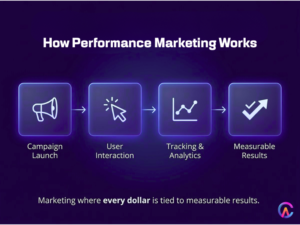
Performance marketing is all about paying for results, think clicks, leads, and sales, rather than just impressions. In the data driven landscape of 2026, it’s become the gold standard for digital campaigns, fueling platforms like Google Ads, Facebook, and affiliate networks. But to truly succeed, you need to keep an eye on the right metrics, especially with so many vanity stats floating around. What really makes a difference? Let’s unpack performance marketing, explore the essential metrics, strategies, and trends, and provide you with actionable insights.
What Is Performance Marketing and Why Focus on Metrics?
Performance marketing connects your ad spend directly to the outcomes you achieve. Advertisers place bids on specific actions through methods like PPC (pay per click), CPA (cost per acquisition), or CPS (cost per sale). Platforms such as Google Performance Max even automate the bidding process to help you get those conversions.
Metrics are crucial because budgets are limited. If you don’t track effectively, you risk wasting money. In 2025, brands reportedly lost a staggering $200 billion due to misattribution, according to Forrester. The key is to sift through the noise and focus on revenue generating KPIs instead of just likes or views.
Essential Metrics: The Ones That Drive Revenue
Not all numbers are equal. Prioritize these performance marketing metrics.
ROAS and ROI: Profitability Kings
ROAS (Return on Ad Spend) tells you how much revenue you’re generating for every dollar spent on ads: ROAS = Revenue from Ads / Ad Spend. So, if you have a ROAS of $5, that means you’re bringing in $5 for every $1 spent. Aiming for a 4x return or more is ideal for scaling up.
On the other hand, ROI takes into account all your costs, ROI = (Revenue – Total Costs) / Total Costs × 100. While ROAS is great for quick checks, ROI gives you a more comprehensive view of how your campaigns are performing.
CAC and LTV: Acquisition Efficiency
CAC, or Customer Acquisition Cost, is calculated by dividing your spending by the number of new customers you gain. The goal is to keep this figure below your LTV, or Lifetime Value, ideally aiming for a 1:3 ratio. For ecommerce, the average CAC is around $50, while for SaaS, it can soar to over $200.
LTV helps you predict long term profits by taking the average purchase value, multiplying it by the customer lifespan, and then subtracting any servicing costs.
Conversion Rate (CVR) and Cost Per Action (CPA)
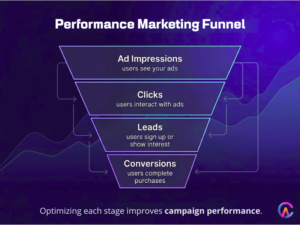
CVR is determined by dividing the number of conversions by the total clicks. In the industry, benchmarks show that ecommerce typically falls between 2-5%, while SaaS trials can exceed 10%. A low CVR might indicate that there are issues with your landing page.
CPA measures the cost associated with achieving a specific goal, whether that’s a lead or a sale. You can calculate it by dividing your total spend by the number of actions taken. In competitive markets, CPA can go beyond $100, so it’s essential to optimize your approach through A/B testing.
Advanced Metrics for 2026 Mastery
Basic stats evolve with AI and privacy shifts.
Attribution Models and Multi Touch Insights
Last click attribution tends to give too much credit to the final touchpoint, while multi touch attribution spreads the value across the entire customer journey. We’re seeing a rise in data driven models that leverage machine learning to evaluate these journeys more effectively.
Incrementality tests are essential for measuring true impact, consider running geo holdouts to establish a non ad baseline.
Engagement and Quality Scores
It’s not just about clicks, metrics like CTR (Click Through Rate) and bounce rates are key indicators of relevance. Google’s Quality Score can significantly enhance your ad rank, helping to lower your cost per click.
A trend to watch in 2026 is the rise of zero party data metrics, such as intent signals gathered from quizzes.
Customer Lifetime Metrics
CLV (Customer Lifetime Value) sharpens the focus on LTV by analyzing customer cohorts. The retention rate, which tracks repeat buyers, is a strong predictor of churn, aim for a monthly target of 20-30%.
Common Pitfalls and How to Avoid Them
Metrics mislead without context.
Vanity vs Actionable Metrics
While impressions and reach might impress your superiors, they rarely contribute to the bottom line. It’s best to overlook these and concentrate on actionable KPIs that drive results.
Cross Channel Silos
Facebook’s ROAS often overlooks the uplift from email campaigns. Utilize tools like Google Analytics 4 to gain a comprehensive view across all channels.
Seasonality and External Factors
Black Friday spikes can skew your data, it’s wise to use year over year comparisons. Economic changes can inflate customer acquisition costs, be sure to adjust your baselines accordingly.
Pro Tip: Create custom dashboards in Looker or Tableau for real time insights.
Strategies to Optimize Key Performance Marketing Metrics
Actionable steps elevate results.
Bidding and Budget Tactics
Smart bidding, like Maximize Conversions, taps into the power of AI, while Manual CPC gives you the reins in unpredictable auctions.
When it comes to budget pacing, consider allocating 70% to your winning strategies and reserving 30% for testing new ideas.
Creative and Landing Page Optimization
Ads with high click through rates (CTR) tend to convert more effectively. Experiment with different headlines and images using dynamic creative optimization (DCO).
On the post click side, mobile first pages that load quickly can boost your conversion rate (CVR) by 20%.
Scaling Without Dilution
Implementing frequency caps helps avoid ad fatigue. You can also grow your audience by using lookalike targeting and retargeting those who have already shown interest.
For instance, a case study revealed that Shopify merchants utilizing Performance Max achieved a remarkable 6x return on ad spend (ROAS) in 2026 by leveraging first party data.
Future Trends in Performance Marketing Metrics
With privacy changes, including the complete phase out of cookies, new strategies are essential.
- AI driven predictive metrics can forecast ROAS even before a campaign launches.
- Blockchain technology offers transparent verification of attribution.
- Unified ID solutions, like ID5, help track user activity across devices.
- Sustainability KPIs are becoming crucial, allowing you to measure the carbon footprint of your ad delivery.
According to eMarketer, by 2030, a staggering 80% of marketing budgets will be directed toward performance channels. The key to success will be mastering metrics in a comprehensive way.
How CodeAries Helps Customers Achieve Performance Marketing Success
CodeAries is all about delivering personalized digital solutions that really amp up your campaigns. Here’s how we fine tune metrics to drive growth:
- We create custom dashboards that track ROAS, CAC, and LTV in real time, helping you make data driven decisions.
- Our team develops AI bidding strategies and attribution models designed to maximize conversions across various channels.
- We design high converting landing pages and ad creatives that have been proven to enhance CVR and reduce CPA.
- We implement cross channel tracking using privacy compliant tools to provide you with accurate insights on incrementality.
- Plus, we offer scaling playbooks that include lookalikes and retargeting strategies, allowing you to grow without diluting your metrics.
Frequently Asked Questions
Q1 What’s the most crucial performance marketing metric?
ROAS is at the top of the list because it directly connects your ad spending to the revenue you bring in.
Q2 How do ROAS and ROI differ?
ROAS zeroes in on the revenue from ads alone, while ROI takes into account all the costs of the campaign to give a complete picture of profitability.
Q3 Why is attribution modeling so important right now?
It helps us understand the real customer journey across different touchpoints, preventing us from giving too much credit to any single channel.
Q4 What are some effective ways to lower CAC?
You can lower customer acquisition costs by optimizing your creatives, targeting lookalike audiences, and fine tuning your landing pages.
Q5 What trends will influence metrics in 2026?
Expect AI driven predictions and a focus on privacy first tracking, like zero party data, to change how we measure accuracy.
For business inquiries or further information, please contact us at