
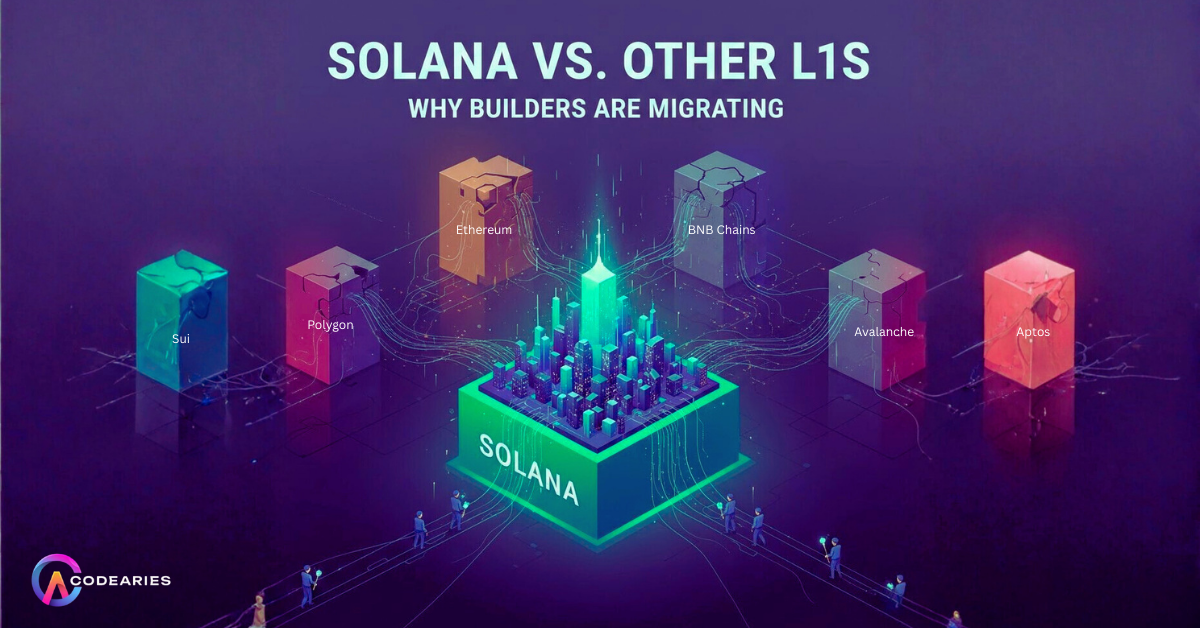
Solana is quickly becoming one of the most appealing layer one blockchains for developers in 2026. This rise is fueled by its impressive throughput, ultra low fees, consumer friendly applications, and a rapidly growing developer community. While many competing L1s are grappling with fragmentation or sluggish user growth, Solana is making strides. Although Ethereum still holds the crown in terms of overall maturity and developer numbers, an increasing number of projects are opting for Solana as their primary execution layer or are shifting consumer apps from other chains to take advantage of its speed, straightforward architecture, and expanding user base.
Why performance and cost matter for builders
When it comes to dApps, most consumers prioritize latency, cost, and reliability over ideological concerns. Solana consistently processes effective user transactions at around one thousand to fourteen hundred transactions per second (TPS) under real world conditions, with peak stress tests exceeding one hundred thousand TPS. Meanwhile, it maintains median transaction fees close to just $0.00025, over ten thousand times cheaper than the typical Ethereum mainnet fees, which hover around one to six dollars per transaction, and often exceed five cents on popular L2s. For applications like high frequency trading, payments, order book DEXs, gaming, and social platforms, where users expect web2 level responsiveness, these differences are significant, they can determine whether a product feels scalable and usable.
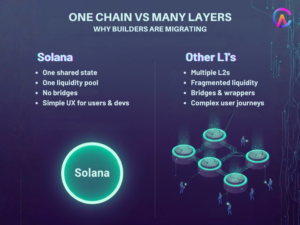
In contrast to ecosystems that rely on multiple L2s and sidechains for scaling, Solana employs a single, highly optimized L1 design. This approach means that all activities share the same state and liquidity, simplifying things for developers who would otherwise have to manage bridges, fragmented liquidity, and cross rollup user experiences. Reports indicate that by late 2025 and into 2026, Solana is handling more daily on chain trades and active addresses than most other chains, creating a vibrant environment that feels alive rather than just a testing ground.
Developer momentum and ecosystem depth
Developer traction is a solid indicator of future success. Recent data from Electric Capital and other tracking sources reveals that in the first nine months of 2025, Solana welcomed over 11,500 new developers, marking an impressive 83% increase year over year. This brings its active developer count to about 17,700, while Ethereum still holds the lead with nearly 32,000, albeit at a slower growth rate. The main difference lies in focus, Solana developers are increasingly working on payments, gaming, consumer apps, and DEX infrastructure, rather than just financial primitives or enterprise pilots.
Ecosystem metrics back up this narrative. Solana ranks high in DeFi TVL, stablecoin volume, and developer activity, with some reports placing it second in TVL, second in developer activity, and third in stablecoin transfer volumes. Retail facing infrastructure is also advancing quickly, with initiatives like Solana phones, a robust wallet ecosystem, and integrations with major exchanges and brokers enhancing visibility and usability for everyday users.
Solana vs other L1s what is different
When compared to other high performance Layer 1s like Avalanche, Cardano, Polkadot, and newer challengers, Solana presents a unique set of trade offs. Avalanche highlights subnet flexibility, while Cardano emphasizes formal methods and cautious upgrades. In contrast, Solana focuses on aggressive performance optimization and a unified base layer. This approach has drawn projects that prioritize shared liquidity and composability over custom app chains.
Benchmarks really showcase this performance advantage. Current stats indicate that Solana can theoretically handle up to sixty five thousand transactions per second (TPS) with fees hovering around just $0.00025. In comparison, Avalanche and Polygon manage around four thousand and seven thousand TPS, respectively, but with slightly higher fees. While Ethereum’s mainnet is still the go to for premium settlements, more and more everyday transactions are shifting to rollups and sidechains, which can add some mental overhead for users and complexity for development teams.
The perception of Solana has also evolved. In the past, reliability issues and outages led some critics to doubt its resilience. However, by late 2025 and into 2026, updates and improvements in tooling have prompted many analysts to label it as battle tested. Cboe Global Markets even filed for Solana linked ETFs, and major brokers have started supporting SOL trading, signaling a growing confidence from institutional players. This kind of endorsement is still quite rare among most Layer 1 competitors.
Why builders migrate from other chains
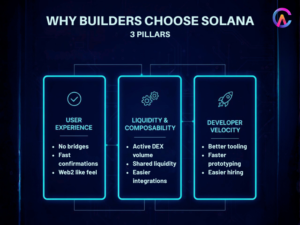
Developers tend to flock to platforms where they can quickly deliver value, delight users, and minimize operational risks. Three key factors stand out.
First up is user experience. Builders on Solana strive to keep things simple for users, avoiding the need to choose networks, manage bridges, or deal with lengthy confirmation times. For consumer applications like gaming, live social feeds, or on chain order books, even minor improvements in user experience can lead to better retention. Numerous reports highlight Solana as one of the most utilized chains for real commerce and payments, with some payment processors ranking SOL among the top seven cryptocurrencies for actual spending volume worldwide.
The second factor is ecosystem liquidity and composability. Many projects that initially launched on slower Layer 1s are finding more active liquidity and partnership opportunities by transitioning to Solana, where decentralized exchange (DEX) volume and NFT activity remain robust compared to its peers. Discussions on Reddit and various forums reveal that builders feel Solana better meets the needs of their applications, especially when it comes to managing thousands of small user actions per minute at a low cost.
Third, When it comes to developer tools and the learning curve, Rust and Solana’s unique paradigms can feel a bit daunting at first. However, the ecosystem has made significant strides with improved documentation, frameworks, and SDKs. Thanks to modern frameworks, much of the complexity is hidden away, allowing teams to whip up production ready prototypes in no time. On the flip side, some Layer 1 chains struggle with less developed tools and smaller developer communities, which can slow down debugging and hiring processes.
Tradeoffs and risks of choosing Solana
Solana isn’t without its risks. Its architecture is more intricate than some account based chains and requires high performance hardware from validators. Critics argue that this could impact decentralization compared to older chains that have lower hardware demands. Plus, while stress tests boast over one hundred thousand transactions per second (TPS), the actual user facing TPS usually hovers around one thousand to a few thousand, depending on the load and type of transaction. That’s still impressive, but those flashy marketing numbers can lead to unrealistic expectations.
The competition is fierce. Ethereum Layer 2 solutions like Base and zkSync are working to merge Ethereum’s security with speeds that rival Solana’s, all while keeping fees low. Meanwhile, alternative high speed Layer 1s like Sui are pushing the envelope with innovative programming models and parallel execution designs. Builders need to consider not just raw throughput, but also ecosystem stability, security assumptions, long term roadmaps, and regulatory factors.
Strategic use cases best suited to Solana
Certain areas really play to Solana’s strengths.
High frequency DeFi platforms, perpetual contracts, and order book exchanges thrive on sub second confirmations and low transaction costs, allowing users to adjust their orders without breaking the bank. On chain games and social applications can handle a ton of micro interactions, like moves, messages, and likes, directly on chain instead of relying on off chain state synchronization. Payment apps and remittance services benefit from predictable low fees and a speedy user experience for everyday transactions.
Founders working in these areas often see Solana as a sensible compromise, balancing the robust security of Ethereum L1 with the challenges that come with expanding through multiple rollups. They appreciate the flexibility to bridge assets to other chains for better composability, all while using Solana as their primary platform for user interactions.
How Codearies helps teams migrate and build on Solana
Codearies is here to support startups, enterprises, and Web3 projects looking to create native Solana applications or transition their existing dApps from other L1s with minimal hassle. For projects on Ethereum, BNB Chain, or other ecosystems, Codearies starts with a thorough review of the architecture and product, mapping out current contracts, user journeys, and infrastructure dependencies to their Solana counterparts.
The team then crafts a step by step migration plan. This might involve bridging liquidity, launching parallel instances on Solana during the transition, and gradually shifting user flows while ensuring compatibility with existing wallets and APIs. For new projects, Codearies offers comprehensive development services, including smart contract engineering in Rust, backend services, indexers, and frontends optimized for Solana’s performance.
Security is a top priority. Codearies focuses on thorough testing, simulating high load scenarios, and working with independent auditors to guarantee that Solana programs are secure, efficient, and upgradable when necessary. They provide monitoring and analytics dashboards that give teams real time insights into transactions per second, fees, and error rates, allowing for continuous improvements in user experience.
Since Solana excels in consumer applications, Codearies also assists with product strategy, UX design, and integration into the wider ecosystem, including wallets, DEXs, NFT marketplaces, and oracles. This all encompassing approach enables clients to concentrate on growth and community engagement while the technical intricacies of Solana development and migration are expertly handled by seasoned engineers.
FAQs
Q1: Why are more builders choosing Solana over other L1s?
Builders are flocking to Solana because it boasts impressive throughput, low fees, and a unified composable L1 environment. This makes it easier for consumer and DeFi apps to provide a web2 level user experience while tapping into a rapidly expanding user base.
Q2: How does Solana compare to Ethereum from a builder’s perspective?
While Ethereum is still the most established ecosystem, a lot of activity is moving to L2s, which adds complexity. In contrast, Solana provides a fast, low cost base layer where most activities occur natively, making development simpler for various use cases.
Q3: Can Codearies help migrate an existing app from another chain to Solana?
Absolutely, Codearies can assess your current architecture, design Solana compatible programs, and oversee a staged migration. This includes bridging liquidity, syncing state, and updating frontends, all without disrupting the user experience.
Q4: What types of projects benefit the most from Solana?
Projects like high frequency DEXs, perpetuals, games, social platforms, payment apps, and any workload that requires thousands of quick, affordable transactions per second typically see the greatest advantages when built on Solana.
Q5: How long does a typical Solana project take with Codearies?
The timeline can vary based on the project’s scope, but many teams can launch a minimum viable product (MVP) in about three to four months. More complex migrations or large scale products may take longer due to the need for security audits, integrations, and performance testing.
For business inquiries or further information, please contact us at