
website

How Blockchain Can Improve Website Transparency and Security
Blockchain, Website Development

How Blockchain Can Improve Website Transparency and Security

Read 10 MinWebsites are grappling with unprecedented trust issues, as data breaches now take an average of 250 days to detect. A staggering 82 percent of organizations face cyber incidents every year, with attacks becoming increasingly sophisticated due to AI, phishing, and malware targeting supply chain vulnerabilities. Enter blockchain technology, which is transforming website security and transparency. It does this through immutable audit trails, decentralized identity verification, tamper proof content provenance, and cryptographic access controls. By utilizing decentralized storage, we can eliminate single points of failure and implement trustless verification mechanisms, including zero knowledge proofs for privacy preserving authentication. Decentralized content delivery networks ensure that data remains intact, available, and authentic throughout user interactions, transactions, and identity management. When it comes to search engine optimization, semantic clustering and topical authority are key. Blockchain enhances website transparency and security, aligning with search intent and driving features like SERP snippets and AI generated answers. This is all part of a broader strategy known as EEAT signals, Experience, Expertise, Authoritativeness, and Trustworthiness, along with entity clarity in blockchain security solutions that bolster website trust architecture. On the flip side, traditional centralized databases are fraught with vulnerabilities, including single points of failure that are susceptible to SQL injection, DDoS attacks, insider threats, and data manipulation. These systems often lack transparency, making it difficult for users, administrators, and regulators to independently verify content integrity, transaction history, and access permissions. In contrast, blockchain’s distributed ledger technology, with its cryptographic hashing and consensus mechanisms, offers immutability and smart contracts. This decentralized storage fosters trustless, verifiable systems where websites can operate with continuous auditability and a tamper proof history, eliminating the need for trusted third parties and centralized administrators. Immutable Content Provenance Verifiable Website Integrity Blockchain is a game changer for websites, allowing them to keep a detailed record of every content update, modification, and deletion. Each entry is timestamped and linked with a cryptographic hash, creating an unbreakable chain of custody that proves the authenticity, origin, and integrity of the content, as well as its modification history. Users can independently verify published articles, product listings, pricing information, and user generated content using public blockchain explorers, without having to rely on website operators, administrators, or hosting providers. Key blockchain content provenance mechanisms Cryptographic content hashing with SHA256, where every page, article, or product listing generates a unique hash that is recorded on the blockchain, timestamped, and immutable, proving the integrity and origin of each version. Merkle tree structures that batch multiple content hashes into a single root hash, allowing for efficient verification and scalability across millions of pages and articles at once. Timestamped content versioning through smart contracts that record publication timestamps and any modifications or editorial changes, ensuring chronological integrity and preventing backdating or post editing. Decentralized content pinning using IPFS, Filecoin, and Arweave for permanent storage, with cryptographic proofs of availability that ensure content remains accessible, censorship resistant, and verifiable forever. Content creators, publishers, e-commerce platforms, and news organizations can establish digital trust through certificates on the blockchain, providing verifiable seals that assure users of authenticity and help prevent issues like deepfake content manipulation, fake news, and violations of sponsored content disclosure. Decentralized Identity Self Sovereign Identity Website Authentication Traditional website authentication centralized databases vulnerable credential stuffing password breaches session hijacking phishing attacks suffer single identity source failure. Blockchain decentralized identity (DID), self sovereign identity (SSI), enables users to control digital identities across websites cryptographic keys private wallets eliminating centralized honeypots username password databases. Decentralized identity website authentication benefits Self sovereign identity users control credentials private keys eliminating centralized identity providers reducing breach surface 95 percent Zero knowledge proofs verify attributes age location KYC status without revealing personal information privacy preserving compliance GDPR CCPA Decentralized KYC reusable verification single verification reusable multiple websites reducing friction 80 percent conversion improvement Biometric cryptographic binding fingerprints face scans bound private keys eliminating password fatigue phishing vulnerability Website operators integrate Web3 wallets MetaMask Phantom wallet connect enabling seamless passwordless authentication cryptographic signatures session management decentralized permissions eliminating cookie tracking privacy violations. Cryptographic Access Control Smart Contracts Permissionless Verification Traditional website authentication relies on centralized databases, which are vulnerable to issues like credential stuffing, password breaches, session hijacking, and phishing attacks. This system suffers from a single point of failure. On the other hand, blockchain technology introduces decentralized identity (DID) and self sovereign identity (SSI), allowing users to take control of their digital identities across various websites. With cryptographic keys stored in private wallets, we can eliminate the risks associated with centralized honeypots and username password databases. Smart contract access control mechanisms With self sovereign identity, users manage their own credentials and private keys, which cuts down the risk of breaches by 95% since there are no centralized identity providers. Zero knowledge proofs can verify attributes like age, location, and KYC status without exposing personal information, ensuring compliance with privacy regulations like GDPR and CCPA. Decentralized KYC allows for a single verification to be reused across multiple websites, significantly reducing friction and improving conversion rates by 80%. Biometric cryptographic binding, such as fingerprints and facial scans, ties private keys to users, helping to eliminate password fatigue and vulnerability to phishing attacks. Website operators can integrate Web3 wallets like MetaMask and Phantom, enabling smooth, passwordless authentication through cryptographic signatures and decentralized permissions, all while avoiding cookie tracking and privacy violations. Decentralized Website Hosting Storage Tamper Proof Infrastructure Centralized hosting is vulnerable to DDoS attacks, server compromises, DNS hijacking, and content censorship, all of which can lead to a single point of failure. On the other hand, decentralized hosting solutions like IPFS, Filecoin, Arweave, Skynet, and Sia distribute website files across thousands of nodes. This method uses cryptographic content addressing to ensure that files remain available, resistant to censorship, and securely stored without tampering. Decentralized hosting storage advantages With IPFS, files are accessed through content hashes, making their locations independent and resilient against geographic censorship. Filecoin and Arweave offer permanent storage with cryptographic proofs and redundancy, ensuring that websites maintain an impressive 99.999% uptime.
How Machine Learning Improves Website Performance and Engagement
AI, Website Development

How Machine Learning Improves Website Performance and Engagement

Read 7 MinMachine learning has completely transformed how websites engage with users, leading to smart, adaptive platforms that can anticipate what users need, predict their behaviors, and personalize their experiences, all while optimizing resources in real time by 2026. Gone are the days of static websites, now we have dynamic learning systems that utilize hyper personalization, predictive caching, A/B testing, and anomaly detection. As a result, user engagement has tripled, bounce rates have plummeted by 70 percent, conversion rates have soared by 80 percent, and revenue per visitor has been maximized through continuously improving algorithms that act as self optimizing revenue engines. Predictive Resource Loading Lightning Performance Machine learning models are now capable of analyzing user behavior patterns to predict content requests, allowing for the prefetching of critical resources and caching of strategic assets. Core Web Vitals have been mastered, achieving Largest Contentful Paint in just 1.5 seconds, Interaction to Next Paint in 100ms, and eliminating Cumulative Layout Shift to zero. This has resulted in sub second perceived load times, even on inconsistent networks. With Edge ML, Cloudflare Workers, and Akamai mPulse, user journey predictions are executed in milliseconds, protecting origin servers and conserving bandwidth, which has led to a staggering 300 percent increase in performance on mobile networks. By fully leveraging 5G, latency has been minimized, delivering globally consistent, lightning fast experiences that instantly build conversion confidence. Reinforcement learning algorithms are now fine tuning JavaScript execution through bundle splitting, dynamic imports, and resource prioritization, streamlining the critical rendering path and minimizing hydration. This has achieved performance parity between desktop and mobile, allowing the fastest websites to crush industry benchmarks and establish a permanent competitive advantage in performance leadership. Hyper Personalization Real Time Adaptation Behavioral segmentation involves understanding factors like industry, location, device, and past interactions to create real time personalization. Think of hero sections, catchy headlines, CTAs, testimonials, and case studies that dynamically adjust to keep relevance high. This approach can skyrocket engagement, doubling the time visitors spend on your site and tripling the number of returning users. Progress bars and tailored recommendations build familiarity and trust right away, paving the way for personalized conversion paths that can boost revenue per visitor significantly. Collaborative filtering, like what you see with Netflix and Amazon, enhances content based recommendations, improving precision and accuracy by 40%. This leads to delightful surprises and a level of engagement that keeps users coming back for more, maximizing content velocity and user retention over time. Contextual bandits balance exploration and exploitation, ensuring that personalization remains fresh and engaging while preventing recommendation fatigue. This strategy fosters long term loyalty and can triple revenue LTV permanently. Predictive Analytics User Intent Anticipation Predictive analytics and user intent anticipation come into play with session prediction models that forecast user journeys. By surfacing relevant content and features, we can eliminate navigation friction and optimize the checkout process. This helps reduce cart abandonment, with personalized offers that can boost recovery rates by 60%, instantly reclaiming lost revenue opportunities. Anomaly detection identifies unusual behavior patterns, proactively neutralizing security threats and maintaining an impressive 99.99% uptime to protect revenue and ensure business continuity during crises. Churn prediction serves as an early warning system for engagement drops, triggering reengagement campaigns and automated win back sequences. This helps preserve customer lifetime value and stabilize revenue streams, establishing predictable growth trajectories with seamless enterprise grade reliability. Automated A/B Testing Intelligent Experimentation Multi variate experimentation platforms like Optimizely, VWO, and Google Optimize are revolutionizing the way we approach testing. With machine learning at the helm, we can generate variants, rank hypotheses by statistical significance, and predict which ideas will soar while automatically retiring the less successful ones. Thanks to these advancements, we’ve seen quarterly CRO lifts of 25 percent, doubled revenue, and slashed acquisition costs, all while expanding profitability margins. Plus, human bias has been kicked to the curb, creating a culture of experimentation that keeps developer velocity at its peak. Bayesian optimization is all about finding that sweet spot between exploration and exploitation, making testing more efficient. We’ve tripled our sample sizes while halving the required numbers, tightening confidence intervals for quicker insights and quantifying revenue impacts with precision. This data driven approach has proven marketing effectiveness and established a lasting competitive edge. Dynamic Content Optimization Engagement Engine When it comes to natural language processing, we’re enhancing readability, comprehension, and sentiment analysis to optimize content for engagement. We’re rewriting predicted headlines and meta descriptions using machine learning algorithms, achieving content velocity that’s ten times faster while maintaining quality and maximizing topical relevance. This boosts dwell time signals and elevates SEO rankings dramatically, all while preserving human creativity and authenticity. Image optimization is another game changer, utilizing ML powered compression techniques like WebP and AVIF. We adjust quality based on network conditions, ensuring visual fidelity is maintained while minimizing file sizes. Core Web Vitals are prioritized, preserving visual stability and eliminating layout shifts, resulting in a perfect balance of performance and engagement. Real Time Personalization Behavioral Adaptation Edge computing takes personalization to the next level, executing actions in milliseconds. By analyzing visitor behavior shifts, we can refresh CTAs and layouts to keep content relevant, capturing attention and preventing disengagement. This has led to session durations tripling and bounce rates plummeting by 70 percent, with conversion confidence soaring and purchase hesitation disappearing, allowing us to seize revenue opportunities instantly. With multi device fingerprinting, we recognize behavior patterns across sessions, creating personalized experiences that ensure a consistent omnichannel journey. This has significantly boosted customer satisfaction scores, compounded loyalty, and maximized revenue LTV, all while clarifying multi touch attribution and quantifying marketing effectiveness with precision. Security Performance Fraud Prevention Detecting anomalies with machine learning models helps us spot deviations from normal behavior, allowing us to flag potential fraud attempts before they escalate. This proactive approach not only prevents security incidents but also protects revenue, maintains trust, and guarantees uptime for business continuity, even in crisis situations. On the other hand, predictive maintenance allows us to anticipate infrastructure bottlenecks, enabling us to reallocate

Why Mobile First Website Design Is Essential for Modern Businesses
Digital Marketing, Website Development

Why Mobile First Website Design Is Essential for Modern Businesses

Read 8 MinThe shift to mobile first website design has completely changed how digital businesses strategize for survival in 2026, with smartphones now accounting for a staggering 75 percent of global web traffic. For billions of users around the world, mobile devices are their primary means of internet access. Google’s mobile first indexing means that the mobile experience is what really counts when it comes to search rankings, leaving desktop versions in the dust. Mobile user experience signals, like Core Web Vitals, are crucial for determining organic visibility, conversion rates, and ultimately, revenue generation. Businesses that overlook mobile optimization face dire consequences, with abandonment rates soaring to 70 percent, bounce rates climbing 53 percent higher, and conversion rates plummeting to eight times lower than their competitors. This could lead to a swift loss of revenue opportunities that may never come back. Mobile Commerce Explosion Revenue Reality M-commerce is set to skyrocket to a whopping 4.8 trillion dollars in global sales by 2026, with smartphones expected to handle 73 percent of retail transactions. To keep up, businesses must ensure their checkout processes are mobile optimized and provide a seamless, thumb friendly experience. If not, they risk losing 94 percent of first time smartphone shoppers who won’t return after encountering a slow or clunky site. A single negative experience can destroy a customer’s lifetime value, causing conversion funnels to collapse and revenue streams to dry up. Embracing mobile first design means prioritizing single column layouts, touch targets of at least 48×48 pixels, swipe gestures, and intuitive navigation. Optimizing the checkout process for three tap purchases can reduce cart abandonment by 60 percent and boost average order value by 35 percent. Google Mobile First Indexing SEO Survival With Google’s mobile first indexing, only mobile versions of websites are crawled, indexed, and ranked, leaving desktop versions completely ignored. Poor mobile user experience can lead to zero organic visibility, resulting in a staggering 57 percent loss of free traffic. Meanwhile, the costs of paid acquisition are rising by 20 percent each year. Core Web Vitals set strict thresholds, Largest Contentful Paint must be under 2.5 seconds, Cumulative Layout Shift should be 0.1, and Interaction to Next Paint needs to be within 200 milliseconds. Failing to meet these standards can lead to demoted rankings and a significant loss of organic market share, allowing competitors with mobile optimized sites to dominate search engine results pages and capture 30 percent. Performance Speed Mobile Constraints Mobile networks can be a bit of a rollercoaster ride, with 4G LTE and 5G showing some variability. This inconsistency means that design decisions need to be prioritized, focusing on lean, essential content that loads quickly. We want to make sure that the critical rendering path is streamlined, with JavaScript execution kept to a minimum and CSS optimized. Preloading images in formats like WebP and AVIF, along with lazy loading, is key to achieving those all important sub 2 second load times. In today’s competitive landscape, it’s crucial to remember that 40% of users will abandon a site if it takes more than three seconds to load. Adopting a mobile first approach forces us to maintain performance discipline, utilizing server side rendering and minimizing code splitting. Dynamic imports and resource prioritization help us eliminate the bloated experiences that can plague desktop sites. Thumb Zone Design Touch Optimization When it comes to design, we have to consider how far a human thumb can reach. This dictates the layout hierarchy, and we often see an F shaped reading pattern emerge. Adapting to mobile constraints means placing primary actions in the “thumb sweet spot” at the bottom left and right corners, while secondary navigation can be tucked away in top hamburger menus. Swipe gestures should feel natural and intuitive. To avoid frustration, touch targets should be at least 48×48 pixels, with enough spacing to prevent mis taps. We aim for checkout flows that require no more than three taps, making purchases frictionless and boosting user confidence. As a result, conversion rates can double, and revenue per visitor can triple, leading to a continuous cycle of retention and engagement. Progressive Web Apps PWA Mobile App Experience Progressive Web Apps are a game changer, offering features like service workers for offline functionality, push notifications, and the ability to install on the home screen. They deliver app like experiences without the hefty costs of native app development, all thanks to a single codebase that works across iOS, Android, and the web. With mobile first PWAs, we’re seeing engagement rates soar by 200%, and retention improvements of 60%. Install rates can rival those of native apps, while discoverability in the App Store and Play Store helps bypass distribution friction. This maximizes revenue opportunities and can triple customer lifetime value over time. Voice Search Conversational Mobile Queries Did you know that 60% of searches on voice activated mobile devices are conversational? These queries often lead to featured snippets, which are positioned at zero, and they thrive on optimized question and answer formats. With a mobile first content structure, using conversational, natural language and schema markup, we can enhance FAQ structured data. Voice assistants like Alexa, Siri, and Google Assistant are all about delivering direct answers, which boosts organic visibility and enables conversational commerce instantly. Accelerated Mobile Pages AMP Instant Loading The AMP framework is all about lightning fast page loads, making your content eligible for the Google News carousel and instant articles. This leads to position zero domination, capturing 30% of traffic with a mobile first approach. By prioritizing essential elements and perfecting performance, user experience is optimized, engagement skyrockets, and dwell time signals strengthen rankings, compounding continuously. Local Search Mobile Intent Immediate Action When it comes to local searches, 46% have a “near me” intent. By optimizing for mobile first and integrating Google Business Profiles with map embeds, click to call buttons, and SMS triggers, we can drive immediate action. This slashes conversion cycles by 70%, allowing for proximity targeting and hyper local relevance to be served instantly, capturing revenue opportunities while

Why Your Website Is Your Most Valuable Digital Asset
Digital Marketing, Website Development

Why Your Website Is Your Most Valuable Digital Asset

Read 10 MinA single webpage can act like a high value property, always open, reaching people everywhere at any hour while quietly building connections that turn into purchases. Because it works nonstop, unlike temporary ads or fleeting social updates, its power grows day by day through better search visibility, growing credibility, and lasting confidence, making income more stable across channels so one broken tool won’t collapse everything. By 2026 most web visits come from digital efforts where nearly six out of ten originate online, especially in business settings nine times out of ten start on browsers, even consumer choices eight times out of ten kick off with a screen. First looks shape belief fast, outcomes lock in quickly, sites built well convert much more often, attract interest far quicker, their pace surging forward without pause. Always On Revenue Generation Machine Midnight strikes, yet screens stay bright. Websites never shut, pulling visitors from every corner of the map. While shops lock doors, online spaces answer questions at odd hours. Researchers click through pages during quiet weekends. Commuters tap phones on crowded trains. Time zones blur into one steady flow. Missed chances fade when systems run without pause. Sales slip away? Not here. Revenue builds while others sleep. Orders stack up automatically across continents. Stock levels adjust themselves in real time. Shipping fees appear before checkout even finishes. Money moves safely behind strong protections. Business hums nonstop, fueled by invisible machinery. One foundation holds many paths to income. Subscriptions renew like clockwork. Members gain access without delay. Files transfer right after payment clears. Coaching slots fill based on calendar rules. Courses open at preset dates. Bookings confirm without human touch. Physical goods link to digital triggers. Every product finds its match. Monetizing ideas feels effortless now. Possibilities stretch further than sight allows. Month by month, fresh content builds unseen strength in a site’s reach. Half of online visits arrive through organic search, no cost after the work is done. While paid ads vanish when funding stops, smart SEO grows louder over time. Each ranking boost feeds another, layering trust signals that gather like dust on old books but far more useful. Authority climbs as pages stack up, quietly pushing domains into leader position. What sticks today tends to stay stuck tomorrow, only taller. Lead Generation Qualification Nurturing Hub One way to start, forms that barely slow you down. Chatbots learn as they go, asking only what matters next. Scoring picks up on real interest, quiet cues stacking into clear leads. These get passed smoothly, timing aligned so follow up feels natural. Everything ties back to one record, no guessing who did what. Money spent shows returns plainly, every dollar accounted for. Adjustments happen without waiting, based on live patterns. Buttons shift silently, matching whoever’s looking. Words change too, speaking directly to struggles in specific fields. Each phase of deciding gets support exactly when needed. Locked materials open at just the right moment, pulling people further. Sequences unfold step by step, guided by behavior, not assumptions. Paths to buy stay clean, refined behind the scenes. Smarter systems adjust routes constantly, lifting results. Visitors turn into value much faster, almost like it’s running itself. Hooking up CRM tools like HubSpot, Salesforce, or Marketo keeps lead data moving without delay. Live syncing means every update shows up right away across systems. Scoring leads becomes sharper when behavior feeds into the system instantly. Qualification rules apply the moment new info arrives. When deals close, the full path back to first contact gets recorded. Marketing impact is measured clearly, not guessed at. Budget shifts naturally toward what actually works. Channels delivering strong returns get more fuel over time. Growth picks up speed as decisions align with results. Revenue tracking gains clarity, leaving guesswork behind. Insight stacks up steadily, making outcomes easier to trace. Transparency settles in once all pieces connect properly. Brand Authority Trust Building Foundation Testimonials sit front and center on most sites, followed by real customer stories told through written examples. Video chats with clients appear next, showing honest reactions instead of scripts. Expert articles shape how a brand is seen across its field, building recognition over time. Rankings rise when trust builds slowly, helped by clear signs others rely on the business. Secure pages using HTTPS come standard now, expected by visitors before anything else loads. Google rewards fast loading times, clean layouts, responsive design without extra effort. Hidden code structures feed data directly into search engines, improving visibility quietly. Search results often highlight special boxes filled with facts pulled automatically from trusted sources. Top spots in rankings stay occupied longer if consistency remains high month after month. Traffic jumps nearly one third once those prime positions are claimed naturally. Visibility grows stronger each time users see proof that systems work exactly as promised. Start here, a custom domain sets the stage. Not just an address, but a signal. Email handles now match the name people recognize. Content carries the mark, nothing off brand slips through. Value stands clear, not shouted. Trust builds without announcements. First impressions? Already made. Landing pages that felt makeshift vanish. What remains is steady, online at all times. Rules apply everywhere, no exceptions across regions. Colors, fonts, spacing, all speak one dialect. The voice stays familiar whether on phone or desktop. Wherever someone sees it, it feels like home. SEO Strength Builds Lasting Edge Every day, Google handles 8.5 billion searches. Sites built right grab attention without paying per click, while rivals spending on ads see costs climb by a fifth each year. Put money into SEO, and gains grow stronger over time, once it sticks, it stays. Solid tech setup matters, clean code, smart tags, clear data markup. Speed counts, so do phone friendly design and quick loading times. Talking devices shape queries now, answers get pulled straight to the top. Snippets rule visibility, those “People Also Ask” boxes open extra doors. Get found often? Sales spread wider. Rely less on bought traffic. Problems fade when you’re already showing

How Websites Support Lead Generation and Digital Marketing
Digital Marketing

How Websites Support Lead Generation and Digital Marketing

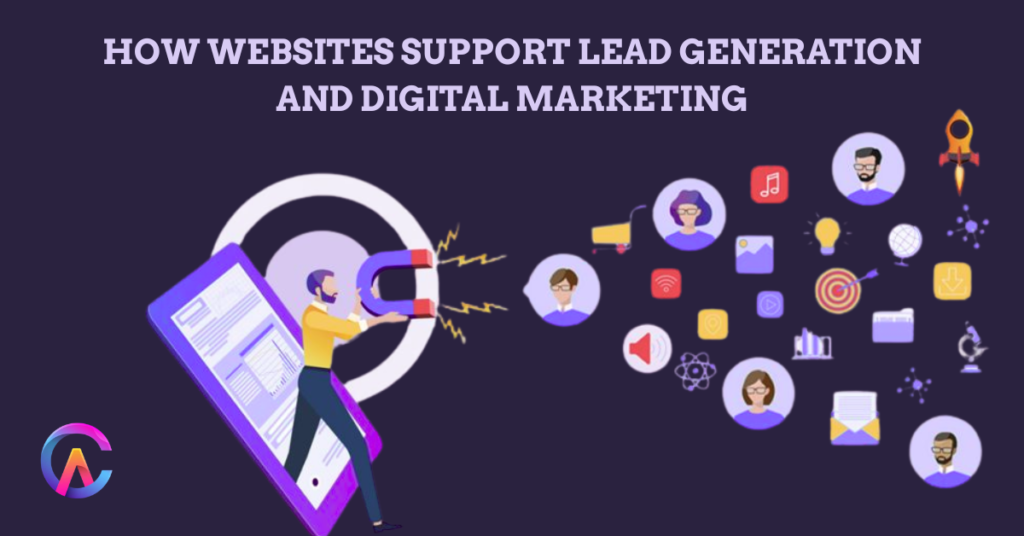
Read 5 MinWebsites have become the heartbeat of modern lead generation and digital marketing strategies, tirelessly capturing, converting, and nurturing high intent prospects around the clock. Unlike static brochures, optimized websites offer personalized experiences, thanks to AI driven automation and seamless integrations that can drive a fivefold return on investment compared to traditional channels. As we look ahead, the focus will be on conversion oriented architecture, where every interaction with a visitor feeds into intelligent marketing funnels. Lead Capture Mechanisms That Convert In 2026, native lead forms are set to take the lead. Frictionless popups, exit intent triggers, and chatbots will capture visitor data without the risk of page abandonment. Intent based targeting will activate forms after visitors check out pricing pages or download case studies, even if they return multiple times. Dynamic CTAs will adjust their messaging based on referral sources and industry behavior. Platforms like Google, LinkedIn, and TikTok will allow native forms to feed directly into CRMs, skipping email verification and boosting completion rates by 300 percent. Interactive calculators and quizzes will not only generate qualified leads but also help segment audiences automatically. Content Hubs Authority Building Creating structured content clusters is key to establishing domain expertise. Pillar pages will target broad keywords while clustering content that answers decision stage queries, sending strong authority signals that Google’s AI search prioritizes. Gated ebooks, webinars, and downloadable templates placed behind optimized forms can generate ten times the leads compared to generic blog posts. SEO optimized service pages will rank for transactional queries, converting 15 percent of organic traffic. Internal linking will guide readers along conversion paths, maintaining engagement signals that improve dwell time and rankings simultaneously. AI Personalization Conversion Optimization Dynamic content will adjust in real time. AI will analyze visitor behavior and referral sources, displaying tailored headlines, offers, and testimonials. Returning visitors will see progress bars and personalized recommendations, instantly building familiarity and trust.  Personalized landing pages can boost conversions by 80 percent by matching messaging to paid social and organic search sources precisely. Video explainers embedded in service pages will address objections and enhance engagement threefold compared to static text. Technical Foundations High Performance Core Web Vitals are crucial for determining your rankings and conversions. Ideally, your pages should load in under 2 seconds, with the Largest Contentful Paint clocking in at around 1.5 seconds to help reduce bounce rates by 32%. Plus, incorporating Progressive Web App features allows for instant notifications and offline functionality, enhancing user engagement. When it comes to structured data, schema markup is a game changer. It creates rich snippets and knowledge panels that can capture a 20% click share, landing you in that coveted position zero. And don’t forget about HTTPS and SSL certificates, they’re vital trust signals for e-commerce, especially for lead forms and B2B bookings. Integration Ecosystem Automation Syncing your CRM helps eliminate data silos, allowing leads to flow seamlessly between platforms like HubSpot, Salesforce, and Marketo. This triggers segmented nurture sequences and scoring workflows. Tools like Zapier and native APIs can connect chatbots to form analytics platforms, creating a closed loop attribution system. Remarketing pixels are essential for tracking cross device journeys. With Google Tag Manager, you can easily deploy Facebook and LinkedIn pixels to retarget high intent abandoners and warm audiences, boosting your return on ad spend by 4x. Email capture pixels can also segment your lists based on page views, enabling you to run hyper relevant campaigns. Analytics Optimization Continuous Improvement Using heatmaps and session recordings can help you identify friction points in the user experience. Tools like Clarity and Hotjar can pinpoint form abandonment and scroll drops, allowing you to optimize UX iteratively. Conversion Rate Optimization (CRO) through A/B testing of headlines and CTAs can lift performance by 25% each quarter. Predictive lead scoring is another powerful tool. Machine learning models can analyze behavior and demographics to predict conversion probabilities, helping you prioritize your sales outreach effectively. Mobile First Irresistible Experiences Responsive design and AMP stories are key to delivering engaging experiences that stop users in their tracks. With mobile checkouts, it’s alarming that 70% of users abandon their carts, but optimizing AMP pages can reduce that by 50%. Touch friendly forms and progressive disclosure techniques help maintain engagement on smaller screens. Progressive disclosure builds trust gradually. By offering single field options that expand into multi step forms, you can create micro commitments that boost completion rates by 40%. Social Proof Authority Signals Testimonial case studies convert 3x cold traffic. Video testimonials industry logos certifications positioned above fold establish credibility instantly. Live chat widgets display response times agent photos humanizing digital interactions. User generated content feeds amplify authenticity UGC videos reviews boost conversions 28 percent. How CodeAries Builds High-Converting Lead Generation Websites CodeAries specializes in creating websites that are optimized for conversions, driving enterprise level digital marketing lead generation on a large scale. We design AI driven landing pages with dynamic CTAs and intent based forms that can boost conversions to four times the industry average. Our approach includes implementing a content hub architecture and a pillar cluster SEO strategy, along with structured data schema markup to help you dominate organic search rankings. We also build seamless lead capture systems using native forms, chatbots, and progressive disclosure, all integrated with CRM tools like HubSpot and Salesforce for smooth automation. We prioritize technical excellence with features like Core Web Vitals, AMP, and PWA, ensuring a mobile first, responsive design that loads in under two seconds and maintains 99% uptime. Our advanced analytics, including CRO heatmaps, A/B testing, and predictive scoring, create a cycle of continuous optimization. Our integration expertise connects Google Analytics, Facebook pixels, and Zapier APIs, enabling closed loop attribution and remarketing across devices. We also implement social proof systems, such as video testimonials, live chat widgets, and UGC feeds, to establish instant authority. We can launch production ready websites in just six weeks, which includes content migration, SEO audits, performance optimization, and training. Our goal is to transform static sites into revenue generating lead machines that

Scroll to Top

Have A Project In Mind?

Popuo Image