
Out in 2026, blockchain steps into real world use, built less for hype and more for function. Work by coders now serves large organizations needing strong, reliable frameworks. Value moves not through gambling like apps but steady platforms handling actual assets. Machines run tasks automatically, guided by rules coded deep in software layers. Proof systems keep data tight without slowing things down. Networks link physical gear, cameras, sensors, storage, with shared digital ledgers. Chaining different blockchains together lets value shift smoothly across borders. Finance gets rebuilt, also supply tracking, medical records, personal verification, all designed to meet legal standards. Speed hits levels once thought impossible, with hundreds of thousands of transactions handled each second. Trust shifts from middlemen to math, cutting out unnecessary oversight. Big money arrives, from pension pools, state reserves, asset managers like BlackRock and Fidelity, who start turning bonds, buildings, crops into tokens. That wave pushes total locked value past a hundred billion dollars. Most traffic settles on upgraded versions of Ethereum, plus standalone speed focused chains such as Solana and Hyperliquid.
This path points toward top performing blockchain setups expected by 2026, mixing hands on tech insight with real world rollout data. Live project outcomes shape each phase, guided by CodeAries’ track record in shipping functional systems. Builders move from concept to fully operating dApps using proven workflows. Mainnet launches become reachable within eight weeks for core versions. Full scale deployment finishes in roughly three months, backed by repeatable methods.
1) RWA Tokenization Platforms Guide Institutional Investment
Fraction after fraction, pieces of reality start living inside blockchains, property, debt, green promises, money markets, all turned into digital chunks by builders throughout 2026. Ownership splits smaller now, trading never stops because circuits keep ticking day and night alongside checks built right in. Names like Centrifuge appear next to giants such as BlackRock while new brands carve space using strings of code named Ondo or BUIDL. Two billion dollars worth of safe assets already reshaped this way letting anyone with clearance reach yields through glass walls guarded by keys and identity gates. Coders craft locked rooms where only verified people enter pools fed by sensors from Chainlink tracking value shifts triggering payoffs across borders without central handshakes. Crossing between networks becomes routine once pathways open under structured rules connecting demand to dormant wealth waiting just beyond bridges. Size of opportunity whispers ten trillion when silence settles around those numbers buried beneath layers of motion.
Billion dollar volumes surge through platforms like Polygon and Avalanche, backed by Fireblocks plus Copper handling institutional custody. Automation reshapes finance, smart contracts manage capital calls, slash delays in distributions. Dynamic discounting emerges alongside tokenized invoices, streamlining supply chains. That shift unlocks a 20 trillion dollar horizon, quietly transforming how value moves.
Top Real World Asset Chances 2026
- Funds once locked in Treasury bills now float as tokens. Five percent APY draws eyes, but slowly. Not banks, infrastructure built like BlackRock’s takes hold. Custody shifts toward institutions, quiet and deep. Gains come not from noise, but structure forming underfoot
- Commercial real estate fractional NFTs rental cashflow secondary markets
- One way businesses handle payments is through private credit. Receivables let companies get cash faster. Dynamic discounting rewards early payment. Firms trade these terms directly. Cash flow improves without banks involved
- Carbon credits ESG compliance verifiable provenance chainlink oracles
- Luxury art wine fractional ownership compliant marketplaces
2) AI Agents with Verified Thinking
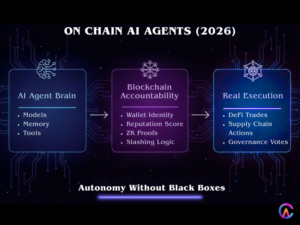
Out of nowhere, AI driven bots began reshaping how blockchains handle decisions by 2026. Instead of guessing, these smart programs run freely inside decentralized apps that track every step they take. Hidden flaws like false outputs or skewed logic get exposed through transparent records built right into the system. On networks such as Bittensor, using TAO coins, machines trade insights while learning from each other. Meanwhile, Fetchai’s FET ecosystem pushes digital workers to cooperate, earn rewards, then bet on future outcomes together. Some focus on financial moves within DeFi; others fine tune delivery routes across global suppliers. Behind the scenes, coders are slipping zero knowledge machine learning checks into contracts so models can prove honesty without revealing secrets. Trust builds when systems punish rogue actions, slashing stakes if something misbehaves. Over time, self running traders shift funds where returns climb highest, all verified, all recorded.
Out in the real world, systems handle massive scale, think Polymarket level traffic, with smart bots managing data flow, user queries, support tasks, even rule adjustments. Verification kicks in through zero knowledge checks, locking down how models weigh choices so results stay honest inside company networks using decentralized web tools.
AI agent builds capturing 2026 mindshare
- Prediction market agents oracle aggregation betting volume
- Autonomous DeFi executors flash loans arbitrage multi chain
- Supply chain AI predictive inventory IoT provenance
- Customer agents personalized underwriting NFT management
- Governance agents DAO treasury proposal simulation
3) Modular Blockchains with Custom Stacks
One million transactions per second become possible when blockchains split tasks into separate layers. Execution shifts away from settlement, opening doors for focused rollups and independent networks. Instead of one size fits all designs, systems now match needs, gaming, money, ID, physical networks each get custom setups. Developers piece together tools, consensus through Celestia, processing via zkEVMs, storage on EigenDA. Costs drop a hundredfold thanks to leaner data handling by layers like Polygon’s AggLayer. ZK proofs secure activity while keeping things running on familiar EVM foundations.
Out of the gate, live blockchains like zkSync Era and Starknet handle huge volumes while managing billions in value. Security gets a boost through restaking, backed by strong bridges and oracle networks that share protections. For builders, tools blend together, OP Stack meets Move VM, enabling faster processing via parallel systems. Gaming worlds come alive using these engines, driving digital economies directly on chain. Each layer stacks up without bloating the core.
Modular stack components 2026
- Data availability Celestia Avail 100x cost reduction
- Execution zkSync Era Polygon zkEVM parallel EVM
- Settlement Ethereum L1 EigenLayer restaking
- Interoperability IBC CCIP cross chain messaging
4) Defi infrastructure built for institutions
Who knew DeFi could blend big money pipelines with open access? Institutional interest now slips into hybrid setups where some parts check identities while others stay wide open. Pools with approval steps sit beside free for all zones built for everyday users. Built in flexibility lets pieces snap together like loose puzzle bits across systems. On zkSync Era, activity hums quietly beneath the surface. Over at Hyperliquid, numbers climb, billions locked, orders stacking live on chain. Centralized depth feeds decentralized markets more smoothly than before. Perpetual bets find new homes across emerging DEX fronts. Behind scenes, intent based engines take aim at what people actually want. Goals get met without manual clicks. Gas worries fade through smarter handling. Identity layers shift silently under reworked account designs. Everything stitches tighter. The feel of using it? Lighter, Smoother, Just works.
One way to look at it, EigenLayer handles restaking, while Karak locks down rollups, bridges, and oracles through shared security. Around 100 billion worth of ETH gets pulled into that system. Lending vaults show up next, built by developers who also craft tokenized treasuries. Rates shift on their own, tied to live conditions. Options appear alongside volatility focused setups. Big players start using these tools to manage risk more quietly.
Institutional DeFi primitives
- Permissioned pools KYC whitelists audit trails
- Intent solvers multi chain execution abstraction
- Restaking protocols shared security marketplaces
- Always on trading platforms hold vast sums locked inside. Billions stay active across decentralized exchanges. Order systems run nonstop, tracking every move
- RWA collateral lending dynamic interest
5) Zero Knowledge Proofs Enable Privacy Without Sacrificing Scale
By 2026, zero knowledge proofs will stretch base layer systems, privacy rules met, speed hits a hundred thousand transactions each second, EVM rollups doing the heavy lift. Off mainchain, operations get verified by tools like zkSync Era, Polygon, Hermez, and Starkware; outcomes anchor to Layer One where sums near a billion shift through. Building apps? Coders weave in ZK driven IDs, reveal only what’s needed, track goods with verifiable trails, run machine learning inside private environments, keep computation sealed.
Hidden payments through Railgun keep user details private, using zero knowledge checks instead of ID scans. Moving between blockchains works thanks to compact validators and shared proof systems. Financial history like scores or age stays off ledgers while meeting rules. Trustless links form when networks confirm data directly, not via middlemen.
ZK applications exploding 2026
- Scale ZK rollups EVM compatible 100k TPS
- Privacy stablecoins shielded transactions
- Compliance ZK KYC selective disclosure
- AI zkML inference proofs model provenance
- Verification of light clients happens through Interop ZK bridges
6) Tokenized hardware economies in DePIN networks
Out of thin air, machines earn tokens by sharing internet signals and space for data. Some networks turn routers into mini cell towers, others store files across scattered drives worldwide. Picture millions of gadgets feeding power, Helium hits two million nodes, while Filecoin guards thirty exabytes. Processing muscle gets pooled too, like io.net linking GPUs for artificial intelligence runs. Builders dive in, setting up rewards for participation, penalties for cheating, location checks, live price shifts. Proof systems track real world actions, shaping markets that adapt on the fly.
A single model might shift how machines learn when hardware spreads through factories. Machines talk without central control while signals pass between clinics and power grids. Some devices track storms using small transmitters linked across open ledgers. Others pull real data into secure loops where trust runs on proof, not promises. Growth happens quietly as nodes replace old systems in plain sight.
DePIN categories scaling
- Compute Render io.net Bittensor GPU AI grids
- Storage Filecoin Arweave permanent data
- Wireless Helium IoT coverage
- Sensors oracles weather supply chain
7) Cross Chain Interoperability Multi Chain Liquidity
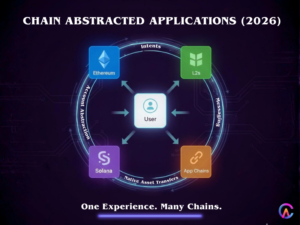
Fifteen blockchains link through LayerZero, using atomic swaps plus shared messaging systems like IBC or CCIP. Messaging happens across chains via Wormhole, while Axelar supports secure data transfer between networks. Builders create decentralized apps that work everywhere, powered by intent based logic and smooth user flows. Accounts stretch across chains thanks to abstraction layers underneath wallet interfaces. User experience stays fluid even when moving assets far between ledgers. Circle enables direct USDC movement with CCTP, cutting out middle steps. Transfers occur natively, avoiding wrappers or extra confirmations. Anoma builds structures where solvers coordinate actions across many chains at once. Each piece fits into a larger system handling complex tasks without friction.
Tokens move between games like tools that fit different worlds. Not just items but places too, traded where players gather. Markets guess what happens next, fed by data stitched together. Big money moves need invisible chains beneath the surface. One pool of value feeds many apps at once. Holding it all means tracking pieces spread far and wide.
Interoperability protocols 2026
- One way to link blockchains is through LayerZero. Another path appears with CCIP handling transfers across systems. Messaging happens on IBC too, connecting about 150 different chains in various ways
- Bridges CCTP native asset transfers
- Intents Anoma multi chain execution
- Chain abstraction wallets unified UX
How CodeAries Helps Customers Build 2026 Blockchain Projects
CodeAries is all about delivering comprehensive blockchain development, transforming the trends of 2026 into real-world applications. We’re talking about 8-week MVPs and 3-month mainnet launches! Our expertise lies in RWA platforms, AI agents, modular rollups, ZK proofs, and DePIN cross-chain solutions. The CodeAries portfolio features projects like SalvaCoin, RWA DeFi hybrids, SissyToken, and zkEVM gaming, boasting a whopping 200M TVL in compliant pools.
Core CodeAries blockchain services
- RWA tokenization, oracle integration, custody, KYC, Chainlink feeds, redemption, settlement, and vaults
- AI agent frameworks, zkML for verifiable execution, Bittensor coordination, and DeFi executors
- Modular rollups including Celestia, EigenLayer, Polygon, AggLayer, and custom execution layers
- Institutional DeFi with permissioned pools, restaking, intent solvers, and KYC audit trails
- ZK infrastructure focusing on privacy rollups, compliance credentials, and zkML inference
- DePIN marketplaces featuring hardware staking, geolocation oracles, and dynamic pricing
- Cross chain bridges like LayerZero, Axelar, atomic swaps, and messaging protocols
Our teams are skilled in deploying zkSync, Polygon, and Solana enterprise APIs, along with monitoring, alerting, and compliance pools, plus smart contract audits and CI/CD pipelines. Clients can expect to go to market 50% faster, with regulatory compliance and production monitoring streamlined for efficiency.
FAQs
Q1: Which blockchain projects are attracting the most institutional capital in 2026?
RWA tokenization platforms, AI agent dApps, and institutional DeFi modular rollups are leading the charge, capturing significant flows from BlackRock and Fidelity, with a projected growth of 100 billion in total value locked (TVL). CodeAries is working on production ready RWA vaults, zkML agents, and hybrid DeFi compliant pools, all set for an 8 week delivery timeline.
Q2: How do modular blockchains facilitate custom infrastructure?
Modular architectures separate data availability from execution and settlement, allowing for an impressive 1 million transactions per second (TPS) across gaming, finance, and decentralized physical infrastructure networks (DePIN) like Celestia and EigenLayer stacks. CodeAries is putting together custom rollups using Polygon AggLayer and zkSync Era, all EVM and ZK compatible, and ready for the mainnet.
Q3: Why are ZK proofs taking the lead in development for 2026?
ZKPs provide privacy, compliance, and scalability, achieving 100k TPS with EVM rollups, shielded transactions, and selective disclosure for zkML inference. CodeAries is integrating zkSync Era with Polygon and Hermez to offer enterprise level ZK identity credentials and confidential computing solutions.
Q4: Which DePIN networks promise the highest return on investment?
Compute GPU grids, Render io.net, Bittensor for AI training, and wireless Helium storage through Filecoin are at the forefront of tokenized hardware economies. CodeAries is developing staking, slashing, geolocation oracles, and marketplace contracts for production deployments.
Q5: How does CodeAries speed up blockchain launches in 2026?
CodeAries oversees the entire lifecycle from concept to MVP, mainnet audits, and compliance monitoring, delivering institutional grade infrastructure 50% faster. The SalvaCoin and SissyToken portfolio showcases RWA, DeFi, AI agent, and zkEVM execution with a live total value locked of 200 million.
For business inquiries or further information, please contact us at