
The social media landscape is changing. Data privacy is no longer just a compliance requirement, it is now a key feature, a competitive edge, and an essential demand from both users and regulators. With growing concerns about surveillance capitalism, data breaches, algorithm misuse, and user tracking issues, social media companies in 2025 face a clear challenge: create privacy first, trust-centered platforms or risk fading away.
This blog looks at how data privacy shapes the future of social media, the new laws and social pressures driving this change, and how Codearies helps clients design and lead in this trust-driven digital age.
A Decade of Data Controversies
Major scandals, from Cambridge Analytica to ongoing credential leaks at large networks, have undermined public trust. Surveys from 2025 show that over 72% of users are now “very concerned” about how social platforms collect, process, and share their personal data.
Companies face backlash for:
- Unconsented tracking (on platform & cross web)
- Selling user data to third parties and advertisers
- Insufficient transparency about algorithms and profiling
- Inadequate data security or breach disclosures
Consumers now demand strong privacy controls, clear insights into data usage, and the right to opt out or completely erase their digital footprints
Regulatory Tsunami: How Laws Are Forcing Platform Change
India’s Digital Personal Data Protection Act, 2023 (DPDP Act)
India, one of the largest social media markets, has introduced the DPDP Act (with strict rules applied in 2025):
- Explicit consent for all personal data collection
- Clear notices: Users must be informed, in simple terms, about what data is being collected and why.
- Right to withdraw consent and have data erased (“right to be forgotten”)
- Severe penalties for breaches or unauthorized use
- Requirement for data minimization: Only essential data should be collected or processed
- User data portability: Customers can move their data between services.
Global Privacy Trends
- GDPR (Europe): Sets the gold standard for data rights, minimization, and breach notifications.
- CCPA/CPRA (California): Gives US consumers the right to opt out, request transparency, and control sensitive information enforced by the California Privacy Protection Agency in 2025.
- A mix of new state, national, and sectoral privacy laws requires platforms to adapt to local compliance and offer tailored user controls.
Increasingly, platforms need to create global privacy strategies that adjust to different legal frameworks or risk heavy penalties, user loss, and damage to their reputation.
Next Gen Data Privacy: Platform Features, Principles, and Technologies
To succeed, future social media platforms must incorporate privacy into every part of their design, architecture, and culture. This includes:
Privacy By Design Principles
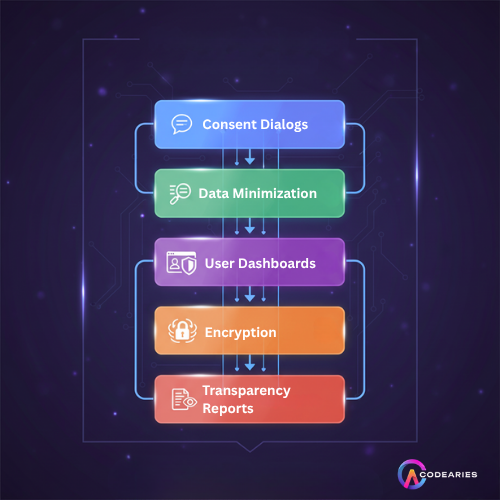
- Clear, granular consent dialogs
- Zero default opt in for sensitive tracking or sharing
- Data minimization: Only collect what’s truly needed
- User dashboards: Easy to use settings for data access, portability, deletion, and preference management
- End to end encryption on messages, media, and even some profile data
- Transparency reports: Regular disclosures regarding data usage, policies, and third-party data requests
- Ethical algorithm design: Limit manipulative targeting, profiling, and dark patterns
Cutting Edge Tech Enablers
- Federated, decentralized platforms: Data is stored and processed locally, not centrally
- Differential privacy and anonymization in analytics and ads
- On device processing to minimize server side data exposure
- Blockchain based consent and audit trails for true data tracking

User Experience: The New “Privacy UX” Paradigm
Future users will prefer platforms that:
- Provide clear, straightforward privacy settings (no hidden toggles)
- Allow them to view and control every bit of collected information
- Automatically notify and address issues in case of a breach
- Make privacy and trust central to the brand (“your data never leaves your device”)
The ROI of Privacy: Why It’s Good Business
- Platforms with strong privacy features experience better user retention, trust levels, and willingness to recommend scores.
- Better compliance lowers the risk of fines and negative public relations.
- Brands that lead in privacy can create new revenue streams, such as paid, ad free options or privacy focused social ecosystems.
- As AI and personalization evolve, transparency in how data trains algorithms is essential for gaining public trust.
How Codearies Helps You Build Privacy First Social Media Platforms
At Codearies, we assist you in turning privacy from a risk into a strategic advantage
Our solutions include:
- Privacy first architecture: Design platforms with built in encryption, data minimization, secure APIs, and local or on device storage when possible.
- GDPR, DPDP Act, CCPA, and global compliance: Comprehensive workflows that weave privacy into international laws and ensure your product is ready for launch everywhere.
- User centric privacy UX: Intuitive dashboards for data rights, deletion, portability, and transparency.
- Smart consent management: Detailed, context aware consent pathways and consent history logs, compliant with the strictest standards.
- Privacy impact assessments and audits: Ongoing review and improvement of your data workflows, profiling, and breach responses.
- Custom privacy solutions: Blockchain based consent tracking, federated processing, and privacy preserving advertising models to set your brand apart.
With Codearies, you don’t just comply; you lead by building platforms that users appreciate and regulators trust.
Frequently Asked Questions
How can Codearies help my platform comply with new global data privacy laws?
We conduct a complete compliance audit, implement necessary technical and process controls, and ensure your product aligns with India’s DPDP, Europe’s GDPR, California’s CPRA, and more.
Does Codearies offer solutions for user-facing privacy settings?
Yes! We create and develop custom privacy dashboards, helping users manage their data and preferences with clarity and ease.
Can you integrate privacy features into an existing social media product?
Certainly, We can enhance existing apps and systems with consent management, encryption, or new data rights features.
How do Codearies solutions handle data minimization and security?
We make sure your system only collects, stores, and processes the minimum necessary data, uses industry standard encryption, and undergoes regular compliance audits for threats.
What is the typical implementation timeline for privacy-focused platform development?
Most projects take 3 to 6 months from audit to deployment, including compliance, UX design, and engineering, along with ongoing testing and updates as regulations change.
For business inquiries or further information, please contact us at contact@codearies.com info@codearies.com