
Author name: contact codearies

Codearies@12345678

Why AI Agents Are the Next Big Frontier in Automation
AI

Why AI Agents Are the Next Big Frontier in Automation

Read 8 MinAI agents are stepping up as the next big thing in automation. They’re not just about responding to single prompts or following fixed scripts, they can actually plan, act, and adapt throughout entire workflows. Unlike traditional bots or rule based systems, these modern agents grasp goals, analyze context, select tools known as APIs, and keep iterating until they achieve the desired outcome. This transformation turns software from a passive responder into an active collaborator, capable of managing projects, running operations, and coordinating with humans and other systems with minimal oversight.            From static automation to autonomous agents In the past, traditional automation has been all about handling narrow, repetitive tasks like sending emails, updating records, or transferring data between systems. These processes can be quite fragile. If something changes or an error pops up outside the predefined rules, the automation fails, and humans have to step in. AI agents change the game by blending language understanding, reasoning, and tool usage. They can make sense of vague requests, determine what needs to be done, and break tasks down into manageable steps, even when conditions shift. Picture this: you tell an agent to research a new market, identify fifty promising leads, draft personalized outreach messages, and input them into your CRM. A traditional script would require strict templates and flawless inputs. But an agent can search, synthesize information, spot duplicates, adjust the tone for different segments, and recover from hiccups like missing emails or API limits. Over time, it learns which prospects are more likely to convert and fine tunes its own strategy. Automation evolves from handling single tasks to achieving comprehensive outcomes. Key capabilities that make AI agents different There are several key features that set agents apart from older automation methods and simple chat assistants. Goal orientation is a major one. Agents work towards objectives rather than just following instructions. You might say, “Grow newsletter signups this month” or “Reduce customer response time,” and they’ll choose the best tactics within the set boundaries. They don’t just provide answers, they actively pursue goals. Tool use: Agents have the ability to tap into external tools, apps, and APIs. They can execute database queries, trigger workflows, send messages, or even run code. This capability allows them to connect human language with digital systems seamlessly. Memory and context: Agents keep track of their ongoing tasks in a working memory, and sometimes they even remember long term details like preferences, history, and rules. This continuity enables them to manage multi step projects instead of just handling one off interactions. Self evaluation: Many agent frameworks incorporate loops where the agent reviews its own work, measures outcomes against goals, and tries again with a refined approach. This reflective process marks a significant advancement beyond the traditional fire and forget automation. Coordination: Agents can communicate with other agents or humans, negotiating tasks and sharing information. This collaboration paves the way for digital teams of specialized agents to work together, much like different departments in a company. Why businesses care now The timing of this shift is no coincidence. Several trends are converging to bring agents into the limelight. Language models have become sophisticated enough to understand complex requests and create detailed plans across various fields. Tooling ecosystems now offer connections to CRMs, ERPs, marketing platforms, development tools, and more. Thanks to cloud infrastructure and vector databases, it’s now feasible to store context and run agents efficiently and affordably at scale. Meanwhile, talent shortages and cost pressures are driving organizations to find leverage wherever they can. Many companies have already tapped out the easy gains from traditional RPA and low code workflows. While those tools still have their place, they struggle with messy, unstructured tasks like reading contracts, summarizing customer feedback, synthesizing market research, or coordinating cross team initiatives. This is where AI agents come in, providing the leverage needed when conventional automation reaches its limits. High impact use cases for AI agents In various industries, agents are carving out their own niches across several categories. Knowledge work copilots can step in as project managers for tasks that involve planning research, drafting documents, gathering approvals, and keeping track of progress. Take a marketing agent, for instance, they can oversee an entire campaign, from researching the target audience to managing content calendars and reporting, only bringing in humans for those big strategic decisions. When it comes to customer operations, agents can sort through support tickets, review past interactions, pull data from internal systems, suggest solutions, and either handle low risk issues directly or draft responses for human agents to approve. As they gain experience, they start to recognize common patterns, which helps reduce the average handling time and allows human staff to focus on more complex cases. In the realm of sales and growth, agents can pinpoint potential customers and enhance their profiles using public data, score leads, craft personalized outreach messages, and coordinate follow ups across various channels. They also keep CRM records up to date, maintain clean pipelines, and generate weekly summaries for managers. For engineering and DevOps, agents can sift through issue queues, logs, and metrics to suggest fixes, write code, run tests, and submit merge requests. Infrastructure agents can monitor incidents, scale resources, and create post mortems with minimal human input. In back office and finance, agents can reconcile transactions, categorize expenses, follow up on invoices, prepare summaries, and assist with audits by linking every line item to the necessary documentation. What ties these cases together is a common thread, they all deal with unstructured information, multiple systems, and decision making that goes beyond simple if then rules, this is where agents truly excel. Architecture of modern AI agents Under the surface, most agents operate on a similar framework, even if the specifics of their implementations vary. There’s a planning layer that takes the user’s goal and breaks it down into smaller tasks, often using a chain of thought approach. Then, a tool layer provides access to various APIs, including those for email, calendars, CRMs, payment

Solana vs. Other L1s: Why Builders Are Migrating
Blockchain, Solana

Solana vs. Other L1s: Why Builders Are Migrating

Read 7 MinSolana is quickly becoming one of the most appealing layer one blockchains for developers in 2026. This rise is fueled by its impressive throughput, ultra low fees, consumer friendly applications, and a rapidly growing developer community. While many competing L1s are grappling with fragmentation or sluggish user growth, Solana is making strides. Although Ethereum still holds the crown in terms of overall maturity and developer numbers, an increasing number of projects are opting for Solana as their primary execution layer or are shifting consumer apps from other chains to take advantage of its speed, straightforward architecture, and expanding user base. Why performance and cost matter for builders When it comes to dApps, most consumers prioritize latency, cost, and reliability over ideological concerns. Solana consistently processes effective user transactions at around one thousand to fourteen hundred transactions per second (TPS) under real world conditions, with peak stress tests exceeding one hundred thousand TPS. Meanwhile, it maintains median transaction fees close to just $0.00025, over ten thousand times cheaper than the typical Ethereum mainnet fees, which hover around one to six dollars per transaction, and often exceed five cents on popular L2s. For applications like high frequency trading, payments, order book DEXs, gaming, and social platforms, where users expect web2 level responsiveness, these differences are significant, they can determine whether a product feels scalable and usable. In contrast to ecosystems that rely on multiple L2s and sidechains for scaling, Solana employs a single, highly optimized L1 design. This approach means that all activities share the same state and liquidity, simplifying things for developers who would otherwise have to manage bridges, fragmented liquidity, and cross rollup user experiences. Reports indicate that by late 2025 and into 2026, Solana is handling more daily on chain trades and active addresses than most other chains, creating a vibrant environment that feels alive rather than just a testing ground. Developer momentum and ecosystem depth Developer traction is a solid indicator of future success. Recent data from Electric Capital and other tracking sources reveals that in the first nine months of 2025, Solana welcomed over 11,500 new developers, marking an impressive 83% increase year over year. This brings its active developer count to about 17,700, while Ethereum still holds the lead with nearly 32,000, albeit at a slower growth rate. The main difference lies in focus, Solana developers are increasingly working on payments, gaming, consumer apps, and DEX infrastructure, rather than just financial primitives or enterprise pilots. Ecosystem metrics back up this narrative. Solana ranks high in DeFi TVL, stablecoin volume, and developer activity, with some reports placing it second in TVL, second in developer activity, and third in stablecoin transfer volumes. Retail facing infrastructure is also advancing quickly, with initiatives like Solana phones, a robust wallet ecosystem, and integrations with major exchanges and brokers enhancing visibility and usability for everyday users. Solana vs other L1s what is different When compared to other high performance Layer 1s like Avalanche, Cardano, Polkadot, and newer challengers, Solana presents a unique set of trade offs. Avalanche highlights subnet flexibility, while Cardano emphasizes formal methods and cautious upgrades. In contrast, Solana focuses on aggressive performance optimization and a unified base layer. This approach has drawn projects that prioritize shared liquidity and composability over custom app chains. Benchmarks really showcase this performance advantage. Current stats indicate that Solana can theoretically handle up to sixty five thousand transactions per second (TPS) with fees hovering around just $0.00025. In comparison, Avalanche and Polygon manage around four thousand and seven thousand TPS, respectively, but with slightly higher fees. While Ethereum’s mainnet is still the go to for premium settlements, more and more everyday transactions are shifting to rollups and sidechains, which can add some mental overhead for users and complexity for development teams. The perception of Solana has also evolved. In the past, reliability issues and outages led some critics to doubt its resilience. However, by late 2025 and into 2026, updates and improvements in tooling have prompted many analysts to label it as battle tested. Cboe Global Markets even filed for Solana linked ETFs, and major brokers have started supporting SOL trading, signaling a growing confidence from institutional players. This kind of endorsement is still quite rare among most Layer 1 competitors. Why builders migrate from other chains Developers tend to flock to platforms where they can quickly deliver value, delight users, and minimize operational risks. Three key factors stand out. First up is user experience. Builders on Solana strive to keep things simple for users, avoiding the need to choose networks, manage bridges, or deal with lengthy confirmation times. For consumer applications like gaming, live social feeds, or on chain order books, even minor improvements in user experience can lead to better retention. Numerous reports highlight Solana as one of the most utilized chains for real commerce and payments, with some payment processors ranking SOL among the top seven cryptocurrencies for actual spending volume worldwide. The second factor is ecosystem liquidity and composability. Many projects that initially launched on slower Layer 1s are finding more active liquidity and partnership opportunities by transitioning to Solana, where decentralized exchange (DEX) volume and NFT activity remain robust compared to its peers. Discussions on Reddit and various forums reveal that builders feel Solana better meets the needs of their applications, especially when it comes to managing thousands of small user actions per minute at a low cost. Third, When it comes to developer tools and the learning curve, Rust and Solana’s unique paradigms can feel a bit daunting at first. However, the ecosystem has made significant strides with improved documentation, frameworks, and SDKs. Thanks to modern frameworks, much of the complexity is hidden away, allowing teams to whip up production ready prototypes in no time. On the flip side, some Layer 1 chains struggle with less developed tools and smaller developer communities, which can slow down debugging and hiring processes. Tradeoffs and risks of choosing Solana Solana isn’t without its risks. Its architecture is more intricate than

Why Meme Coins Are Becoming the Gateway to Crypto Adoption
Blockchain, Crypto, Meme Coin

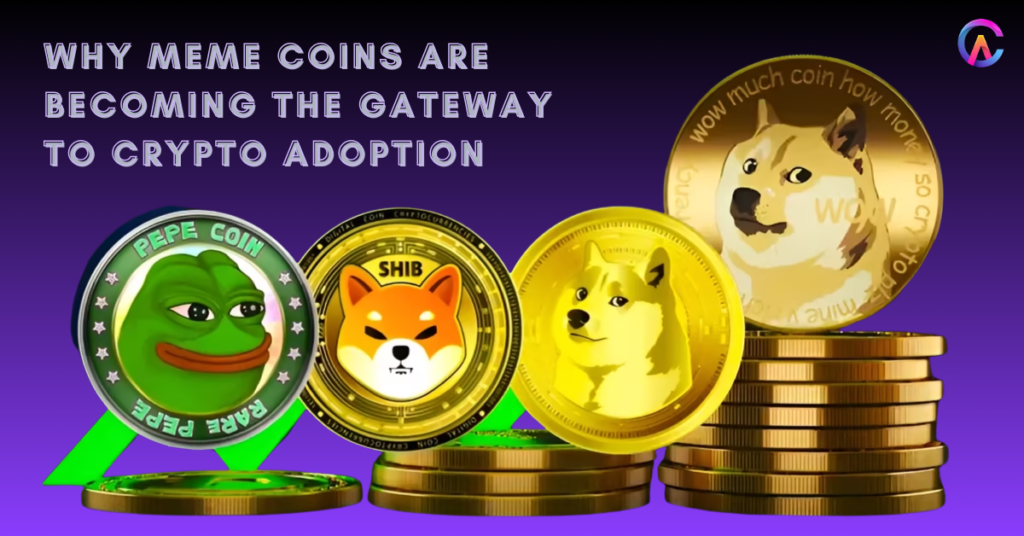
Why Meme Coins Are Becoming the Gateway to Crypto Adoption

Read 8 MinMeme coins are quickly becoming the entry point for many into the world of crypto. They break down the psychological and technical barriers that often keep everyday folks from diving into Bitcoin, Ethereum, and the more complex DeFi protocols. With their fun, affordable, and culturally relatable vibe, meme coins attract people who might never bother reading a whitepaper or delving into tokenomics. Instead, they download a wallet, join a community, and make their first trade. From there, a good number of them gradually venture into centralized exchanges, DeFi apps, NFTs, and on chain games, transforming what started as a joke into a full fledged crypto journey. Why meme coins attract first time users Traditional crypto projects can seem pretty daunting, filled with complex discussions about decentralization, consensus mechanisms, and yield strategies. Meme coins turn that narrative on its head by blending speculation with internet humor and community storytelling. People are more inclined to try out a coin associated with a dog, cat, frog, or a celebrity parody because it feels more like joining a viral trend than making a serious financial decision. Price psychology plays a big role too. While the unit price of a coin doesn’t mean much without considering its supply, users often feel that buying millions of units of a low cost meme coin offers more potential than owning a tiny slice of a blue chip asset. This lottery ticket mentality, combined with stories of early Dogecoin or Shiba Inu investors turning small amounts into life changing profits, creates a strong sense of FOMO and curiosity. That curiosity drives users to learn how to create wallets, transfer tokens, and track charts, essential skills for participating in the crypto space. Social media is also a key player in this phenomenon. Influencers, KOLs, and online communities are always sharing memes, price screenshots, and inside jokes that spread far beyond the usual crypto Twitter crowd. This virality allows meme coins to reach people who may have never set foot on a crypto news site but spend hours on TikTok, Telegram, or Reddit. Once those users start asking how to buy, they often find themselves going through the entire crypto onboarding process without ever having to begin with Bitcoin education or DeFi tutorials. The role of community and identity Crypto has always thrived on community, but meme coins take that to a whole new level. Owning a meme coin becomes a part of who you are online. People switch up their avatars, add coin tickers to their usernames, and treat Discord or Telegram channels like their own digital tribes. For many newcomers, that sense of community is way more motivating than any technical details about the coin itself. These communities host contests, airdrops, meme battles, and even raids where everyone works together to post content across different platforms in perfect sync. New users quickly grasp the basics like liquidity pools, centralized exchanges, and slippage just by joining in on these events and asking questions in the chat. What might seem dull in a textbook turns into an adrenaline rush when it’s the difference between winning a contest or missing out on a price surge. This feeling of belonging helps users push through the challenges of learning about seed phrases, network fees, and the risks of making irreversible mistakes. They don’t feel like isolated individuals facing a complicated system, instead, they’re part of a group with common goals. That group dynamic is why meme coins often outshine more serious but less social projects when it comes to bringing in new users and keeping them engaged. Meme coins as marketing funnels for the entire ecosystem When a meme coin skyrockets in popularity, centralized exchanges scramble to list it because trading volume and new account signups soar. These exchanges then promote other products to the same users, like margin trading, staking, and even educational modules on safer investing and diversification. The meme coin essentially becomes the gateway for the entire exchange’s business. On the decentralized front, meme coin liquidity pools introduce users to DEXs, bridging, and yield farming. Someone who starts by buying a token on a DEX will quickly notice options to stake LP tokens, farm rewards, or get involved in launchpads. Many DeFi protocols intentionally embrace meme liquidity because it draws in traffic and fees that can later benefit more structured products. NFTs and gaming ecosystems are definitely reaping the rewards. Meme coin communities often kick off NFT collections, games, or metaverse experiences that showcase their beloved mascots. Those who initially jumped in for a quick profit often find themselves buying NFTs, diving into game economies, or trying out cross chain bridges. In this way, meme coins become cultural brands that guide users through various aspects of Web3. Education through speculation Critics have a point when they say meme coins can be volatile, risky, and often lack solid fundamentals. However, even when these coins take a nosedive, many users walk away with invaluable knowledge. They pick up skills like securing wallets, spotting scams, reading contract addresses, and grasping the basics of tokenomics. This hard earned experience equips them to be more savvy participants when they later engage with more serious projects. Nowadays, many communities have educational channels that cover essential topics like risk management, doing your own research (DYOR), fundamental analysis, and security tips. Some teams even collaborate with educators or influencers to host live sessions that break down how liquidity works, why slippage is important, and how to steer clear of honeypots. Ironically, the fear of getting rekt drives a deeper understanding than any abstract academic material ever could. For younger users and those in emerging markets, meme coins might be their first encounter with candlestick charts or the concept of macro cycles. These experiences are shaping a generation that is more financially and technologically savvy, even if their initial trades don’t always hit the mark. The double edged sword risks and downsides While meme coins might seem appealing at first glance, they come with some pretty significant risks. A

How AI Is Reinventing DeFi Through Autonomous Smart Contracts
AI, Blockchain

How AI Is Reinventing DeFi Through Autonomous Smart Contracts

Read 8 MinAI is shaking up the world of DeFi by transforming smart contracts from rigid rule based systems into flexible, self sufficient entities that can gauge market conditions, learn from data, and adjust their actions with minimal human oversight. Gone are the days of fixed interest rates, strict collateral requirements, and manual strategy crafting. Now, DeFi protocols are beginning to harness AI agents to enhance liquidity yields, manage risk, and execute trades in real time, making decentralized finance not only more efficient but also a bit more intricate and risky. This evolution paves the way for exciting new applications like self optimizing lending pools, autonomous market makers, and dynamic liquidation systems, but it also brings up important concerns about transparency, trust, and governance, especially when the code can adapt through learning. From static smart contracts to autonomous agents Traditional DeFi smart contracts operate on set logic, if the collateral ratio dips below a certain point, liquidate, if the price feed indicates X, then adjust the rate to Y. While these contracts are powerful, they lack the ability to adapt to context. Enter AI driven autonomous smart contracts, which introduce three key enhancements. They can gather more data from on chain activities, cross chain movements, and off chain signals. They learn from this data using techniques like reinforcement learning or predictive analytics. And they take action by tweaking parameters, choosing strategies, or initiating flows without waiting for manual governance decisions. In practical terms, this means that the behavior of protocols can evolve over time. Lending platforms can identify the best collateral factors for various assets by monitoring volatility and user actions. Automated market makers can adjust their fee structures based on changing volumes and volatility. Liquidation bots can determine which positions to liquidate when gas prices surge or liquidity is low. The outcome is a more agile DeFi ecosystem that functions less like a static spreadsheet and more like a constantly evolving trading desk, all built on chain. Where AI plugs into the DeFi stack AI isn’t here to take over smart contracts at their core. Instead, smart contracts continue to serve as the reliable foundation for managing asset custody and settlement. Typically, AI finds its place in agents that interact with or adjust these contracts. A few interesting patterns are starting to emerge. One of these patterns involves AI governed parameters. In this setup, governance determines which metrics an AI agent can manage, like interest rate curves, fee multipliers, or reward schedules. The agent operates off chain but regularly updates on chain contracts with new values through secure configuration calls. Another pattern is AI powered executors. These agents monitor the markets and carry out transactions such as arbitrage rebalancing or liquidations, all while adhering to predefined cap rules and safety checks stored on chain. A third pattern features AI enhanced oracles and risk engines. Oracles can use anomaly detection to weed out unreliable price data, while risk engines can predict overall protocol risk through simulations and machine learning. These components don’t directly hold assets, but they significantly influence how smart contracts respond to real world events. AI optimized lending and liquidity Lending protocols are among the biggest winners when it comes to AI. Currently, most lending markets depend on static risk parameters like loan to value ratios, liquidation thresholds, and reserve factors, which governance updates periodically based on human analysis. This method is often slow and can lead to overreactions. With AI, protocols can continuously assess risk for each asset, user cohort, and market condition. For instance, the system can learn that a specific token tends to become highly volatile during major events and can automatically tighten collateral requirements in advance. It can also identify concentration risk when one borrower dominates a pool and adjust incentives to encourage a more diverse mix of lenders or borrowers, reducing that risk. When it comes to liquidity, AI can really help determine how much of the reserves should be lent out versus what should be kept as a safety net. It can also create dynamic interest curves that adjust based on usage and volatility in a nonlinear fashion, enhancing capital efficiency without compromising safety as much as traditional static curves tend to do. Smarter automated market makers Automated market makers (AMMs) initially relied on straightforward bonding curves that don’t need a centralized order book, but they often face issues like impermanent loss and can be less effective in volatile or thin markets. With AI driven liquidity management, these AMMs can become significantly smarter. An AI agent can continuously track volume fluctuations and order flow, making real time decisions about where to allocate liquidity along a curve or across various pools. It might shift liquidity closer to the current price during stable market conditions and spread it out more when volatility increases. Additionally, it can adjust fees on the fly, raising them during turbulent times to better reward liquidity providers and lowering them during quieter periods to draw in more traders. Over time, an AI powered AMM can learn the microstructure patterns of the market on each chain and trading pair, uncovering optimal configurations that would be nearly impossible to fine tune manually. For liquidity providers, this means potentially higher net returns and reduced uncompensated risk. For traders, it can lead to less slippage, especially with long tail assets. AI driven liquidations and risk mitigation Liquidations are one of the most delicate functions in DeFi. If they’re too aggressive, users face unnecessary liquidations, if they’re too slow, protocols can end up with bad debt. Traditional liquidation bots operate on basic rules, often competing against each other and wasting gas in the process. With autonomous smart contract ecosystems, AI agents can plan liquidations in a more strategic manner. They can simulate future price movements and gas conditions to determine the best timing and order for liquidating positions. They can also route liquidations across multiple decentralized exchanges (DEXs) to minimize slippage and even coordinate partial liquidations to protect user health and reduce systemic shock. AI isn’t

DeFi Security: The Biggest Risks and How Modern Protocols Solve Them
Blockchain

DeFi Security: The Biggest Risks and How Modern Protocols Solve Them

Read 7 MinDeFi security is that crucial balance between the freedom of open programmable finance and the risk of devastating losses. Right now, billions of dollars are locked up in smart contracts that anyone can access, which makes these systems incredibly powerful but also attractive targets for savvy attackers. Why DeFi security is such a hard problem In decentralized finance, we swap out trusted intermediaries for code. This means: Research and industry reports indicate that DeFi and cross-chain protocols are responsible for most of the crypto losses, with individual exploits often racking up tens or even hundreds of millions of dollars in a single event. As the total value locked increases, attackers become more driven and inventive. The main risks can be grouped into several categories: bugs in smart contracts, economic attacks, vulnerabilities in cross-chain systems, failures in oracles and price feeds, governance exploits, and compromises on the user side. Smart contract bugs the core technical threat Once smart contracts are deployed, they can’t be changed, so any coding error can turn into a permanent vulnerability. Studies of DeFi hacks consistently show that flaws at the contract level are a primary attack vector, especially in unaudited or forked code. Common patterns Modern protocols address this through Yet, despite these measures, reports from 2025 still indicate that flaws in smart contracts are leading to losses in the hundreds of millions, particularly among smaller projects that bypass thorough reviews. Economic and market manipulation attacks In the world of DeFi, it’s all about the interplay of code and economics. Even contracts that are flawlessly coded can be vulnerable if their incentives or assumptions are shaky. Key vectors Security guidance now emphasizes Economic exploits can be particularly elusive during code reviews, as they often arise from the interactions between contracts, markets, and the capital of attackers. Cross chain bridges and interoperability risks Cross-chain bridges and messaging layers are some of the most targeted elements in the DeFi space. They often manage large pools of assets that represent various networks, making them incredibly attractive targets. Looking ahead to 2025, reports indicate that cross-chain exploits could lead to over a billion dollars in stolen funds, with multi-chain hacks affecting otherwise unrelated protocols through their shared bridges or custodial components. Typical issues Modern mitigations include Despite these advancements, many risk frameworks now categorize bridge exposure as a distinct risk, necessitating stricter limits. Oracle and data feed vulnerabilities When it comes to oracle and data feed vulnerabilities, oracles bring off-chain data, such as prices, into on-chain contracts. If this data is inaccurate or can be manipulated, it can lead to mispriced collateral or incorrect redemptions. Common failures Best practice today Oracle manipulation continues to represent a significant portion of DeFi exploits, especially when projects skimp on their data infrastructure Governance and admin key risks Many DeFi protocols kick off with admin roles that allow a core team to upgrade or control parameters. This setup brings about two main types of risks: Research into DeFi governance incidents shows that token voting systems can be manipulated, especially when liquidity is high but participation is low. Modern countermeasures Additionally, protocols are increasingly separating treasury control from core contract control to limit the potential damage. User side and infrastructure threats Even if the protocol is secure users and supporting infrastructure can be attacked Security reports indicate that phishing and private key theft account for a significant portion of total crypto losses, even when on-chain contracts remain uncompromised. Mitigations include Ultimately, security in DeFi is a shared responsibility between the protocol and its participants. How modern protocols design with security in depth These days, leading DeFi teams are shifting towards a defense-in-depth approach instead of just depending on a single audit or safety measure. Here are some common strategies they’re using: Both academic and industry reviews highlight that while DeFi is still in its early and somewhat unstable stages, a mix of strong engineering, adversarial testing, and continuous monitoring can significantly boost resilience over time. How Codearies helps DeFi teams reduce security risks Codearies is here to support DeFi founders and teams who want to move quickly without compromising on security. What Codearies typically does Threat modeling and architecture review Secure smart contract development Audit preparation and coordination Security operations and monitoring User and governance safety The goal isn’t just to pass an audit; it’s about building a protocol that can stand strong against evolving threats. Frequently asked questions Q1 What is the single biggest risk most new DeFi projects underestimate? A lot of teams don’t realize that even the tiniest logic errors or lapses in access control can result in a complete loss of funds once their protocol goes live. It’s not just about those rare zero-day bugs; often, it’s simply about missing checks or having poor upgrade paths. Codearies tackles this issue by implementing early-stage threat modeling and conducting thorough reviews of privileged functions. Q2 Are audits enough to keep a DeFi protocol safe? While audits are essential, they alone aren’t enough. They help minimize risk, but they can’t guarantee safety, especially as protocols change and integrate with others. Continuous monitoring, controlled feature rollouts, and bug bounties are equally crucial. Codearies supports teams in establishing a comprehensive security lifecycle. Q3 How can we reduce risk around cross chain features? Whenever possible, it’s best to keep the core value and logic on the most secure base layer and treat bridges as tools with limited exposure, complete with caps and circuit breakers. Opt for proof-based or well-tested bridge systems instead of custom experiments. Codearies assists in designing those boundaries and selecting safer interoperability stacks. Q4 What can we do to protect users even if our contracts are secure? It’s important to invest in front-end and wallet safety, provide clear transaction previews, establish strong branding around official links, and promote security education. Think about integrating with wallet security tools and offering optional insurance. Codearies often helps teams create easy-to-understand safety guides and design user experiences that gently steer users away from risky actions. Q5 When

The Solana Meme Coin Boom: Fast Transactions, Big Communities, Bigger Gains
Blockchain, Meme Coin, Solana

The Solana Meme Coin Boom: Fast Transactions, Big Communities, Bigger Gains

Read 7 Min  The Solana meme coin craze is one of the most talked about phenomena in Web3, transforming a lightning fast, low fee blockchain into a vibrant hub for viral tokens, massive communities, and sometimes, incredible profits. With speedy transactions eliminating delays, large communities boosting memes and liquidity, we’re seeing tokens skyrocket from nothing to billions in market cap in just a matter of weeks. Why Solana became meme coin central Solana is a high-performance layer one blockchain designed for rapid and affordable transactions. This unique combination makes it perfect for the fast-paced trading culture surrounding meme coins, where users are eager to buy, sell, and shift positions constantly without the stress of hefty fees or sluggish confirmations.  Learn more about how Meme coins are reshaping Web3 communities here. For meme traders and community builders this matters because Low fees allow people to trade even the smallest amounts and engage in on-chain activities without breaking the bank. High throughput and low latency ensure that decentralized exchanges and launchpads remain responsive during intense hype periods. Mobile-friendly wallets simplify the onboarding process for non-technical users. Solana’s ecosystem already boasted a robust DeFi and NFT infrastructure, so when meme season hit, the groundwork was laid for new tokens to go viral in no time. The anatomy of the Solana meme coin boom Lightning fast launches and trading Meme coins on Solana usually launch through straightforward token creation platforms and bonding curve tools, enabling anyone to create a token in just minutes. From there, decentralized exchanges and aggregators can list them almost immediately. Thanks to transactions clearing in seconds at minimal costs, the trading experience feels more like a web2 app than a sluggish blockchain. This allows for: This seamless cycle of launching, hyping, and trading has played a significant role in why so many Solana memes have taken off. Iconic Solana meme projects Several meme coins have emerged as the face of the entire chain. Each of these coins combines cheeky branding with robust community building and a lively social presence. Communities as growth engines At the heart of Solana meme coins is the idea of communities using tokens as their glue for coordination. Holders get creative by making art, hosting Twitter Spaces, building fan sites, running trading communities, and even organizing real life stunts. The token transforms into: Thanks to Solana’s low transaction costs, people can easily send small tips, join games, and fund community initiatives with minimal hassle, which only strengthens engagement.. Why fast transactions matter for memes Meme markets move at lightning speed, thanks to social media. If there’s any delay between catching the hype and taking action, the momentum can fizzle out. Solana’s performance is a game changer on several fronts: This creates a non stop casino like atmosphere where attention and liquidity can shift between various coins throughout the day. Big gains and big risks Upside potential Solana meme coins have delivered some of the most significant percentage gains in the market: For builders and creators the boom also means Downside realities The  same factors that create massive upside can also lead to harsh downsides: For communities and founders, the real challenge lies in managing expectations and building sustainable structures that can endure beyond the initial hype. How Solana memes are evolving beyond pure jokes As the ecosystem evolves, many meme projects are starting to add some exciting new features: While this doesn’t take away from their meme nature, it does pave the way for more sustainable community economies instead of just pure hot potato speculation. What this means for Web3 The recent boom of meme coins on Solana uncovers some larger truths: For builders, this means creating products that tap into meme liquidity and community energy rather than overlooking it. For traders, it signals that memecoins are here to stay, but managing risk and educating oneself is crucial. How Codearies helps you build in the Solana meme coin era Codearies is all about teaming up with Web3 founders, creators, and brands eager to dive into the Solana meme coin craze, but without treating it like a total gamble. What Codearies typically does Concept and narrative design Safe token and launch architecture Community and growth systems Utility and ecosystem integration Monitoring and risk management The goal is straightforward: transform meme energy into a solid project that can weather market fluctuations while staying true to the fun that makes memes so impactful. Frequently asked questions Q1 Why are meme coins so strong specifically on Solana? Solana really shines when it comes to trading and on chain activities, making them super fast and affordable. This aligns perfectly with the quick paced, high volume nature of meme traders, allowing communities to engage on chain without the stress of gas fees. It’s a seamless blend of technological prowess and meme market vibes. Q2 Can a Solana meme coin have real utility or is it always just a joke? While many start off as lighthearted jokes, they can evolve into tokens with genuine utility, like access passes for communities, staking assets for rewards, or even in game currencies. Codearies often encourages teams to think ahead, transitioning from pure meme status to at least some level of utility, giving the community a solid reason to stick around. Q3 What is the biggest mistake new meme projects make on Solana? One major pitfall is launching just for a quick profit without a clear plan for fair distribution or what happens after the initial week. This often results in rapid sell offs and a loss of trust. Another frequent oversight is neglecting contract security and liquidity risks. Codearies helps mitigate these issues with better design and thorough reviews. Q4 How risky is it for regular users to trade Solana meme coins? It’s quite risky. Prices can swing wildly, moving 50 to 90 percent in a single day, and some tokens are outright scams. Users should only invest what they can afford to lose, verify contracts, and keep an eye on essential factors like liquidity and the

What is Utility Token? A digital asset that unlocks access, benefits & Features
Blockchain, Utility Token

What is Utility Token? A digital asset that unlocks access, benefits & Features

Read 7 MinA utility token is essentially a digital asset that serves as an access key within a blockchain ecosystem. It allows holders to use various products, unlock features, earn rewards, or engage in specific services, rather than signifying legal ownership in a company. These tokens are the driving force behind platform economies, enabling users to pay fees, access premium tiers, and utilize in app items or governance features, all while aligning user behavior with the network’s growth. They play a crucial role in many Web3 applications, exchanges, DeFi platforms, and gaming projects, acting as the fuel that powers the entire experience.​ What is a utility token in simple terms Utility tokens are crypto assets created on a blockchain that grant users access to specific products, services, or features within that project’s ecosystem, think of them as digital tickets, membership passes, or in app currencies. Unlike security tokens, which represent shares or legal ownership and are treated as regulated investments, utility tokens are primarily designed for functionality and usage, not for profit sharing or equity rights. Most utility tokens operate on smart contract platforms like Ethereum or other programmable chains, adhering to standards such as ERC20. This allows them to be stored in wallets, traded on exchanges, and easily integrated into decentralized applications (dApps). Their value typically reflects the platform’s usefulness, the demand for its services, and the anticipated future utility, rather than direct claims on the company’s cash flows.​ How utility tokens work under the hood Utility tokens originate from a smart contract that outlines the total supply, minting rules, transfer protocols, and any special functions like staking, burning, or access checks. Once the contract is deployed, the tokens are minted and can be distributed through various methods such as ICOs, IEOs, IDOs, airdrops, or in app earning mechanics, depending on how the project is launched. Inside the platform, the token is seamlessly integrated into various workflows. Contracts verify balances before allowing access to features or applying token based discounts to services. Users might need to hold or spend tokens to carry out actions like uploading data, claiming rewards, voting, or unlocking premium tools. Since everything operates on a blockchain, these access rules are enforced by code, transforming the token into a programmable permission system that controls features and aligns incentives. Core utilities access benefits and features Utility tokens can unlock a range of benefits depending on the project’s design. Here are some common use cases: Access to services: Users can pay or stake tokens to utilize essential services like storage, computing, bandwidth, or API access. For instance, Filecoin is used for decentralized storage, while Enjin facilitates in game asset operations. Fee discounts and premium tiers: Many exchanges and DeFi platforms offer trading fee discounts or better interest rates to users who hold or stake their native utility tokens. This is common with various centralized exchange (CEX) tokens and DeFi governance hybrids. In app currencies and assets: Games and metaverse environments often use utility tokens as the primary currency for purchasing items, upgrades, and experiences, fueling internal economies and secondary markets. Rewards and incentives: Tokens are awarded for actions that benefit the network, such as providing liquidity, validating data, watching ads, or contributing content. This aligns users with the growth of the protocol, as seen with Basic Attention Token (BAT) and other attention based tokens. Governance and feature voting: Some utility tokens come with governance rights, allowing holders to vote on protocol upgrades, fee structures, or feature roadmaps. However, pure governance tokens are typically considered a separate category. In practice, many modern tokens are hybrids that combine access, discounts, governance, and sometimes revenue sharing. Yet, the fundamental concept remains focused on utility within the ecosystem rather than legal ownership. Utility tokens vs other token types In the broader world of digital assets, it’s important to differentiate utility tokens from other key categories. Cryptocurrencies These are general purpose digital currencies like Bitcoin, primarily used as a medium of exchange or a store of value, without being tied to any specific app features. Security tokens These tokens represent shares or claims on real world assets, companies, or revenue streams. They are regulated as securities, which means they come with investor protections and disclosure requirements. Governance tokens These tokens are mainly used for voting on protocol decisions and DAO proposals. They can sometimes overlap with utility tokens when they also provide access to certain features. Utility tokens These tokens offer functional access to a product or service within a specific ecosystem, like paying fees or unlocking premium options. However, they typically don’t provide any equity rights. Regulators focus on actual behavior rather than just labels. So, a utility token that’s marketed as an investment with profit expectations might still be classified as a security in some jurisdictions. Benefits and risks of utility tokens When crafted thoughtfully, utility tokens can really enhance product ecosystems. They create a natural demand for services, align user interests with the growth of the network, and pave the way for innovative business models like token gated communities and decentralized billing based on usage. By utilizing smart contracts, tokens can minimize the need for intermediaries, allowing payment discounts and rewards to flow directly between users and the protocol. That said, there are significant risks to consider. Poorly designed tokenomics, inflation, harmful emissions, or vague utilities can transform a token into mere speculation, lacking any real value. Users might start viewing utility tokens as investments, hoping for price increases, even when the teams behind them clearly state that’s not their purpose. This can lead to volatility and increased regulatory attention. Additionally, bugs in smart contracts and inadequate security measures can put balances and access rights at risk. It’s crucial for projects to clearly define real utilities and avoid launching tokens just to raise funds without a solid long term product strategy.​ Real world examples of utility tokens Several well known projects highlight how utility tokens can drive various sectors: Filecoin (FIL) This token is used to buy and sell decentralized storage

The Evolution of Layer 1 Blockchains: Speed, Security & Scalability
Blockchain

The Evolution of Layer 1 Blockchains: Speed, Security & Scalability

Read 7 MinLayer 1 blockchains are the backbone of Web3, taking care of essential tasks like consensus security and transaction processing for everything built on top of them. Over the last ten years, they’ve transformed from slow, experimental networks into high performance, multi chain ecosystems that balance three key goals: speed, security, and scalability. This transformation is changing the way dApps are created, how users interact with crypto, and how businesses view blockchain adoption. From first generation chains to a multichain world In the early days, layer 1s mainly prioritized security and decentralization, often sacrificing speed and user experience in the process. Bitcoin demonstrated that decentralized digital money was feasible, but it could only handle a limited number of transactions per second. Ethereum introduced programmable smart contracts but soon faced congestion during peak times, resulting in high fees and sluggish confirmations. By the mid 2020s, this congestion led to fragmentation, as users and developers began moving away from overloaded networks to alternative layer 1s that offered better throughput and lower costs. Reports on crypto adoption highlight that this congestion and migration trend is a major factor driving the rapid growth of new base layer networks and their accompanying ecosystems. Meanwhile, established chains have been upgrading their architectures, focusing on innovations like staking, sharding, and rollups to scale up without compromising security. Today, the layer 1 landscape is bustling with contenders, including Ethereum, Solana, BNB Chain, Avalanche, Cosmos based zones, Cardano, and a host of newer players, each carving out their own unique niches and trade offs. The speed dimension how layer 1s got faster Throughput and latency are super important for user facing applications like trading, gaming, payments, and social apps. A bunch of technical strategies have popped up to tackle these challenges. Optimized consensus mechanisms Instead of relying on the energy hungry proof of work, many modern Layer 1s have shifted to proof of stake or its variations, like delegated proof of stake and leader based protocols. These newer mechanisms help reduce block times and enhance finality while also cutting down on energy use. Guides on Layer 1 architectures for 2025 highlight the move towards faster BFT style consensus to better support consumer scale decentralized applications. Parallel execution and VM design Some blockchain networks have introduced parallel transaction execution and more efficient virtual machines, allowing them to process multiple transactions at the same time, as long as they don’t interfere with each other. This method enables order book style decentralized exchanges, gaming, and microtransactions to operate at much higher volumes than what earlier chains could handle. Native support for high throughput Networks like Solana, Avalanche based subnets, and certain application specific Layer 1s are designed with highly optimized networking and block propagation layers. Overviews of leading Layer 1 projects in 2025 emphasize these performance driven architectures as a major advantage for high frequency DeFi and real-time applications. The bottom line is that while older chains might only handle tens of transactions per second, many of today’s Layer 1s boast the ability to manage thousands or even more under ideal conditions, opening the door to use cases that would have seemed impossible on chain before. The security dimension decentralization and resilience Security is absolutely essential for any base layer. As the value secured by Layer 1s increases, the temptation for attacks also rises. This evolution has several important facets. Staking and Economic Security Layer 1s that use proof of stake link their network security to the value of staked tokens and penalize validators who misbehave. The strength of this model hinges on how well the stake is distributed, the incentives for validators, and the design of governance. Client Diversity and Decentralization Strong networks promote a variety of independent node implementations and a broad set of validators, which helps minimize the risk of bugs in a single client or collusion. Industry experts emphasize that censorship resistance and credible neutrality remain crucial reasons why developers favor certain Layer 1s, even if they offer slower raw throughput. Formal Verification and Safer Languages Some ecosystems pour resources into developing smart contract languages and frameworks that can be formally verified to reduce security risks. Others prioritize toolchain audits and runtime protections to mitigate the impact of contract bugs. While performance focused chains sometimes get flak for their hardware requirements or validator concentration, many are working on light clients, cryptographic proofs, and protocol level safeguards to enhance decentralization over time. The scalability dimension layer 1 versus modular architectures Scalability goes beyond just raw transactions per second (TPS), it’s about maintaining global usage without compromising decentralization or incurring high costs. Currently, two main approaches are coexisting. Monolithic High Performance Layer 1s These chains strive to manage most activities on a single base layer, optimizing every component of the stack for maximum throughput. Their advantage lies in their simplicity and powerful composability, as everything exists within one global state. However, their challenge is to ensure long term decentralization as hardware demands continue to rise. Modular and rollup centric ecosystems When we talk about modular and rollup centric ecosystems, it’s interesting to see how different designs tackle scalability. Some approaches push scalability to secondary layers, allowing the base layer to concentrate on security and data availability. In this setup, rollups, sidechains, and app chains take care of execution while settling back to the main layer (L1). Various policy and technical papers highlight this modular strategy as a way to achieve internet scale usage without burdening every node with the task of processing every single transaction. Looking ahead, the landscape is shaping up to be quite hybrid. Some ecosystems are building rollups on top of established L1s, while also trying out high performance, app specific base layers tailored for specific sectors like gaming or DeFi. UX tools and developer experience in modern layer 1s The growth of an L1 ecosystem really hinges on how easy it is for teams to develop and for users to get on board. Here are some current trends making waves: Better SDKs and frameworks: L1 platforms

How Meme Coins Are Reshaping Web3 Communities
Crypto, Meme Coin, Uncategorized

How Meme Coins Are Reshaping Web3 Communities

Read 7 MinMeme coins are transforming Web3 communities by turning speculation into a social game, blending culture with capital, and empowering holders to become co creators of narratives and value. Rather than focusing solely on technology or formal governance, these tokens often serve as social clubs, digital brands, and coordination tools that unite large groups of people around a shared story. From jokes to social coordination engines The early days of meme coins demonstrated that straightforward narratives and humor could attract users more effectively than complex technology. By 2024 and 2025, this evolved into what many refer to as the memecoin supercycle, where launch platforms and on chain tools made it easy for anyone to create a token linked to a meme, a moment, or a micro culture. Analysts observing Web3 communities have noted that memecoins now act as multimodal artifacts, blending imagery, slang, inside jokes, and token economics to connect people through shared identities and behaviors. This shift is changing the way communities come together. Instead of relying on whitepapers and roadmaps, people are gathering around memes, vibes, and a sense of belonging. The token itself becomes a badge of membership, a scoreboard, and a storytelling anchor all rolled into one. How meme coins rewire Web3 communities 1 Community first then product later In traditional crypto projects, the focus typically starts with technology and then moves to community. Meme coins flip this order on its head. A viral meme, a catchy ticker, and a strong social media presence draw in a crowd first, with products if they come at all, following later. Research on Web3 trends for 2025 indicates that meme driven projects consistently excel in early user growth because they lower the barriers to entry and make participation enjoyable rather than technical. This has led to 2 New models of participation and status In the world of meme coins, clout isn’t just about how much you hold. It’s all about the status you earn through creating memes, starting threads, running fan accounts, hosting discussions, or even getting involved in grassroots marketing. Research into memecoin communities shows that the impact of content creation and social interaction often matters more for influence than just having a big wallet.​ Common patterns This dynamic fosters the growth of leaderless yet highly engaged communities that operate in harmony without the need for traditional organizational structures. 3 Virality as a core growth primitive Meme coins are designed to be viral right from the start. Their branding is tailored for screenshots, avatars, and bite sized content. Reports on token branding for 2025 highlight that meme projects thrive on jumping on trends, remixing ideas, and quickly responding to news cycles to keep themselves relevant and in the spotlight. Effects on Web3 This shift transforms Web3 from a story about infrastructure into one about entertainment and culture. 4 Liquidity and attention rotating between micro communities The meme coin market is like a lively, ever changing festival. Every week, capital and attention shift among countless micro communities. Analytics firms have observed that even when the broader market is sluggish, meme coins continue to shine, thriving on the power of narratives rather than just fundamentals.​ For communities this means While this experimentation can feel chaotic, it’s driving Web3 toward more diverse and expressive forms. 5 On chain identity and social graphs built around memes Since meme coins are inexpensive to buy and trade, they’ve become popular social objects. Wallets that hold a specific meme token can signify membership in a particular tribe. Some projects are already leveraging holdings of certain memecoins to gate access to communities, airdrop NFTs, or grant special roles in games and DAOs.​ Consequences In essence, memes create a soft layer of social identity on top of wallet addresses. 6 Pushing UX tooling and infra forward The memecoin supercycle of 2024–2025 sparked a surge of new launchpads, low code token creation tools, social trading dashboards, and copy trading bots. Many of these innovations were specifically crafted to foster rapid community formation and experimentation. Examples include These tools significantly lower the barriers for community led tokenization across various niches. The downside shadow risks for communities Meme coins are shaking up the Web3 scene, but they come with some serious risks. Speculation over substance Since price movements are such a shared experience, communities can quickly turn into gambling hubs. Analysts and regulators are sounding the alarm, noting that many meme coins show signs of pump and dump schemes, often with a handful of insiders pulling the strings and a lack of transparency. Short attention cycles Communities can disappear just as quickly as they form when the charts take a nosedive. This constant churn erodes trust among members over time, making it tough to build something lasting. Scams and soft rugs The low barrier to entry attracts bad actors who take advantage of the excitement within communities. Security reports frequently point out that rug pulls and hidden fees in meme contracts are significant risks for everyday users. Cultural toxicity Some memes lean on edgy or exclusionary humor, which can limit inclusivity and foster harassment. This undermines the broader Web3 ideal of open participation. For Web3 to grow, communities need better education, transparent contracts, and cultural norms that prioritize more than just quick profits. What this means for the future of Web3 Despite the risks meme coins have proven that Looking ahead, some projects are already merging meme energy with real utility, like pairing meme tokens with stablecoin systems, DeFi tools, or creator resources. Others are trying out ways to give active contributors ownership and governance power that goes beyond just early investors.​ In this light, meme coins are less of a final destination and more of a testing ground, teaching Web3 how to design for people, not just protocols. How Codearies helps brands and builders harness meme coin communities Codearies partners with Web3 founders, brands, and communities eager to dive into meme culture while maintaining a clear strategic focus and ensuring safety. What Codearies typically does Our goal is to

The Solana Ecosystem Explained: Key Projects, Tools & Growth
Blockchain, Solana

The Solana Ecosystem Explained: Key Projects, Tools & Growth

Read 6 MinThe Solana ecosystem has emerged as one of the most vibrant and rapidly evolving hubs in the Web3 space. It combines impressive transaction speeds, low fees, and a swiftly growing array of DeFi, NFTs, infrastructure, and consumer applications. For founders, traders, and builders, grasping the key projects, tools, and growth narrative of Solana is crucial for navigating the upcoming wave of blockchain adoption. This guide delves into Solana’s core value proposition, its major ecosystem pillars, and practical tools. It wraps up with insights on how Codearies supports teams in building and scaling on Solana, along with some frequently asked questions focused on Solana. Why Solana Matters in 2026 Solana is a high performance layer one blockchain crafted to handle thousands of transactions per second, all while keeping fees low and ensuring quick finality. Its fundamental design choices emphasize: These features make Solana particularly appealing for DeFi, decentralized exchanges (DEXs), payment systems, NFT marketplaces, and social and mobile first dApps, where speed and cost are paramount. Core Technology Concepts in Solana Proof of History and Proof of Stake Solana employs a hybrid mechanism that combines Proof of History, which provides a cryptographic timeline for transactions, with Proof of Stake, which secures consensus and validation. Together, these mechanisms facilitate the parallel processing of transactions across the network, supporting high throughput. Parallel Execution and Sea level Rather than executing all transactions one after the other, Solana’s Sealevel runtime allows many transactions to run in parallel, provided they don’t interact with the same state. This significantly boosts capacity and is a key reason why DEXs and order book based protocols thrive on Solana. Solana Programs and Accounts In Solana, smart contracts are referred to as programs, and data is stored in accounts. Each transaction specifies which accounts it will read from or write to. This explicit access model is fundamental to achieving parallelism and performance, influencing how developers design contracts and user experiences. Key Ecosystem Pillars DeFi on Solana DeFi continues to be one of the standout areas for Solana Spot and Perpetual DEXs In the world of decentralized exchanges, order book and AMM style platforms are leading the charge. Thanks to Solana’s high throughput and low latency, it’s a perfect fit for: Lending and Borrowing Lending protocols on Solana allow users to earn yield and borrow against collateral, supporting major Solana tokens, stablecoins, and liquid staking derivatives. Liquid Staking Staking is crucial for Solana’s security, and liquid staking tokens let users delegate their stake while keeping their liquidity in DeFi. This means they can earn staking rewards and still use their assets as collateral at the same time. Stablecoins and Payments USDC and other stablecoins are popular for on chain payments, trading, and yield strategies. With Solana’s low fees, transferring stablecoins is affordable, making it ideal for remittances and microtransactions. NFTs and Digital Culture Solana is also a leading player in the NFT space, featuring: The low fees make it easier for small creators and encourage frequent interactions, like gaming loot boxes or dynamic art updates. Consumer Apps Social and Mobile A new wave of Solana applications is putting consumer experience front and center: This trend is pushing Solana beyond just trading, aiming to integrate it into everyday life. Infrastructure and Developer Tools The ecosystem thrives thanks to a robust set of tools that support it. These essential components significantly reduce the hurdles for teams working on new protocols and applications. Solana Development Basics Programming Languages While most Solana programs are crafted in Rust, there are frameworks and transpilers available for TypeScript and other languages. Rust offers great performance and safety, but it can be a bit challenging to learn. Frameworks help simplify the process and speed up development. Account Model Design Since Solana requires transactions to specify accounts in advance, developers need to plan carefully around: Testing and Deployment Local validators and devnet clusters give teams the chance to simulate conditions before launching on the mainnet beta. Continuous integration setups typically compile code, run unit tests and integration tests, and then deploy through command line interfaces or tooling pipelines. Growth and Ecosystem Health Solana’s growth is evident across various metrics: The ecosystem has successfully navigated significant stress tests and continues to draw in new founders, thanks to its performance, user experience, and ever improving tools. Challenges and Considerations No ecosystem comes without its trade offs. Smart teams prioritize redundancy, monitoring, and security right from the start. How Codearies Helps You Build and Scale in the Solana Ecosystem Codearies is here to support both startups and enterprises eager to harness Solana’s speed and low fees for next gen products. Strategic Architecture End to End Solana Development Security and Performance Ecosystem Integration With Codearies, you gain a Solana savvy partner from the brainstorming phase to mainnet launch, helping you create resilient, scalable apps that feel as fast as Web2 but operate natively in Web3. Frequently Asked Questions Q1: Why should you choose Solana over an EVM chain for a new project? Solana really shines when you need high throughput, low latency, and super low fees, think order book trading, real time gaming microtransactions, or consumer apps that involve lots of small interactions. If performance and user experience are your main goals, Solana is often a fantastic choice. Q2: Is it tough to find developers who can work on Solana? While Rust skills are definitely in demand, the ecosystem has expanded significantly. Codearies has a dedicated team focused on Solana and can help your in house developers get up to speed with frameworks, patterns, and code examples. Q3: Can existing EVM projects transition to Solana? Absolutely, Many protocols are designed to operate across multiple chains. The architecture is different, so you can’t just copy and paste contracts, but Codearies can assist you in creating a Solana native version that retains your core logic and brand while taking full advantage of Solana’s strengths Q4: How does Codearies ensure security for Solana projects? We adhere to best practices for account and program design, conduct thorough testing,

Scroll to Top

Have A Project In Mind?

Popuo Image