
Author name: contact codearies

Codearies@12345678

How Businesses Use AI to Automate Repetitive Workflows
AI

How Businesses Use AI to Automate Repetitive Workflows

Read 6 MinBusinesses are increasingly turning to AI to streamline repetitive workflows, fundamentally changing how teams operate. This shift not only saves time but also helps scale operations without overwhelming employees. Nowadays, AI takes care of a wide range of tasks from managing emails and data entry to handling support tickets and generating reports allowing humans to concentrate on strategy, creativity, and building relationships. What AI Workflow Automation Actually Means AI workflow automation refers to the use of smart systems that can read, understand, make decisions, and take action across various tools and processes. Unlike basic automation that follows simple “if this, then that” rules, modern AI can grasp context, learn from patterns, and manage complex workflows independently. Key building blocks Over time, these systems improve by learning from feedback and outcomes, becoming more intelligent and precise without needing manual updates. Where Businesses Automate Repetitive Workflows Customer Support and Service Support is one of the areas where automation shines the most. The result? Quicker responses, reduced workload for agents, and improved consistency. Sales and Marketing Repetitive tasks in sales and marketing are perfect for AI. This means more time for selling and less time spent on administrative tasks. HR Operations and Recruiting HR teams are all about automating those heavy, tedious processes. The end result? Smoother employee journeys and way less manual follow up. Finance and Back Office Finance is filled with structured, repeatable workflows. This approach tightens controls and speeds up closing cycles. IT and Internal Support IT teams are leveraging AI as their first line of support. This not only reduces ticket queues but also boosts internal satisfaction. Typical Automation Pattern Step by Step Most AI automations follow a clear, structured pattern. AI has the ability to manage unstructured data like text, PDFs, screenshots, and voice notes, which means it can tackle a much wider range of tasks compared to the old rule-based tools. Benefits Beyond Just Saving Time Key Challenges and How Smart Teams Handle Them Start with manageable use cases, measure the impact, make improvements, and then gradually expand. How Codearies Helps Businesses Automate Repetitive Workflows with AI Codearies partners with both startups and larger enterprises to create, build, and scale AI driven automation that’s tailored to fit real world operations. What Codearies typically does Use cases Codearies often implements The ultimate goal? To get more leverage from your existing team, not just to pile on more tools. Frequently Asked Questions Q1: What kinds of workflows should we automate first with AI? Start by automating those high volume, repetitive tasks that have a clear pattern, like ticket triage, lead routing, invoice entry, or answering simple customer FAQs. These tasks offer a quick return on investment and are safer to automate before diving into more complex processes that involve tricky edge cases. Q2: Will AI automation replace my team? The best implementations don’t replace people, they eliminate low value busywork. Your team will transition from mindless clicking to focusing on supervision, decision making, and building relationships. While there might be some pressure on headcount over time, the daily work will become much more strategic. Q3: How long does it take Codearies to deliver a working AI workflow? A focused pilot project, like support triage or lead routing, typically takes about 4 to 8 weeks from the discovery phase to going live. For larger automation programs that span multiple departments, the rollout can be phased over several months, allowing for incremental wins along the way. Q4: Do we need a lot of historical data before using AI in workflows? Having good data is beneficial for use cases that rely heavily on predictions, but many automations like document extraction or routing based on clear rules, require minimal historical data. Codearies can help you figure out what’s feasible right now and what might need to wait for more data. Q5: How does Codearies handle security and privacy when automating workflows? Our implementations adhere to the principle of least privilege access, with encryption both in transit and at rest, along with clear data retention policies. For sensitive steps, we can keep a human in the loop, and our systems are designed to comply with your requirements, whether it’s GDPR, SOC, or any sector specific regulations. For business inquiries or further information, please contact us at  contact@codearies.com  info@codearies.com

Why Chinese Meme Coins Are Booming: Trends, Risks and Market Buzz
Blockchain, Meme Coin

Why Chinese Meme Coins Are Booming: Trends, Risks and Market Buzz

Read 5 MinChinese meme coins took off, raking in over $237 million in market cap, with quarterly surges of 35% fueled by cultural memes like panda variations, Pepe, and viral trends from WeChat, all while navigating the strict crypto bans in mainland China. Platforms such as Binance and Solana have become hotspots for these tokens, thriving thanks to offshore communities, whale activity, and cultural connections. Coins like Biaoqing, PeiPei and BinanceLife have seen daily gains of 137%, driven by Asia’s 560 million crypto users. This surge highlights the vibrant internet culture in China, where humor, nationalism, and speculative excitement blend to create high reward opportunities in regulatory gray areas. Cultural roots powering Chinese meme coin mania Chinese meme coins are deeply embedded in unique digital ecosystems, where platforms like Weibo, WeChat, and Douyin generate instant viral sensations, turning expressive panda memes and zodiac animals into billion dollar tokens. Biaoqing leads the pack with a $15 million cap, using panda expressions to foster community connections, while PeiPei gives the Pepe frog a Chinese twist, achieving top gainer status thanks to whale backing and low entry barriers. Unlike the global phenomenon of Dogecoin, these tokens incorporate themes from the Lunar New Year, like dragons and snakes, creating seasonal surges, just look at how FU Coin spikes during Chinese New Year, reflecting the excitement of retail investors. Community dynamics play a crucial role in this growth, with Telegram and Weibo groups orchestrating airdrops, raids, and memes that can lead to daily volume spikes of 10%. Developers are opting for fair launches on BSC and Solana, steering clear of centralized ICOs that are banned in mainland China. The cultural specificity of these coins fosters loyalty, panda themed tokens resonate with national pride, while cat memes like MOA tap into feline superstitions, positioning these assets as social phenomena that go beyond mere speculation.​ Technical trends behind the surge Chinese meme coins are leaning towards Binance Smart Chain (BSC) and Solana, thanks to their low fees, high transaction speeds, and liquidity pools in Asia that support microtransactions and help prevent bot driven launches. We’re also seeing the rise of layer two scaling solutions, AI integration, and a mix of meme coins with real utility. These tokens are adding features like staking and governance, which help them stick around longer than just the typical hype cycles. In response to the rug pull scandals, smart contract audits are becoming the norm, with projects locking liquidity and implementing anti sniper measures to boost investor confidence, especially given the staggering seventy percent failure rate in this space. Solana based projects are leading the charge, thanks to their speed and vibrant meme ecosystem. One notable example is Bonk, which has been dubbed a Chinese variant, even though it originated from WeChat integrations and prize pools. The cost of developing audited tokens has plummeted to under five thousand dollars, allowing creators to quickly iterate and test out viral ideas on a weekly basis. Top performers Market leaders showcase diverse strategies​ On average, these coins are delivering twenty percent monthly returns, outperforming global memes during the bullish cycles in Asia Regulatory risks navigating China’s landscape China has imposed strict bans on cryptocurrency trading, mining, and ICOs, with the central bank cracking down on stablecoins, money laundering, and cross border transactions. Meme coins often find themselves in murky legal waters, operating through offshore exchanges, VPNs, and Hong Kong hubs, where regulations similar to MiCA require KYC and AML transparency. While traders on the mainland face penalties, a staggering 560 million users still access these markets via OTC desks and foreign platforms, creating a shadow market. Global regulators see meme coins as speculative assets that aren’t classified as securities, which means they lack the investor protections that come with that designation. This exposes holders to risks like rug pulls, pump and dump schemes, and intellectual property disputes. The SEC has clarified that most meme coins fall outside of securities laws, but fraudulent activities and market manipulation can still trigger enforcement actions. Meanwhile, the EU’s MiCA regulations require disclosures for promotional tokens, but rug pulls continue to be a significant issue, with developers often draining liquidity after the initial hype, leaving tokens worthless.​ Investment risks beyond the hype Volatility is a hallmark of Chinese meme coins, with around 70% failing within just a few months due to whale sell offs, fading narratives, and a lack of real utility. Low cap coins often find themselves in liquidity traps during market corrections, while security vulnerabilities can lead to exploits. Tax reporting can be a headache across different jurisdictions, as unreported gains may attract audits. Diversification is crucial, as even the top performers can see their values plummet by 80% during bear markets. Market buzz and future outlook The Chinese meme sector reached a remarkable $100 billion market cap contribution in Q2 2025, with Asia driving 35% of this growth thanks to cultural virality and low entry barriers. Binance integrations, prize pools, and airdrops are boosting adoption, while the zodiac themes promise to act as seasonal catalysts. As the market matures, we can expect a hybrid utility that reduces the risks associated with pure speculation, positioning the survivors for potential gains of ten to one hundred times their initial value. How Codearies launches compliant Chinese meme projects Codearies is all about launching meme coins that comply with China’s regulatory landscape. They focus on secure, audited launches on platforms like BSC and Solana. Their strategy revolves around creating viral narratives that resonate culturally, blending pure memes with DeFi elements to ensure sustainability. They deploy smart contracts with anti bot measures and liquidity locks, renouncing ownership to pass rigorous audits and prevent rug pulls. To build community, they integrate tools like WeChat and Telegram for automating airdrops, raids, and KOL campaigns, while also ensuring liquidity through compliant offshore exchanges. After launching, they keep an eye on whale tracking, volume bots, and refreshing narratives to maximize gains and minimize losses. If you’re curious about token launch strategies, check out their guide on the

Taxi App Trends: EV Fleets, AI Pricing and Autonomous Ride Innovation
Taxi App

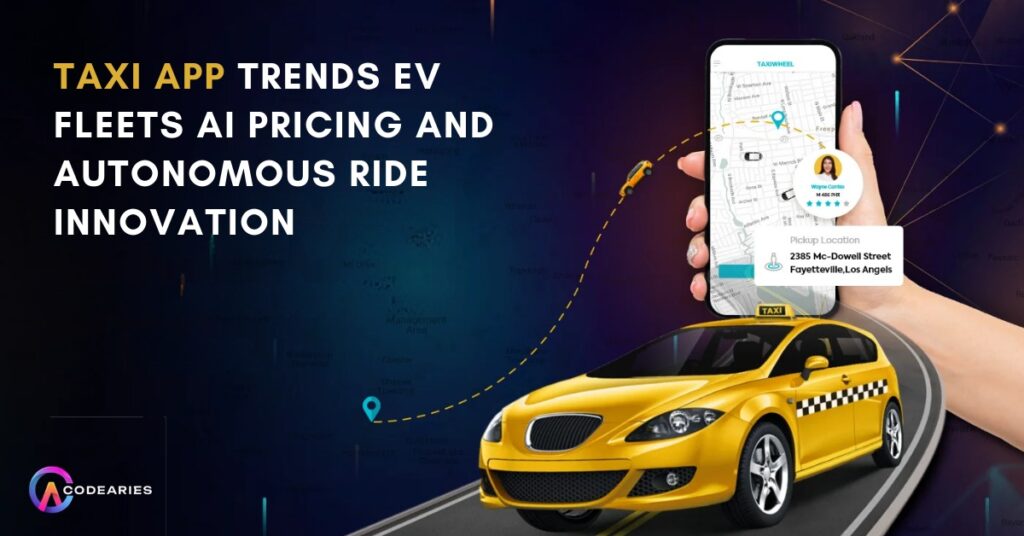
Taxi App Trends: EV Fleets, AI Pricing and Autonomous Ride Innovation

Read 6 MinTaxi apps have completely transformed how we get around cities ever since Uber and Ola introduced their on demand services. Fast forward to 2026, and the industry is entering a groundbreaking phase, driven by electric vehicle fleets, smart AI pricing algorithms, and self driving ride hailing systems. These innovations are coming together to create efficient, sustainable, and passenger focused mobility solutions that cut emissions, reduce costs, and offer unmatched convenience. As urban areas struggle with traffic jams, pollution, and limited infrastructure, taxi apps are stepping up as intelligent solutions that merge cutting edge technology with real world benefits. You check this blog to learn how taxi apps are build. This thorough exploration dives deep into each trend, covering everything from technology implementations and economic factors to challenges, global case studies, and how businesses can thrive with expert partners like Codearies. EV Fleets Electrifying Taxi Operations Electric vehicles are at the heart of the sustainable evolution of taxi apps, as battery powered fleets take the place of fossil fuels, providing zero emissions, lower costs, and an enhanced experience for riders. With battery prices dropping below $100 per kWh and charging infrastructure expanding, full scale adoption is becoming a reality. Key EV fleet technologies and strategies include Global leaders are making waves in the electric vehicle (EV) scene. Uber Comfort Electric is rolling out an impressive fleet of 50,000 EVs across 50 cities, while Didi Chuxing dominates China with the largest EV taxi fleet, boasting over 2 million vehicles. In India, Ola Electric is producing affordable scooters and cars tailored for markets with a high density of two wheelers, and in Europe, Bolt is pushing for EV adoption in cities like Tallinn, Paris, and London. The numbers clearly favor EVs. With fuel savings hitting 60%, maintenance costs dropping by 40%, and tax incentives enhancing profitability, it’s a win win. Riders are treated to a quiet, smooth ride with instant torque and the added perk of HOV lane access, making EVs even more appealing. AI Pricing Dynamic and Transparent Fare Models When it comes to pricing, AI is shaking things up with dynamic and transparent fare models. Gone are the days of static surge pricing, now, sophisticated real time algorithms are at play, balancing supply and demand, rider behavior, and other external factors to ensure optimal matching and revenue. Here are some of the advanced AI pricing features: Platforms are innovating at a rapid pace. UberX Share leverages AI for carpool pricing, while Lyft Priority smartly balances wait times and fares. In India, Rapido uses hyperlocal AI for auto rickshaws, and Ola Micro provides budget friendly options. In Latin America, services like 99 and InDriver allow riders to negotiate fares within AI suggested ranges. AI pricing can boost revenue by 25%, cut rider drop offs by 30%, and enhance driver satisfaction through more predictable earnings. Autonomous Ride Innovation Driverless Taxi Future Autonomous vehicles are set to revolutionize the industry by eliminating driver costs, operating around the clock, and opening up new possibilities from robotaxis to goods delivery, transforming the way we use taxi apps. Here are some breakthroughs driving this autonomy: Waymo One is leading the charge with 50,000 paid rides each week in Phoenix, San Francisco, and Los Angeles. Cruise is operational in San Francisco, while Baidu Apollo Go serves ten cities across China. Tesla’s Robotaxi Network is set to launch in 2026 with millions of vehicles on the road. Zoox and Motional are currently testing purpose built robotaxis that don’t even have steering wheels. With autonomy, costs can be reduced by 70%, enabling 24/7 service and opening up new markets such as transportation for the elderly, late night rides, and expansion into suburban areas. Convergence Ecosystem Impacts and City Integration Trends are coming together in powerful ways. AI is managing electric vehicle (EV) robotaxi fleets alongside micromobility options like e-bikes, scooters, and public transit, all wrapped up in user friendly multimodal apps. Meanwhile, blockchain technology is ensuring the authenticity of carbon credits and ride histories, while the Internet of Things (IoT) is fine tuning charging and maintenance processes. Cities are reaping the rewards with less congestion, a 20% reduction in emissions, and developments focused on transit. The economic landscape is shifting, creating new jobs in areas like autonomous vehicle oversight, charging infrastructure, and fleet management, although some drivers may find themselves displaced, highlighting the need for reskilling programs. Passengers stand to gain from lower fares, safer rides, and smooth door to door travel experiences. However, there are challenges to tackle, including getting regulatory approval, building public trust in safety, ensuring data privacy, and making necessary infrastructure investments. Solutions could involve phased testing partnerships and clear safety reporting. How Codearies Powers Your Taxi App Revolution Codearies is at the forefront, providing comprehensive technology for the next generation of taxi platforms, expertly handling EV AI pricing and autonomy. Solutions include From the initial concept to millions of rides, Codearies is building taxi apps that are ready for the autonomous, electric, AI driven future. Frequently Asked Questions Q1: How does Codearies help EV taxi fleets become profitable? By integrating AI, we can reduce costs by 40%, increase utilization by 25%, and tap into incentives for the best return on investment. Q2: Can AI pricing be effective in regulated fare markets? Absolutely, Our transparent and compliant models adjust to fare caps while maximizing revenue through increased volume and customer loyalty. Q3: When can we expect autonomous taxis to go mainstream? We anticipate that Level 4 fleets will start scaling between 2026 and 2028, with full robotaxi dominance expected by 2030 in cities that have approved them. Q4: How does Codearies assist two wheeler taxi markets? We offer specialized AI for routing, battery optimization, and rider matching for scooters, autos, and bikes. Q5: What sustainability features does Codearies offer? We provide carbon dashboards, vehicle to grid (V2G) capabilities, EV mandates, offset partnerships, and tools for reducing emissions across multiple modes of transport. For business inquiries or further information, please contact us at  contact@codearies.com  info@codearies.com
The Rise of Live Commerce: Why Platforms Like Whatnot Are Dominating E-Commerce
Whatnot

The Rise of Live Commerce: Why Platforms Like Whatnot Are Dominating E-Commerce

Read 5 MinThe world of e-commerce is experiencing a groundbreaking shift thanks to live commerce, a lively mix of live streaming, social interaction, and instant buying. Platforms like Whatnot are leading the charge, creating a shopping experience that goes beyond the usual online store. They’re crafting immersive, community focused, real time buying adventures. This trend isn’t just a fleeting moment, it marks a significant change in how consumers engage with brands, find products, and make purchases online. In this comprehensive blog, we’ll dive into the rise of live commerce, how platforms like Whatnot operate and thrive, the tech and social elements driving their success, and how businesses can tap into this powerful channel. We’ll also showcase how Codearies supports companies in excelling in this ever evolving landscape. You can also learn how to build a live selling platform like Whatnot here What Is Live Commerce Live commerce merges live video streaming with e-commerce features, allowing sellers and brands to present products, showcase their features, answer questions, and interact with viewers in real time. Shoppers can watch, comment, ask questions, and buy featured items, all on the same platform. Unlike traditional e-commerce sites or pre recorded videos, live commerce is all about interactivity, immediacy, and social validation. Customers feel like they’re part of a community event rather than just making a purchase. This vibrant atmosphere boosts engagement, builds trust, creates urgency, and ultimately leads to higher conversion rates. Why Platforms Like Whatnot Are Leading the Charge Whatnot is shaking things up as a live auction style social commerce platform that truly showcases the potential of this innovative model. Initially launched with a focus on collectibles like trading cards, comics, toys, and sneakers, Whatnot quickly grew by fostering a genuine community driven marketplace that thrives on live streaming and real time auctions. Here are some key reasons why Whatnot stands out: This mix of vibrant social interaction, gamified shopping, and curated product discovery really resonates with younger, digitally savvy consumers. Surge in Live Commerce Globally Live commerce is making waves around the world, and it’s so much more than just Whatnot or collectibles. The global market is booming, fueled by several key factors: Live commerce is projected to generate trillions globally and capture a significant slice of the digital retail pie. How Live Commerce Transforms the Customer Journey In contrast to traditional e-commerce, which often feels passive with limited interaction, live commerce shakes things up by offering: This unique blend of commerce and content leads to longer viewing times, more frequent purchases, and higher order values. Opportunities for Businesses in Live Commerce Many brands have experienced a 20 to 30 percent increase in conversion rates compared to traditional online stores by embracing live commerce. Challenges and Considerations in Live Commerce Navigating these challenges can lead to significant rewards in customer loyalty and a unique competitive edge. How Codearies Helps You Win in Live Commerce At Codearies, we’re all about helping brands and sellers ride the wave of live commerce’s incredible growth with our mix of strategic, technical, and creative know how. Here’s what we bring to the table: Join forces with Codearies to supercharge your live commerce journey, capturing customers and boosting sales through unforgettable, authentic, and scalable digital experiences. Frequently Asked Questions Q1: What sets Whatnot apart from other live commerce platforms? Whatnot stands out by emphasizing community driven live auctions for collectibles, fostering deep social interactions and trust systems that create fast paced, enjoyable experiences. Q2: Can Codearies assist small sellers in launching on live commerce platforms? Absolutely! We offer comprehensive support, including onboarding, content coaching, technology setup, and growth marketing specifically designed for new or niche sellers Q3: How does live commerce influence customer loyalty? Live commerce nurtures ongoing relationships by showcasing brand personality, hosting recurring shows, and engaging audiences in real time, which helps turn casual shoppers into loyal customers. Q4: Do users need special devices or apps to join in? Most platforms, including Whatnot, are accessible via smartphones and desktop browsers, featuring easy sign in and secure payment options that make joining a breeze. Q5: How quickly can Codearies help a brand kick off live selling? Typically, the timeline to go live ranges from 4 to 12 weeks, depending on your readiness, content production, and technology integration requirements. For business inquiries or further information, please contact us at  contact@codearies.com  info@codearies.com

Ride Sharing Revolution EV Carpools AI Routes and Sustainability Trends
AI, Car Pooling App

Ride Sharing Revolution: EV Carpools, AI Routes and Sustainability Trends

Read 6 MinRide sharing has completely transformed how we get around cities ever since Uber and Lyft made app based carpooling a thing. As we look ahead to 2026, the industry is on the brink of exciting new developments fueled by electric vehicles, smart AI route planning, and an unwavering push for sustainability. Electric vehicle carpools are a game changer, cutting down emissions, while AI driven routing helps ease traffic congestion. Plus, the latest green trends are weaving together micromobility, public transit, and carbon tracking into a smooth, integrated experience. This shift promises a cleaner, quicker, and fairer transportation system that benefits everyone, riders, drivers, cities, and our planet. This in depth analysis takes a closer look at each of these transformative elements, exploring the technologies, real world applications, economic effects, challenges, and how innovative companies can spearhead this mobility revolution alongside partners like Codearies. EV Carpools Electrifying Shared Mobility Electric vehicle carpools are where ride sharing meets clean energy, offering shared EV fleets that produce zero tailpipe emissions, lower operating costs, and an exceptional user experience. With battery prices dropping and charging stations becoming more widespread, integrating EVs is becoming the norm for these platforms. Key advancements include Real world leaders are making waves. Uber Comfort Electric is rolling out premium EV rides across 100 cities, while Lyft Purple is seamlessly integrating electric vehicles with carpooling. Over in Europe, companies like Bolt and Free Now are mandating EV fleets in select markets, and in China, Didi boasts the world’s largest EV ride hailing network with more than 10 million vehicles. The economic benefits are driving this shift; EVs can slash fuel costs by 50 to 70 percent, extend the life of drivetrains, and come with government incentives. Plus, riders get to enjoy quieter rides, instant torque, and access to HOV lanes, making them even more appealing. AI Routes Revolutionizing Navigation and Efficiency Artificial intelligence is taking ride sharing to the next level, moving from just matching riders to predictive, hyper efficient routing. Machine learning is now able to anticipate demand, optimize routes, and personalize journeys in real time. AI is making car pooling app smarter. Here are some core AI capabilities: Platforms are excelling in this space. Uber Elevate is harnessing AI for flying taxis and ground optimization, while BlaBlaCar has mastered long distance carpools with AI driven route sharing. In India, Ola and Rapido are leveraging AI to enhance their dense networks of two wheelers and auto rickshaws. AI routes are making a real difference by cutting wait times by 25%, reducing mileage by 20%, and boosting driver earnings through smarter dispatch, which is transforming the way we think about operational economics. Sustainability Trends Reshaping Ride Sharing Ecosystems Sustainability is becoming a key focus in ride sharing as platforms work to address Scope 1, 2, and 3 emissions, embrace circular economy principles, and align with net zero goals. Pivotal trends include Bolt and Gett are leading the charge in European sustainability, while Uber Green and Lyft Light modes are gaining popularity worldwide. Cities like Paris, Singapore, and Los Angeles are even mandating green fleets for ride hailing services. These trends are not only slashing urban emissions and improving air quality but also easing the strain on infrastructure, all while appealing to eco conscious millennials and Gen Z. Convergence Ecosystem Impacts and Challenges The real game changer comes from how we integrate different systems. Imagine AI coordinating electric vehicle carpools alongside drone deliveries, micromobility options, and public transit to create a seamless multimodal ecosystem. Meanwhile, blockchain technology ensures the authenticity of carbon credits and the history of rides, while IoT sensors keep tabs on vehicle health in real time. The economic ripple effects are significant, leading to job transitions towards roles like charging tech specialists, AI dispatchers, and fleet managers, all supported by trillions in infrastructure investments. Cities stand to gain from less congested roads and developments focused on transit. However, challenges remain. We face issues like EV charging deserts, regulatory hurdles for autonomous vehicles, and the need for innovation in battery mineral supply chains. Additionally, building public trust is essential for encouraging carpooling with strangers and ensuring data privacy in highly personalized routing. Moving forward, we need to foster public private partnerships, reskill the workforce, and establish standards for interoperable green mobility How Codearies Accelerates Your Ride Sharing Revolution Codearies is here to supercharge mobility startups, platforms, and cities with cutting edge technology that leads the way in electric vehicle AI and sustainable ride sharing. Comprehensive solutions include From initial MVP pilots to scaling up to a billion rides, Codearies provides the technological backbone for the next generation of mobility Frequently Asked Questions Q1: How does Codearies optimize EV carpool economics? Our AI boosts occupancy, reduces idle time, and incorporates fast charging, leading to a 30% drop in costs per mile. Q2: Can Codearies build AI routes for two wheelers or micromobility? Absolutely, Our models are designed to adapt to bikes, scooters, cars, and pedestrians, creating a well rounded urban ecosystem. Q3: What sustainability metrics does Codearies track? We monitor CO2 savings per ride, the impact of modal shifts, waste reduction, and lifecycle emissions across various fleets. Q4: How quickly can we launch an EV ride-sharing MVP? We can roll out functional pilots in just 12 to 16 weeks, with full scale platforms ready in about 6 months. Q5: Does Codearies support global regulatory compliance? Definitely, We incorporate standards for the EU, US, India, China, and emerging markets into every solution we provide. For business inquiries or further information, please contact us at  contact@codearies.com  info@codearies.com

The Future of Food Delivery: AI Kitchens Drone Deliveries and Hyperlocal Trends
AI, Food Delivery Apps

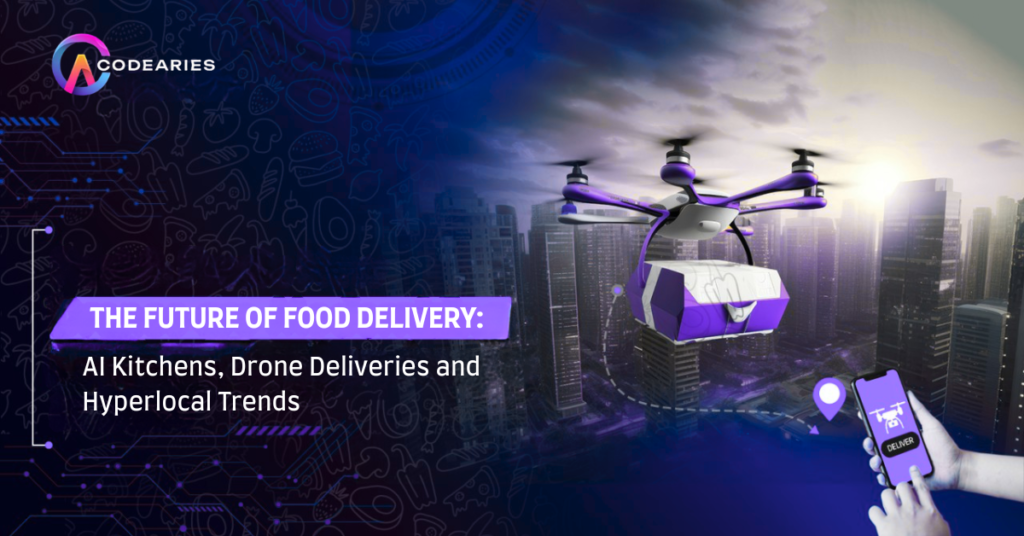
The Future of Food Delivery: AI Kitchens Drone Deliveries and Hyperlocal Trends

Read 6 MinFood delivery has come a long way, evolving from a simple convenience into a massive global industry worth hundreds of billions. It’s not just about getting your meals anymore, it’s about transforming urban lifestyles and opening up new economic opportunities. As we look ahead and beyond, this sector is on the brink of a revolutionary shift, fueled by advancements in artificial intelligence, autonomous delivery systems, and hyperlocal strategies. Imagine AI powered kitchens that fine tune menus and streamline operations, drones that cut down delivery times, and hyperlocal trends that emphasize fresh, community focused food. These innovations promise not just quicker meals but also smarter, more sustainable, and deeply personalized food experiences that change the way we eat, shop, and connect with our neighborhoods. This in depth exploration takes a closer look at the future of food delivery, breaking down the technologies, use cases, challenges, and opportunities that lie ahead. It also shines a light on how forward thinking businesses can spearhead this transformation. AI Kitchens Revolutionizing Food Preparation AI kitchens are at the forefront of food production automation, where machine learning, robotics, and data analytics come together to create ghost kitchens or dark kitchens that operate with unmatched efficiency, precision, and scalability. These facilities focus solely on delivery and takeout, eliminating the need for dine in seating. The core technologies driving AI kitchens include: Leading the charge in this space are innovators like CloudKitchens, founded by Uber’s Travis Kalanick, which utilizes AI to manage thousands of virtual brands from a single location. Then there’s Reef Technology, with its modular kitchen pods that can be deployed anywhere, all powered by AI driven operations. In Asia, companies like Zomato’s Hyperpure and Swiggy’s kitchen networks are leveraging AI to serve millions of meals daily at an impressive scale. The benefits of AI in kitchens go beyond just efficiency. These smart kitchens significantly reduce labor costs, operate around the clock, and can whip up hyper personalized meals, including custom nutrition plans or allergy safe dishes, all on demand. Drone Deliveries Taking Food to New Heights Drones are set to tackle traffic congestion and delivery delays, ensuring that food arrives hot and fresh in under 15 minutes. With regulatory approvals speeding up in the US, Europe, and Asia, what once seemed like science fiction is now becoming a part of our everyday lives. Some key advancements in drone technology include: Pioneers in this field are making strides. Wing, a subsidiary of Alphabet, is already delivering in Australia, the US, and Finland, while Zipline focuses on delivering medical supplies, with plans to expand into food delivery. Amazon Prime Air aims for 30 minute delivery times, and Manna Aero Drone is serving suburban Europe with deliveries in under 10 minutes. In India, Swiggy and Dunzo are testing drone deliveries in tier 2 cities. While challenges around regulations, battery life, and public acceptance still exist, the decreasing costs and advancing technology are positioning drones to become the backbone of last mile delivery by 2030. Hyperlocal Trends Redefining Neighborhood Food Ecosystems Hyperlocal delivery is all about sourcing, preparing, and delivering food within a tight radius, usually under 3 kilometers. This approach promotes fresh, sustainable, and community focused models. Defining characteristics include India is at the forefront of hyperlocal innovation, with companies like Blinkit, Zepto, and Swiggy Instamart achieving delivery times of under 10 minutes thanks to their dense networks of dark stores. In the US, DoorDash and Uber Eats are expanding their hyperlocal services, while in Europe, Gorillas and Flink are focusing on speedy neighborhood deliveries. Hyperlocal services also thrive on data. AI helps map demand density, optimize rider routes, and personalize offerings based on preferences at the block level, blending global reach with a personal local touch. Integration Convergence and Broader Impacts The real future lies in convergence. AI driven kitchens support drone fleets, hyperlocal networks utilize AI for dynamic pricing and rider assignments, and blockchain technology ensures transparency in the supply chain. Sustainability is a key driver, with electric vehicles, drones, and zero waste kitchens significantly reducing carbon footprints. Economic changes are also on the horizon, with job roles evolving from drivers to drone operators, AI technicians, and local food curators. This shift is accompanied by substantial growth in dark kitchen real estate and logistics technology. Consumer benefits are significant. Meals are delivered fresher, faster, and more tailored to individual preferences, all while cutting costs and minimizing packaging waste and traffic congestion. Challenges and Pathways Forward Regulatory challenges, particularly around airspace management and food safety standards, are slowing down the scaling of drones. AI kitchens are facing concerns about job displacement, and hyperlocal models often struggle to be profitable on a smaller scale. The way forward involves public private partnerships, workforce reskilling, and hybrid systems that combine human and AI efforts. Data privacy is also a major concern, as hyper personalization requires careful management of location, dietary, and behavioral data. How Codearies Powers the Future of Food Delivery Codearies empowers food businesses, restaurants, and delivery platforms with state of the art technology to excel in the age of AI, drones, and hyperlocal delivery. Our comprehensive support includes Join forces with Codearies to launch, deploy, and scale the next generation of food delivery solutions that not only satisfy customers but also lead the market. Frequently Asked Questions Q1: How can Codearies help startups enter the AI kitchen space? We offer complete robotic integration software development and AI optimization, cutting the time to launch by 50%. Q2: Are drone deliveries ready for widespread food use? Yes, in approved areas with growing capabilities. We seamlessly integrate compliant drone systems with your current platform. Q3: What makes hyperlocal delivery more profitable than broad delivery? Shorter routes mean lower costs, fresher food, and higher order values driven by neighborhood loyalty, resulting in better economics Q4: Can Codearies customize for specific cuisines or regions? Absolutely! Our AI tailors itself to local tastes, dietary needs, and cultural preferences for a truly authentic and personalized delivery experience. Q5: How does Codearies ensure sustainability compliance?

Why Utility Tokens Are Exploding: New Trends, Use Cases & Market Shifts
Utility Token

Why Utility Tokens Are Exploding: New Trends, Use Cases & Market Shifts

Read 5 MinUtility tokens are on the rise because the crypto landscape is finally moving beyond mere speculation to real world applications. These tokens are now driving payments, governance, loyalty, and access within actual products, rather than just being tools for trading charts. The rapid expansion of tokenization, DeFi, NFTs, and social tokens is prompting businesses, especially startups, to integrate utility tokens into their apps for better engagement, automation, and innovative revenue models, leading to a growing demand for well crafted token economies. What makes utility tokens different Utility tokens serve as digital keys that grant access to services, features, or rights within a specific ecosystem, unlike security tokens that primarily represent investment contracts. Currently, enterprises, Web3 startups, and creators are leveraging utility tokens for access control, in app payments, governance, and community rewards, making them a fundamental part of digital products rather than just an afterthought.​ Two big shifts stand out this year Learn everything about Utility Token Development Process, Tech Stack & Cost New trends driving utility token growth A number of blockchain trends are coming together to boost the adoption of utility tokens. High impact utility token use cases Utility tokens are making waves across various industries, serving as the essential link between users, products, and data. Market shifts and numbers behind the boom The expanding digital tokens and tokenization markets highlight why utility tokens are capturing so much interest. These statistics indicate a fundamental shift in how tokens are perceived, evolving from mere speculative instruments to being recognized as essential infrastructure for digital products. Best blockchains for launching utility tokens When it comes to launching utility tokens, picking the right blockchain is a crucial move since it influences gas fees, integrations, security, and how far your community can reach.​ Tokenomics design trends for utility tokens A well crafted tokenomics strategy can be the key factor that separates successful utility token projects from those that flop. How Codearies helps you build and scale utility token projects Codearies is your go to partner for developing and scaling utility token projects from start to finish. They help clients transform their ideas into thriving token ecosystems that have real world applications. In the discovery phase, Codearies collaborates with founders and product teams to translate business objectives into tangible token utilities. This could mean anything from access rights and in app payments to loyalty programs and governance models, all while ensuring that everything aligns with user value and regulatory requirements. Their team crafts comprehensive tokenomics that address supply allocation, vesting, emissions, and incentive structures, focusing on fostering sustainable growth rather than just short term gains. On the technical front, Codearies builds smart contracts on top tier chains like Ethereum and other compatible networks, tailoring their approach based on performance and cost needs. They seamlessly integrate these contracts with your apps, dashboards, wallets, and analytics. Additionally, Codearies offers support for audits, integration testing, and phased launches, whether it’s presales, fair launches, or in app rollouts, along with ongoing optimization as your user base and token economy grow. FAQs about utility tokens and Codearies Q1) Why are utility tokens trending? Utility tokens are gaining popularity because the crypto markets are increasingly valuing real world utility. They’re being embraced in areas like DeFi, gaming, NFTs, and loyalty programs, all driven by strong user engagement and clear demand on the blockchain. Q2) How does Codearies approach utility tokenomics design? Codearies begins by understanding business goals and user behaviors. From there, they craft token supply distribution, vesting schedules, and incentive models that foster sustainable demand loops, steering clear of fleeting hype. Q3) Which blockchain does Codearies recommend for utility tokens? Codearies often suggests Ethereum Layer 2 networks or chains like Polygon and BNB Chain for various consumer and DeFi applications. They also consider Solana or similar networks for high throughput gaming or real time applications, depending on the specific needs of each project. Q4) Can Codearies help connect tokens with apps and dashboards? Absolutely, Codearies not only develops smart contracts but also integrates them into web and mobile applications, admin dashboards, and analytics tools. This way, tokens can enhance real user experiences and provide measurable KPIs. Q5) Does Codearies provide post-launch support for token projects? Yes, Codearies offers post launch services that include monitoring, feature updates, adjustments to tokenomics, and new utility integrations. This support helps projects adapt to market changes and beyond, all while maintaining user trust and long term value. For business inquiries or further information, please contact us at  contact@codearies.com  info@codearies.com
How to Launch a Meme Coin (Chinese Market Edition): Cost, Tokenomics & Development Guide
Blockchain, Crypto

How to Launch a Meme Coin (Chinese Market Edition): Cost, Tokenomics & Development Guide

Read 4 MinStarting a meme coin for China means knowing strict local rules, how tokens work, plus what it costs, stuff that’s way different than regular projects because Beijing keeps crypto tight as of today. This walkthrough breaks down those hurdles, shows key tech moves, gives pricing details, while zeroing in on grabbing attention from Chinese users. Understanding the Chinese Meme Coin Market Chinese meme coins usually grow from online jokes and trends big on apps like WeChat and BSC. Instead of public fundraising, lots rely on fan powered starts, spreading fast through shared stories, small giveaways, or word of mouth buzz. These drops skip mainline sales, helping dodge strict rules tied to central control. Fans jump in even though China’s been tough on crypto before, people still want new tech, as long as it plays by the rules Key Regulatory Challenges in China Buying or selling crypto, running exchanges, or mining isn’t allowed in mainland China, owning popular digital currencies also faces tight limits. Still, some people trade through overseas platforms or private deals. If you’re creating a meme coin, watch out, moving toward Hong Kong means dealing with strict identity checks and anti fraud rules. Rules differ by area, so getting legal advice helps dodge fines or trouble Core Technical Steps to Launch a Meme Coin Fix the overall number of tokens, often limited, to make them rare. Split up how they’re shared between founders, users, promo efforts, plus trading reserves, being clear about each chunk to build confidence. Use methods like burning coins, repurchasing them, or rewarding holds so the worth stays strong while cutting down extra supply Chinese meme coins often launch on BSC or other EVM based networks to keep fees low, move fast, yet reach more users at once. Instead, some might pick Layer 2s or sidechains, helping them scale easier while spending less on gas Build smart contracts that follow ERC20 or BEP20 rules, include basic token functions but also stronger safety steps, like bot resistance, locked funds access, along with community voting setups. Since laws are strict and hacks happen, better run several audit rounds using well known security teams Create a site for the project, link up digital wallets, also set up ways to handle the community, key for clear updates and keeping users involved. Run giveaways through social apps automatically, use rewards that match what’s popular on China’s online platforms. Run token release using airdrops or DEXs that follow Chinese rules. Push organic buzz through social platforms, sparking user driven spread, skip traditional coin swaps or mainline trading hubs Estimated Development Cost Breakdown These costs change based on how complex the token is, what rules need following, or how big the marketing goals are. How Codearies Helps Launch Meme Coins for China Codearies focuses on building blockchain tokens from start to finish, keeping local rules in mind, such as those in China. It supports customers by: FAQs Q1 What is essential for launching a meme coin in the Chinese market? Figuring out the rules, building a token system that works for locals, also picking blockchains that fit China’s tech setup, these things really matter if you want to make it work Q2 What’s the price tag for building a meme coin using Codearies? Prices usually start at a couple grand for simple tokens, but can jump to twenty large if you add promo work, security checks, or tricky reward systems, depends what the project actually requires Q3 Does Codearies help with legal compliance in China? Codearies offers clear direction, working alongside legal pros to follow China’s tough rules on crypto plus KYC and AML steps.​ Q4 What blockchains do Chinese meme coins usually use? Binance Smart Chain, or similar EVM friendly networks, tends to get picked because it’s cheaper, handles growth well, also backs strong developer activity Q5 Can Codearies assist with community building and marketing in China? Yes, Codearies builds social media plans, think airdrops or interaction pushes, that use homegrown channels such as WeChat along with BSC content creators to boost reach Starting a meme coin in China takes sharp tech skills along with a real feel for local rules and customs. Teaming up with pros such as Codearies helps you roll out a token that fits regulations, grabs attention, and lasts. For business inquiries or further information, please contact us at  contact@codearies.com  info@codearies.com

How to Build a Taxi App: Cost Breakdown & Complete Development Guide
Taxi App

How to Build a Taxi App: Cost Breakdown & Complete Development Guide

Read 4 MinCreating a taxi app now means setting up a solid system that links riders and drivers using smooth phone and website tools, along with accurate GPS, instant pairing, while also handling safe money transfers. If you want your cab app to succeed, grasp key functions, design choices, expenses, plus plans for growing after release, so you can stand tall against top players Figuring out what taxi apps do behind the scenes Taxi apps let people grab a ride right away or set one up later, whereas drivers receive trip alerts, finish the job, then collect their pay. Passengers’ start and end points are linked to available drivers close by, factoring in road congestion and who’s online. These platforms usually include separate apps for riders and drivers, while a backend dashboard manages everything behind the scenes Core features of a taxi app Passenger app features Driver app features Admin panel Technology and architecture for a taxi app Taxi apps rely on flexible backend setups that manage ride demands, map tracking, or money transactions without slowing down. Key parts of this setup involve Taxi app development cost explained piece by piece Development expenses can differ a lot based on how many platforms you need like Android, iOS, or Web, not to mention the app’s features, where your team is located, along with how long the project runs. Here’s a rough idea of what things might cost. Major cost drivers What Codearies does for taxi app ideas Codearies handles full cycle digital creation, so startups or big firms can get flexible taxi apps that fit their goals. These tools match specific needs while scaling smoothly over time In the beginning, Codearies works alongside you to figure out what features work best, along with how users move through the app and what rules fit your area’s laws. Instead of guessing, their team builds driver and rider apps that handle booking, following trips, and payments without hiccups. On top of that, they include backend tools so managing daily tasks feels smooth Codearies builds apps using up to date tools plus a strong cloud setup that handles lots of users at once, live location tracking, instant ride matches by area, along with safe payment processing, so your cab service keeps running smoothly as more people join. On top of coding, they bring in data insights, regular system checks, and smart scaling plans to boost customer loyalty and increase earnings over time FAQs Q1 What is the typical timeline to develop a taxi app with Codearies? A basic MVP might launch in roughly three to four months, whereas a complete platform, with complex tools and backend setups, could go beyond half a year, shaped by how big it is and what users say along the way Q2 What’s the price to create a taxi app using Codearies? Prices change based on how many people are involved, what tools you need, also which platforms you’re using, typically starting around $25k for basic versions, going up past $200k if it’s a big system running across several cities Q3 What tools does Codearies suggest using for taxi apps? Codearies usually suggests going with built in app tools or flexible dev platforms hooked up to backend systems like Node.js or Java, linking them to databases such as PostgreSQL or MongoDB, adding location features through Google Maps, enabling live updates via fast communication methods, then layering on trusted checkout options that fit what each customer wants Q4 Could Codearies assist with rules adherence or include safety tools? Yes, Codearies helps set up KYC checks, run driver history screenings, add emergency buttons inside the app, or handle rules that change from place to place Q5  Is there help from Codearies after launching a taxi app? Codearies keeps helping after launch, tweaking features, boosting speed, watching system health, while pushing updates so your taxi app stays sharp and ready to grow For business inquiries or further information, please contact us at  contact@codearies.com  info@codearies.com

How to Build a Live Selling Platform Like Whatnot: Features, Tech Stack & Development Cost
Whatnot

How to Build a Live Selling Platform Like Whatnot: Features, Tech Stack & Development Cost

Read 6 MinCreating a live selling app similar to Whatnot involves mixing instant video streams, live bidding, messaging, online shopping, also group interaction into a single tool, so makers can display items then sell them fast as people tune in and place bids. For your shopping livestream app to work well, you need quick response streaming, an easy checkout path, solid oversight tools plus backend systems ready for sudden jumps in users watching at once or making purchases To understand what is whatnot? and the rise of live social selling. Read this Blog. How a live selling platform works A live selling setup helps vendors go on air, showcase items, host quick sales or bidding rounds, while folks viewing can reply instantly, quiz the seller, offer prices, then buy right there. Off camera, it handles streaming tech like signal processing, format conversion, smooth broadcast, tracks stock levels, updates costs, processes transactions, follows up with data, all linked smoothly behind the curtain Core actors Key things needed for a live shopping app like Whatnot Buyer side features Seller features Admin features Tools and setup behind live shopping apps A Whatnot style platform works like live video plus shopping online, so the setup needs fast response times, handles many users at once, while keeping payments safe and reliable. Live feeds plus instant updates Online shop systems along with support tools Client programs or dashboards Non functional requirements Development cost for a live selling platform like Whatnot Price changes based on how big the project is, number of users at once, what devices it works on, also which tools need to connect Industry numbers for online sales plus live video setups show a simple version, just live feed, item display, messaging, basic payment, usually costs between $40k and $80k. A step up, with bidding features, user tailoring, phone apps, data tools, might run $80k to $150k or higher. Full scale systems meant for worldwide use, meeting varied legal rules, linking deeply with other software, often go past $200k, particularly if the stream setup or auction mechanics get tricky Biggest cost drivers What Codearies does to help you set up a real-time sales system Codearies might handle everything tech wise when setting up a live shopping system, guiding your project from concept to launch, shaping an app or site that fits your audience, using today’s streaming tools alongside solid online sales tech In discovery plus planning, Codearies teams up with you to pin down who’s buying, how it earns, what rules apply, then turns those into a straightforward plan for features real users need, whether they’re selling, shopping, or managing. Instead of cluttered layouts, their design crew builds clean screens so viewers find videos, items, and talk boxes fast across phones and browsers, matching your look while pushing action On the tech end, Codearies sets up fast live video streams using current standards while also building safe server systems that handle products, stock levels, sales data, and payments, linking it all smoothly for a real time shopping flow. Once things go live, they help fine tune speed, track user behavior, and roll out new functions like rewards setups, smart item suggestions driven by AI, or tools for streamers, all helping your platform expand alongside audience growth and income goals FAQs Q1 What is the first step to start a live selling project with Codearies? The initial phase involves a chat, Codearies checks out your market focus and how you plan to run live sales, then maps a gradual path starting with a basic version, building up toward a complete streaming storefront Q2 What’s the price to create a live shopping app using Codearies? Prices change based on tools, systems, and size, often similar to what you’d see with tailored online stores or streaming setups, basic versions start around a few grand, while bigger setups across multiple areas can hit six digits, then Codearies sends a clear breakdown once they know what’s needed Q3 What tools does Codearies use for live shopping apps? Codearies uses today’s frontend tools, web or mobile, with a backend that grows as you do, tied together by fast data flow systems like WebRTC or ultra low delay HLS through CDNs, while weaving in messaging features alongside payments secured just right for your speed and cost goals Q4 Could Codearies handle live auctions along with instant messaging? Yes, Codearies sets up live auctions featuring countdown clocks, instant bids, skip the line purchase options, built in messaging plus emoji responses, letting shoppers talk to vendors while racing to grab goods kinda like on Whatnot Q5  Is help available after launch for Codearies’ live shopping tools? Codearies keeps an eye on upkeep while rolling out fresh tools, think better streaming stats views plus income boosting upgrades, to help your livestream store grow steadily without hiccups For business inquiries or further information, please contact us at  contact@codearies.com  info@codearies.com

Scroll to Top

Have A Project In Mind?

Popuo Image