AI

AI

Building AI-Driven Frameworks for Scalable dApps Development

Read 7 MinDecentralized applications, or dApps, transform industries by offering secure, transparent, and decentralized solutions through blockchain technology. However, as decentralized networks expand, they face the critical scalability challenge. This is where artificial intelligence (AI) offers frameworks that enhance scalability, automate tasks, and optimize performance. AI-driven frameworks represent the future of dApps development, enabling decentralized systems to handle increasing loads without sacrificing speed or security. The Shift Toward Decentralized Applications The transition from centralized applications to decentralized systems marks a paradigm shift in technology. Traditional, centralized applications rely on a central authority to control data and processes, often creating single points of failure. In contrast, decentralized applications (dApps) run on blockchain networks, distributing control among multiple nodes and improving security, transparency, and autonomy. While dApps offer numerous benefits, they also introduce challenges, particularly when it comes to scaling up. Source The Decentralized Application Development (DApps) Market was valued at $25.63 billion in 2022 and is estimated to grow at a CAGR of 56.1 percent to $ 70.82 billion by 2030. As more users interact with dApps and transactions occur, decentralized networks can experience bottlenecks that slow performance. AI-driven frameworks provide the tools necessary to overcome these scalability challenges, enabling dApps to function efficiently even as the network grows. The Importance of AI in Decentralized Apps Artificial Intelligence (AI) is transforming technology across various sectors, and its integration with decentralized applications (dApps) is proving to be a game-changer. Combining AI and decentralization creates a potent synergy that can elevate user experiences, strengthen security measures, and foster innovation within the dApp ecosystem. Key Advantages of AI in Decentralized Applications Enhanced User Experience Personalized Interactions: AI can analyze user preferences and behaviour to offer customized content and suggestions, improving engagement and satisfaction in dApps. Conversational Interfaces: By leveraging AI-powered chatbots and virtual assistants, dApps can provide more intuitive and user-friendly experiences, making them accessible to a broader audience. Behavioural Predictions: AI can anticipate user actions and preferences through predictive analytics, enabling dApps to deliver proactive, personalized services. Strengthened Security Anomaly Detection: AI can help detect irregularities or patterns associated with fraudulent activities in decentralized platforms, bolstering security by identifying potential threats in real-time. Smart Contract Vulnerability Checks: AI can assist in auditing smart contracts, flagging possible vulnerabilities and preventing exploitative attacks. Risk Management: AI-driven risk assessment tools can evaluate transaction risk profiles, allowing dApps to implement preventive measures for high-risk activities. Operational Efficiency Task Automation: AI can streamline operations by automating repetitive processes, helping decentralized platforms reduce operational overhead while improving response times. Resource Optimization: AI algorithms can allocate resources more effectively, enhancing the performance and reliability of decentralized applications. Scalability: AI’s ability to optimize operations allows dApps to efficiently scale to handle increasing workloads while maintaining consistent performance and security. Fostering Innovation Decentralized AI Models: AI can be decentralized, paving the way for a more transparent, community-driven development of machine learning models and decision-making processes. New dApp Use Cases: AI opens the door to innovative applications in areas such as decentralized finance (DeFi), healthcare, and supply chain management, transforming the way these industries operate. Real-World Examples of AI in Decentralized Applications AI-Enhanced DeFi Platforms: AI can offer users personalized investment recommendations and risk assessments, tailoring financial products to individual profiles and improving decision-making in decentralized financial systems. Supply Chain Automation: AI can optimize decentralized supply chains, providing real-time tracking, anomaly detection, and resource management, ensuring efficient and secure operations. AI in Decentralized Healthcare: In decentralized healthcare systems, AI can analyze patient data to provide personalized health insights, support diagnostics, and ensure secure and private sharing of medical records. Core Components of Decentralized Application (dApp) Architecture Decentralized applications (dApps) rely on several key components to operate efficiently and securely: Blockchain Network Foundation: Provides a distributed ledger for secure, transparent data storage. Consensus: Ensures network-wide agreement on the ledger’s state. Smart Contracts: Automate transactions and agreements without intermediaries. Frontend Interface User Interaction: Web or mobile interface that allows users to engage with the dApp. Backend Communication: Fetches data from the blockchain and updates the user interface. Backend System Node Operations: Manages smart contracts and reads/writes data to the blockchain. Storage: Stores additional data on decentralized networks or locally. APIs: Enable interaction between the front end and blockchain. Cryptocurrency Wallet Asset Management: Stores digital assets and facilitates transaction signing. Transaction Signing: They enable users to sign and authorize transactions, allowing them to interact with smart contracts or perform other blockchain-related actions. Decentralized Oracles External Data Integration: Oracles bridge the gap between on-chain and off-chain data. They bring data from the real world, such as weather reports, stock prices, or other external events, and feed it into the blockchain for smart contract execution. Interoperability Protocols Cross-DApp Communication: Interoperability protocols allow different decentralized applications to interact and share data, creating more complex ecosystems where dApps can work together across platforms. AI-Driven Frameworks in dApp Development Artificial Intelligence (AI) is increasingly integrated into decentralized application (dApp) development, enhancing capabilities, efficiency, and user experiences. AI-driven frameworks offer advanced tools and technologies to optimize and secure dApps while providing dynamic functionalities. Key AI-Driven Frameworks in dApp Development AI-Enhanced Smart Contract Development Automated Code Generation: AI tools can create smart contract code from natural language inputs or templates, streamlining the development process. Security Audits: AI algorithms can analyze smart contracts for vulnerabilities and potential security risks, ensuring the safety and reliability of dApps. Code Optimization: AI improves contract efficiency, reducing gas costs and speeding up transactions by optimizing the underlying code. Machine Learning for Predictive Analytics Behaviour Prediction: AI can analyze user interactions to forecast future behaviours and preferences, enabling personalized recommendations within dApps. Market Analysis: AI-driven tools can process market data to predict trends, providing insights that help dApps manage risks and stay ahead in volatile markets. Fraud Detection: AI models can detect fraudulent patterns by identifying anomalies in transaction behaviour, offering enhanced protection for dApps against cyber threats. Natural Language Processing (NLP) for User Experience Conversational Interfaces: AI-powered chatbots and virtual assistants can provide seamless natural language interactions, making dApps

AI

AI Powered Governance Models For DAOs

Read 7 MinDecentralized Autonomous Organizations (DAOs) have revolutionized how communities and companies can govern themselves without relying on centralized authority. These blockchain-based organizations enable transparent, decentralized decision-making, but as DAOs grow, they encounter their governance challenges. The more complex and expansive a DAO becomes, the harder it is to manage governance and streamline decision-making efficiently. Artificial intelligence (AI) is a game-changing technology that can address many issues that DAOs face. AI-powered governance models present an opportunity to enhance how DAOs operate by optimizing decision-making processes, improving transparency, and ensuring compliance—all while preserving decentralization. In this article, we’ll explore how AI is shaping the future of governance for DAOs, as well as the advantages and challenges that come with it. The Evolution of DAOs: From Governance to Collaborative Innovation Decentralized Autonomous Organizations (DAOs) have become a critical component of the blockchain ecosystem, offering new opportunities for decentralized decision-making and collaborative ownership. Their progression reflects a shift from initial governance-focused models to diverse applications across sectors like art, finance, and social initiatives. Early DAO Governance Models (DAO 1.0) While the concept of decentralized organizations dates back to the 1990s, blockchain technology enabled DAOs to take shape. Early DAOs, such as the well-known The DAO in 2016, primarily focused on governance and decentralized decision-making. The DAO aimed to create a decentralized venture capital fund where token holders had a say in investment decisions. Despite its eventual failure due to security vulnerabilities, it highlighted the potential of DAOs in democratizing governance processes. The Rise of Smart Contracts (DAO 2.0) The introduction of smart contracts revolutionized DAOs by automating rules and decision-making processes. With code that self-executes, smart contracts increase the reliability and efficiency of DAOs. This phase saw projects like MakerDAO and Compound lead the way in decentralized finance (DeFi), enabling decentralized governance in financial markets. These DAOs illustrated how blockchain could disrupt traditional financial systems by offering decentralized alternatives to borrowing, lending, and asset management. Expanding to Collaborative Creativity (DAO 3.0) In recent years, DAOs have broadened their scope beyond governance and finance, entering the realm of creativity and innovation. Collaborative DAOs like FlamingoDAO and The LAO have emerged as platforms that unite communities to fund artists, create digital assets, and foster innovation. These organizations function as decentralized incubators for creative projects, especially in the non-fungible token (NFT) space, where digital art and collectibles thrive. This shift marks a significant expansion of DAO use cases, showing their potential to transform industries outside of finance. Key Trends in DAO Evolution Broader Use Cases: DAOs are increasingly being applied across various sectors, including decentralized science (DeSci), gaming, social impact projects, and environmental initiatives. Growing Complexity: As DAOs evolve, challenges related to governance models, scalability, and security are becoming more prominent. Integration with Traditional Systems: Some DAOs are forming partnerships with traditional companies and institutions to combine decentralized governance with existing resources and expertise. Regulatory Shifts: As DAOs grow, so does the focus on how they will be regulated. Governments and regulators are developing frameworks to balance the benefits of DAOs with consumer protection and legal accountability. Enhancing DAO Governance with AI Decentralized Autonomous Organizations (DAOs) are reshaping governance by enabling decentralized decision-making and community-led initiatives. However, managing large and diverse communities within DAOs presents unique challenges. AI offers promising solutions to address these complexities and enhance DAO governance’s efficiency, fairness, and transparency. Source How AI Can Transform DAO Governance Enhancing Decision-Making Comprehensive Data Analysis: AI can use extensive data from blockchain transactions and external sources to deliver actionable insights. This includes gauging community sentiment, tracking market trends, and identifying emerging risks. Predictive Analytics: By analyzing historical data and recognizing patterns, AI can forecast the potential impacts of various governance proposals, aiding members in making well-informed choices. Smart Recommendations: AI can offer tailored suggestions for addressing governance issues, drawing from past experiences and member preferences to propose viable solutions. Streamlining Dispute Resolution Automated Smart Contracts: AI can oversee and enforce smart contract terms, facilitating fair and transparent resolution of disputes without manual intervention. AI Mediators: AI-driven mediation tools can assist in resolving conflicts by guiding discussions and proposing balanced solutions based on data and predefined criteria. Arbitration Systems: AI-powered arbitration can deliver unbiased decisions based on comprehensive rule sets and available evidence for more intricate disputes. Optimizing Community Management Personalized Engagement: AI can enhance member interaction by customizing communications based on individual interests and engagement history. Efficient Onboarding: AI-driven bots can streamline the onboarding process for new members, offering tailored guidance and essential information to integrate them into the DAO effectively. Educational Content: AI can generate and distribute educational resources to help members understand governance processes and their organizational roles. Advanced Risk Assessment Fraud Detection: AI can detect and mitigate fraudulent activities such as token manipulation or unauthorized access, safeguarding the integrity of the DAO. Security Evaluation: AI tools can evaluate the DAO’s security measures, identifying potential vulnerabilities and suggesting improvements. Risk Management Strategies: AI can assist in devising comprehensive risk management plans, enhancing the DAO’s ability to anticipate and address potential issues. What is AI-powered DAO Governance? AI-powered DAO governance involves using machine learning algorithms and other AI technologies to manage a DAO’s decision-making, voting, and operational processes. Unlike traditional governance models, which rely on human intervention at each step, AI systems can automate these processes, ensuring they are executed quickly, efficiently, and without bias. Integrating AI into DAOs can lead to faster decision-making, greater accuracy, and more transparent processes. AI-Enhanced Data-Driven Decision-Making in DAOs Decentralized Autonomous Organizations (DAOs) leverage collective decision-making from their members. Yet, the extensive and intricate nature of data within DAOs can complicate the extraction of actionable insights. AI can significantly improve this area by transforming how DAOs utilize data for decision-making. Transformative AI Applications in DAO Decision-Making Comprehensive Data Aggregation and Analysis On-Chain Insights: AI can analyze on-chain data, such as transaction records and token holdings, to uncover key trends and patterns. Off-Chain Integration: By including off-chain data like market sentiment and social media trends, AI offers a more comprehensive view

AI

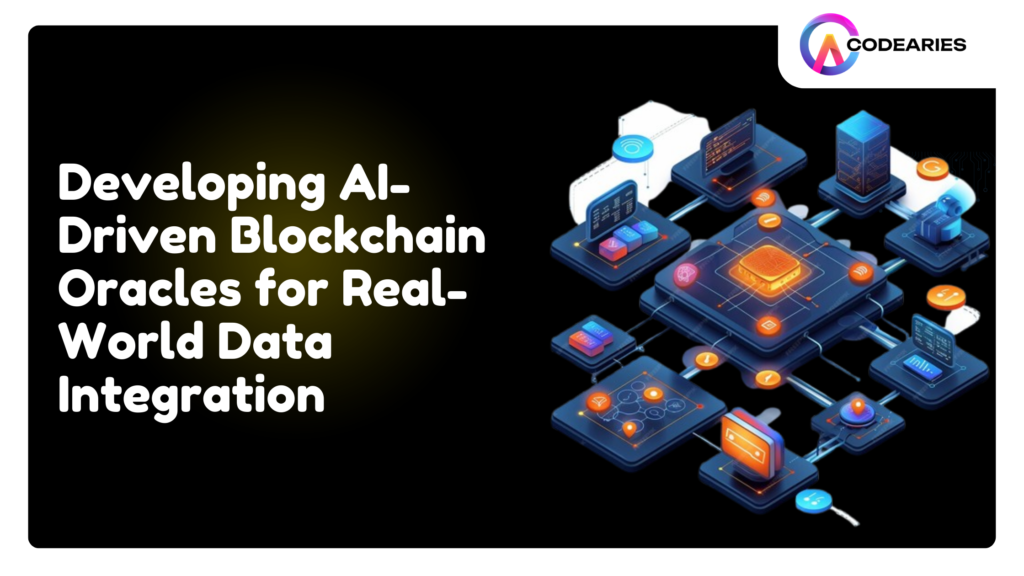
AI-Driven Blockchain Oracles: Revolutionizing Data Integration

Read 6 MinThe convergence of artificial intelligence (AI) and blockchain technology drives innovation across multiple sectors, creating decentralized systems that offer improved transparency, security, and operational efficiency. One of the standout applications of this integration is the rise of AI-driven blockchain oracles, which play a crucial role in real-world data integration. Blockchain oracles act as intermediaries, enabling smart contracts to access and interact with off-chain data. However, accuracy, reliability, and speed issues often plague the integration of external data into decentralized systems. This is where AI comes into play, significantly enhancing the capabilities of blockchain oracles by boosting data verification, processing efficiency, and minimizing errors. This article delves into AI-driven blockchain oracles, their significance in integrating real-world data, and their transformational impact on industries like finance, healthcare, supply chain management, and environmental monitoring.  What are AI-driven blockchain Oracles? AI-enhanced blockchain oracles are critical gateways that bring real-world data into blockchain ecosystems. These oracles feed external information into smart contracts, enabling decentralized applications (dApps) to interact with off-chain data securely and reliably. The integration of AI within these oracles enhances their capabilities by allowing sophisticated data analysis and validation. The global blockchain technology market size was valued at USD 17.46 billion in 2023 and is expected to grow at a compound annual growth rate (CAGR) of 87.7% from 2023 to 2030. Types of Blockchain Oracles Blockchain oracles can be categorized into different types based on their function: Inbound Oracles: These oracles fetch external data and deliver it to the blockchain. Outbound Oracles: These oracles send blockchain data to external systems. Consensus-Based Oracles: These oracles aggregate data from multiple sources to ensure reliability and accuracy. Source How Do AI-Enhanced Oracles Function? Data Acquisition: Oracles gather information from diverse real-world sources such as financial markets, weather reports, and IoT sensors. AI-Driven Data Analysis: Artificial intelligence processes the raw data, identifying patterns and verifying its relevance and accuracy. Data Validation: AI models help ensure the integrity of the data, guarding against inaccuracies or manipulation before it is used. Data Delivery: After verification, the oracle transmits this trusted data to blockchain-based smart contracts. Key Advantages of AI-Enhanced Blockchain Oracles Superior Accuracy: AI algorithms can analyze and filter out irrelevant or erroneous data, ensuring that only accurate, high-quality information is delivered to smart contracts. Increased Efficiency: Automation speeds up the entire data gathering and validation process, reducing the need for manual intervention and saving time and costs. Robust Security: AI can detect anomalies in the data that may indicate fraudulent behaviour, making the system more resilient to attacks or manipulations. Broader Application Spectrum: By leveraging AI’s advanced capabilities, blockchain oracles can support various use cases, from financial services to supply chain transparency. The Role of AI in Enhancing Blockchain Oracles Artificial Intelligence (AI) has dramatically transformed the functionality of blockchain oracles, elevating their performance in terms of efficiency, security, and data integrity. Below are the primary ways AI enhances blockchain oracles: Ensuring Data Quality: Anomaly Detection: AI algorithms can identify irregularity in data sets, spotting inconsistencies that may indicate errors or manipulations. This helps prevent faulty data from entering the blockchain. Noise Filtering: AI can sift through vast amounts of information, eliminating irrelevant or misleading data points to ensure that only the most accurate and relevant data is passed to smart contracts. Advanced-Data Analysis and Aggregation: Data Synthesis: AI can merge data from multiple independent sources, creating a more complete and trustworthy dataset that can be used for decision-making on the blockchain. Predictive Analytics: By analyzing historical data, AI algorithms can forecast future trends and behaviours, adding predictive capabilities to blockchain applications that rely on real-world data. Automating Smart Contracts: Condition-Based Triggers: AI autonomously triggers smart contract actions when predefined conditions are met. This reduces the need for human oversight. Complex Decision Support: AI supports complex decision-making in smart contracts. It interprets intricate data to determine if contract conditions are fully met. Boosting Security: Fraud Prevention: By continuously analyzing data streams, AI can identify suspicious patterns that may indicate fraud, such as sudden changes in market prices or tampering with external data feeds. Risk Evaluation: AI enhances the reliability of data by assessing the risk profiles of different data providers. Real-Time Data Processing: Low-Latency Responses: AI-driven oracles excel in processing data in real time, allowing smart contracts to react instantaneously to changes in the external environment. Handling Large Data Volumes: AI systems are well-suited for managing large-scale data streams, enabling oracles to support blockchain applications that demand high throughput and fast decision-making. Challenges in Traditional Blockchain Oracles While blockchain oracles have revolutionized data integration in decentralized systems, traditional oracles still face significant challenges, including: Data Latency: The delay in acquiring real-time data affects the timing of smart contract execution. Trust Issues: Centralized oracles are susceptible to manipulation, reducing the trustworthiness of the data. Data Availability: Inconsistent or unreliable data sources can lead to gaps in data delivery AI-driven oracles tackle these issues by applying machine learning techniques to enhance data accuracy, minimize latency, and ensure continuous trust in decentralized systems. AI Solutions to Oracle Security Risks Blockchain oracles are frequent targets for manipulation, particularly in high-stakes environments like decentralized finance (DeFi). AI significantly reduces security risks by monitoring and validating data in real-time, employing machine learning algorithms to detect anomalies and suspicious activity.In DeFi applications, where large sums of money are at stake, AI-driven oracles can safeguard financial systems by verifying data from multiple trusted sources and preventing tampering before it reaches the blockchain. Smart Contracts and AI-Powered Oracles The success of smart contracts depends heavily on the accuracy and timeliness of the data they receive. AI-driven blockchain oracles enhance smart contracts by providing reliable, real-time data, ensuring contract conditions are accurately met. For example, in insurance, an AI-powered oracle verifies the occurrence of an event (like a natural disaster) from multiple data sources, automatically executing a claim only when it meets accurate conditions, thereby preventing fraudulent claims. AI-Driven Blockchain Oracles: Transforming Multiple Industries AI-driven blockchain oracles are revolutionizing industries by integrating real-time data with blockchain networks, enhancing transparency, efficiency,

AI

Building AI powered Decentralized Cloud Storage Solutions

Read 7 MinThe landscape of cloud storage is evolving rapidly, driven by innovations in artificial intelligence (AI) and decentralized technologies like blockchain. Traditional cloud storage models, while convenient, face limitations such as security vulnerabilities, high operational costs, and scalability challenges. In response, decentralized cloud storage powered by AI is emerging as a superior alternative, providing enhanced security, cost-efficiency, and resilience. This article explores how AI-powered decentralized cloud storage solutions are built, their core components, and their benefits over traditional storage methods. Decentralized Cloud Storage Decentralized cloud storage transforms data storage by utilizing blockchain technology to distribute information across a global network. In decentralized storage, data splits and stores across numerous independent nodes, unlike traditional cloud storage where a single provider manages data on their servers. This approach offers significant security, resilience, privacy, and cost advantages. Significant Advantages of Decentralized Cloud Storage Stronger Security: Data is encrypted and fragmented into smaller pieces, making unauthorized access and tampering much more complicated for hackers. Greater Resilience: The distributed structure ensures that even if some nodes fail, the system continues to function without compromising the integrity of the data. Enhanced Privacy: Since data is not stored on centralized servers, users have better control, reducing risks related to government surveillance or corporate breaches. Cost-Effectiveness: Decentralized storage can offer a more affordable solution than traditional providers by tapping into the unused storage space of participating users. Freedom from Third-Party Control: Users maintain autonomy over their data and avoid reliance on single storage providers, mitigating risks such as censorship or vendor lock-in. How Decentralized Cloud Storage Operates Encryption: Data is securely encrypted using advanced cryptographic techniques to guarantee confidentiality. Data Sharding: Large files are divided into smaller fragments and scattered across various nodes in the network. Distribution Across Nodes: These fragments are stored redundantly across multiple locations to ensure availability and security. Reconstruction of Data: When needed, the system retrieves the file fragments from the network and reassembles them for the user Key Challenges of Traditional Cloud Storage Traditional cloud storage faces several significant limitations. Centralized systems are prone to single points of failure, making them susceptible to hacking, data loss, or downtime. Maintaining large data centres is also expensive, driving up operational costs. Additionally, data privacy is a growing concern, as users must trust third-party providers with sensitive information. These issues highlight the need for a more resilient, cost-effective, and secure storage model, which decentralized cloud storage addresses. AI-Powered Decentralized Cloud Storage Solutions Decentralized cloud storage is emerging as an attractive alternative to traditional centralized solutions. Distributing data across multiple nodes enhances security, resilience, and privacy. When combined with artificial intelligence (AI), these decentralized systems’ capabilities are significantly expanded, offering a new frontier in cloud storage innovation.The AI-powered storage market size reached US$ 16.6 billion in 2022. Demand for AI-powered storage solutions stood at US$ 21.0 billion in 2023. In the forecast period between 2023 and 2033, demand is poised to exhibit a 20.7% CAGR. Revenue is anticipated to cross around US$ 138.0 billion by the end of 2033. Source Key Benefits of AI-Powered Decentralized Cloud Storage Enhanced Security: AI can proactively identify and address security risks, such as malware, ransomware, and potential data breaches, increasing the robustness of decentralized storage. Improved Data Privacy: With AI-driven protocols, data confidentiality is better safeguarded from unauthorized access, ensuring privacy. Optimized Performance: AI algorithms can intelligently manage data distribution, retrieval, and storage, improving efficiency and scalability. Smarter Data Management: AI automates tasks like classification, tagging, and searching, making it more straightforward to handle and access large datasets, even across a decentralized network. AI Applications in Decentralized Cloud Storage Smart Contracts: AI can facilitate the automated execution of smart contracts, enhancing trust and transparency across decentralized storage networks. Predictive Analytics: AI can analyze usage patterns to predict future storage needs, ensuring efficient resource management and allocation. Data Governance: AI helps enforce data governance standards, ensuring compliance with regulations and maintaining ethical data practices. AI-Powered File Systems: AI can manage intelligent file systems that automatically organize data according to its content and context, streamlining data storage and retrieval. Notable AI-Powered Decentralized Cloud Storage Platforms Filecoin: A decentralized network that leverages blockchain and AI to encourage storage providers and ensure the integrity of stored data. Storj: This decentralized cloud storage solution uses a peer-to-peer system with AI-enhanced encryption to protect user privacy and data. MaidSafe: A decentralized platform that offers scalable and secure storage enhanced by AI for improved performance and security. Blockchain: The Foundation of Decentralized Storage Blockchain technology is integral to the success of decentralized storage, offering a secure, transparent, and tamper-proof infrastructure. It enables data management across a distributed network while ensuring trust, security, and accountability. Here’s an overview of its core functions within decentralized storage: Ensuring Data Integrity and Traceability Immutability: Once data is recorded on a blockchain, it cannot be modified or deleted, preserving the integrity of the stored information. Traceability: Blockchain logs the entire history of data—who created it, who accessed it, and any modifications—ensuring transparency and accountability throughout its lifecycle. Providing Trust and Security Decentralized Ledger: By distributing data across numerous nodes, blockchain ensures that no single point of failure exists, offering enhanced protection against hacking and censorship. Cryptographic Hashing: Data stored on the blockchain is represented by unique cryptographic hashes, ensuring that it cannot be tampered with or altered without detection. Incentivization and Automation Tokenization: Many decentralized storage platforms use tokens to incentivize participants to contribute storage space. These tokens can be traded or used within the network, creating a market-driven system for storage. Smart Contracts: Blockchain-based smart contracts allow automated, rule-based interactions within the network. These contracts execute transactions and enforce terms autonomously, reducing the need for intermediaries and minimizing human error. Decentralized Governance and Consensus Consensus Algorithms: Blockchain networks rely on consensus mechanisms (such as Proof of Work or Proof of Stake) to ensure all participants agree on the state of the distributed ledger. This decentralized agreement eliminates the need for a central authority, creating a more resilient and trustworthy network. Community Governance: Blockchain

AI

AI in Blockchain-Based Peer-to-Peer Energy Trading Systems

Read 6 MinThe merging of Artificial Intelligence (AI) and blockchain technology is rapidly transforming multiple sectors, with the energy industry poised for a revolutionary shift. In peer-to-peer (P2P) energy trading systems, blockchain serves as a decentralized platform where participants can directly trade energy, while AI optimizes these transactions by leveraging data analytics and automation. Blockchain-based platforms provide secure, efficient, and transparent marketplaces by enabling direct transactions between energy producers and consumers. AI enhances this ecosystem by improving decision-making, market efficiency, and scalability. This article explores how AI and blockchain revolutionise energy trading systems, making them more efficient, sustainable, and resilient. Defining Peer-to-Peer Energy Trading and the Role of AI Peer-to-peer (P2P) energy trading is an innovative and decentralized approach. It allows individuals and small producers to exchange electricity directly, bypassing the need for traditional utility companies. This model fosters a more efficient and democratized energy marketplace, emphasizing sustainability and community-driven energy management. Source Artificial Intelligence (AI) plays a pivotal role in enhancing P2P energy trading by introducing advanced data-driven capabilities: Accurate demand forecasting AI analyzes complex datasets, such as historical consumption patterns, weather forecasts, and real-time behaviour, to predict energy demand with high precision. This ensures producers can optimize their output, avoid energy waste, and maintain a balanced supply. Optimizing energy consumption AI identifies patterns in energy usage and can recommend efficient consumption strategies for users. This reduces energy costs and lightens the load on the grid during peak times, promoting a more resilient system. Dynamic real-time pricing With AI-driven algorithms, energy prices can be dynamically adjusted based on real-time market conditions, ensuring a fair and balanced market that responds to fluctuations in supply and demand. This incentivizes consumers and producers to engage in more efficient energy practices. Facilitating renewable energy integration By predicting renewable energy generation from sources like solar and wind, AI enables smoother integration of these fluctuating resources into the energy mix. It ensures that renewable energy can be utilized effectively, enhancing sustainability and reliability in P2P trading networks. Smart grid management AI enhances the management of smart grids by continuously monitoring energy flows, diagnosing grid inefficiencies, and balancing supply and demand in real-time. This reduces the risk of outages and maximizes grid performance.Overall, AI empowers the P2P energy trading ecosystem by ensuring optimized, intelligent, and sustainable energy flows, transforming the future of decentralized energy markets. Blockchain and AI Enhancing Decentralized Energy Markets Blockchain Advantages Transparency: All transactions are recorded on a public ledger, ensuring explicit tracking of energy sources and trades and boosting trust in decentralized systems. Immutability: Once recorded, transactions cannot be altered, creating a tamper-proof history that prevents fraud and maintains accuracy. Decentralization eliminates the need for intermediaries by allowing direct peer-to-peer energy trading, reducing costs, and enhancing market efficiency. AI Enhancements Predictive Analytics: AI forecasts energy demand weather conditions and optimizes distribution using real-time data, improving grid management. Dynamic Pricing: AI adjusts prices based on current market conditions, ensuring fair pricing and efficient energy use. Grid Optimization: AI identifies and mitigates inefficiencies, improving grid stability and reducing waste. Security and Automation Blockchain Security: Cryptographic techniques ensure transaction security and immutability, while distributed verification enhances resilience against cyberattacks. Smart Contracts: Automate transactions by executing agreements automatically when conditions are met, streamlining trading and cutting out intermediaries. Blockchain and AI revolutionize energy trading by providing transparency, security, efficiency, and automation in decentralized markets. How AI Predicts Energy Demand for Balanced Energy Distribution AI-driven energy demand prediction is a critical tool in managing energy distribution and ensuring the stability of modern power grids. By leveraging vast amounts of data and sophisticated algorithms, AI enables accurate forecasting of energy needs, allowing grid operators to manage generation, distribution, and storage more effectively. Key AI Techniques for Energy Demand Prediction Statistical Forecasting: AI can utilize statistical methods like time series analysis, regression models, and ARIMA (AutoRegressive Integrated Moving Average) to analyze past consumption data and predict future energy demand. Machine Learning: Algorithms such as neural networks, support vector machines, and random forests can learn from historical data, detecting subtle patterns and predicting energy demand with high precision. Deep Learning: Advanced deep learning architectures, such as recurrent neural networks (RNNs) and convolutional neural networks (CNNs), allow for handling large datasets and uncovering complex relationships between multiple variables, from weather trends to economic factors. Key Factors AI Considers in Energy Forecasting Historical Data Patterns: AI analyzes historical energy consumption, identifying daily, weekly, and seasonal cycles, along with special events that may cause fluctuations. Weather Conditions: External factors such as temperature, humidity, and wind speed play a significant role in determining energy demand, particularly for heating, cooling, and renewable energy generation. Economic Indicators: Shifts in economic activity, such as industrial production or retail performance, can directly influence energy consumption levels. Social Factors: Population density, urbanization, and evolving lifestyle habits can alter energy consumption, making these essential inputs in AI models. Dynamic Pricing Models Driven by AI for Fair Energy Markets AI-driven dynamic pricing models are transforming energy markets by providing real-time price adjustments that reflect fluctuations in supply and demand. This approach promotes not only efficiency but also fairness in energy distribution and consumption. The core benefits of AI-driven dynamic pricing models  Balancing supply and demand: AI algorithms continuously monitor energy supply and demand, predicting shortfalls or surpluses. Prices are adjusted dynamically, ensuring the energy grid remains balanced and stable, avoiding blackouts or overproduction. Reducing energy waste: By incentivizing consumers to adapt their usage during peak periods through higher pricing, AI-based models help reduce the strain on the grid. This minimizes the need for backup power sources, contributing to more efficient energy usage. Encouraging renewable energy adoption: Dynamic pricing models favour renewable energy by making it more cost-competitive, especially during peak demand times. AI enables better integration of renewables like solar and wind by predicting their output and reflecting these fluctuations in pricing. Fostering a fair market: Dynamic pricing models ensure that energy prices accurately reflect real-time production and consumption costs, creating a more equitable playing field for consumers and producers. This system

AI

AI-Powered User Behavior Analysis in Blockchain Social Networks

Read 6 MinBlockchain technology has introduced a fresh perspective on privacy, data security, and the ownership of digital assets. When combined with artificial intelligence (AI), the possibilities for transforming social networks are remarkable. AI-powered behavioral analysis in blockchain-based social networks offers a secure and personalized user experience that balances decentralization with engagement, making these platforms an attractive alternative to traditional, centralized systems. Understanding AI-Powered User Behavior Analysis AI-powered user behavior analysis harnesses the power of artificial intelligence to unlock deep insights into how users interact with digital platforms. By analyzing extensive datasets, AI systems can detect patterns, predict behaviors, and anticipate user needs in ways that surpass traditional analysis methods. Source The global behavior analytics market size was valued at USD 801.8 million in 2023 and is projected to grow from USD 1,096.5 million in 2024 to USD 11,468.3 million by 2032, exhibiting a CAGR of 34.1% during the forecast period (2024-2032). Core Elements of AI-Driven User Behavior Analysis Comprehensive Data Collection: It collects data from diverse sources such as website interactions, mobile app usage, social media engagement, and transaction histories for analysis. Data Refinement: Helps to clean, standardize, and prepare the raw data for processing to eliminate errors and inconsistencies. Feature Engineering: Derive meaningful attributes from the raw data to help AI systems better understand user preferences and actions. AI Algorithm Application: Apply machine learning techniques to detect trends, correlations, and anomalies within the dataset. Model Training and Optimization: Use historical data to train AI models, enabling them to make accurate and actionable predictions. Actionable Insights and Predictions: Trained models provide real-time forecasts of user behaviors, identify key user segments, and reveal actionable insights into user preferences. Advanced AI Techniques in Behavior Analysis Segmentation through Clustering: Users with similar behavioral patterns are grouped to enable personalized strategies. AI-Driven Recommendation Engines: AI systems suggest relevant products, services, or content based on individual user preferences and previous interactions. Predictive Models: Forecast future actions such as purchasing behavior, churn, or conversion likelihood. Natural Language Processing (NLP): AI analyzes user-generated content like social media posts and reviews, extracting sentiment and intent to better understand user motivations. Blockchain Social Networks Blockchain technology, celebrated for its decentralized and secure framework, is steadily reshaping industries across the board, and social networking is no exception. Blockchain-based social networks are emerging as a revolutionary alternative to traditional platforms, offering users greater privacy, autonomy, and innovative ways to monetize their content, all while enhancing transparency. Benefits of Blockchain Social Networks Greater User Autonomy: Users maintain control over their data and digital identities, avoiding the surveillance and manipulation commonly associated with centralized platforms. Democratized Content Reward Systems: Content creators are rewarded based on engagement and quality rather than the whims of ad-based algorithms, promoting a fairer distribution of rewards. Censorship Resistance: Decentralized networks are less vulnerable to shutdowns or censorship, providing a space for freer expression. New Revenue Streams: Tokenization allows users and creators to tap into new financial ecosystems, fostering economic opportunities within the platform. AI-Powered Behavioral Analysis in Blockchain The integration of artificial intelligence (AI) with blockchain is unlocking powerful new applications. One of the most promising areas is AI-powered behavioral analysis within blockchain ecosystems. By combining AI’s data processing capabilities with blockchain’s transparency and security, businesses can gain deeper insights into user behavior, enhance fraud detection, and improve risk management. Key Use Cases of AI in Blockchain Behavioral Analysis Fraud Detection Anomaly Detection: AI can spot irregular patterns in transaction data, such as unusual spikes or spending behaviors, which may signal fraud. Identity Verification: AI can cross-check user identities by analyzing blockchain data points, including transaction histories and digital footprints, ensuring authenticity. Risk Assessment Credit Scoring: AI analyzes blockchain-based financial histories to assess creditworthiness, offering more accurate and transparent credit scores. Market Prediction: By examining trends and sentiment on blockchain platforms, AI can help predict risks and market opportunities. User Segmentation Customer Profiling: AI can categorize users based on their behaviors and preferences, enabling personalized services and targeted marketing. Community Identification: It can also detect distinct communities within blockchain networks, encouraging engagement and collaboration. Predictive Analytics Behavior Forecasting: AI uses past behavior to predict future actions, allowing platforms to proactively address user needs or potential risks. Trend Forecasting: AI can spot emerging trends in blockchain activities, offering valuable insights for investors and businesses. Potential Benefits Stronger Security: AI can detect and prevent fraud more effectively, safeguarding the blockchain ecosystem. Personalized Experiences: Understanding user behavior allows blockchain platforms to offer more relevant and tailored services. Innovative Business Models: AI-driven insights from blockchain data can inspire new products and services. Increased Trust: The transparency and reliability of AI-powered behavioral analysis can help build trust in blockchain technologies. As both AI and blockchain continue to evolve, the potential for their combined use in behavioral analysis will only grow, opening up more possibilities for innovation and security. Centralized vs. Decentralized Platforms: The AI Advantage The debate between centralized and decentralized platforms has gained momentum with the growth of blockchain technology. Each model offers distinct advantages, but the integration of artificial intelligence (AI) into both types can amplify their strengths, unlocking new possibilities for innovation, security, and efficiency. Centralized Platforms Central Control: Managed by a single authority or organization. Key Advantages: Operational Efficiency: Centralized systems are often more streamlined, allowing for faster decision-making and data processing. Scalability: With unified infrastructure, centralized platforms can scale quickly and handle large volumes of users and transactions. Consistent Governance: Centralized control ensures uniform policies and compliance across the platform. AI Integration Benefits: Personalized Interactions: AI can analyze user behavior to provide tailored content, enhancing user engagement and satisfaction. Advanced Predictive Analytics: AI can anticipate user behavior, helping businesses stay ahead of trends and market shifts. Automation of Tasks: Routine operations can be automated by AI, reducing overhead and boosting operational efficiency. Decentralized Platforms (Blockchain-Based) Distributed Architecture: Operates without a single controlling entity, relying on a network of participants. Key Advantages: Enhanced Security: Decentralized platforms reduce vulnerabilities by distributing data across multiple nodes, making breaches and censorship difficult.

AI

Smart Contract Auditing with AI-Powered Tools

Read 7 MinIn the fast-evolving realm of blockchain technology, ensuring the security of smart contracts is a critical necessity. These self-executing contracts, which form the backbone of decentralized applications (dApps) and decentralized finance (DeFi) systems, require thorough auditing to prevent breaches and safeguard digital assets. Traditional manual audits, while effective, can be time-consuming and costly. To address these challenges, AI-powered auditing tools are stepping up, offering faster, more scalable, and highly accurate solutions for securing smart contracts. In this article, we’ll explore the transformative role of AI in smart contract auditing, the benefits of these cutting-edge tools, and how they are reshaping blockchain security. What is a Smart Contract? A smart contract is a digital agreement where the contract terms are encoded into software and automatically executed once predefined conditions are met. Unlike traditional agreements that rely on intermediaries, smart contracts operate autonomously on blockchain platforms such as Ethereum. They are designed to be immutable and tamper-proof, ensuring that once a contract is deployed, its logic cannot be altered. FMI shares that the smart contract market is predicted to be valued at US$ 230.2 million in FY 2024. The market is expanding at a robust 23.80% CAGR over the next ten years and lead the market to US$ 1,946.78 million by 2034. Source However, this immutability also presents a challenge: any coding error or vulnerability becomes permanent, making rigorous pre-deployment auditing essential. Without thorough auditing, smart contracts can be exploited by attackers, leading to financial losses and compromised trust. Common Vulnerabilities in Smart Contracts Even though smart contracts are hailed for their security, they are not without risks. Here are some of the most common vulnerabilities that can compromise a contract’s integrity: Reentrancy Attacks: This occurs when a malicious actor repeatedly calls a function within a contract before the previous call is finished, enabling them to manipulate the system and, in some cases, steal funds. Integer Overflows/Underflows: Contracts can miscalculate numerical values when these exceed or drop below the storage limits, potentially allowing attackers to exploit the contract for fraudulent gain. Denial of Service (DoS): An attacker can disrupt a smart contract’s normal functionality, halting key operations and causing service failures. Gas Limit Issues: Contracts that are not optimized for gas usage can lead to high transaction fees or failures due to insufficient gas. These vulnerabilities highlight the importance of comprehensive auditing to ensure that contracts are safe from exploitation. The Evolution of Smart Contract Auditing Historically, smart contract auditing was a manual process, requiring blockchain security experts to comb through lines of code. These audits, while thorough, took considerable time and effort. As blockchain projects scaled and adoption increased, the demand for faster, more scalable auditing methods grew. AI-powered auditing tools have emerged to address these challenges. By using advanced machine learning models, these tools can quickly detect vulnerabilities and analyze complex codebases more efficiently than traditional human auditors. This marks a significant shift in the way blockchain security is approached. How AI is Enhancing Smart Contract Auditing AI plays a pivotal role in revolutionizing smart contract auditing by automating the detection of vulnerabilities. AI-powered tools can process vast amounts of code at speeds far beyond human capabilities, offering a more thorough analysis in a fraction of the time. These tools are trained on extensive datasets of past vulnerabilities, enabling them to recognize patterns and flag potential issues that human auditors might miss. An additional benefit of AI tools is their ability to uncover zero-day vulnerabilities—those previously unknown flaws that traditional methods might overlook. By automating the routine, time-intensive aspects of auditing, AI frees up human auditors to focus on more complex and nuanced security concerns. Benefits of AI-Powered Auditing Tools The introduction of AI into smart contract auditing has brought about several key advantages: Speed and Efficiency: AI can audit large volumes of code in minutes, as opposed to the weeks that manual audits might take. Improved Accuracy: AI’s pattern recognition capabilities allow it to spot hidden vulnerabilities, reducing the chances of human error. Scalability: As the number of smart contracts continues to grow, AI tools can handle the increased volume of audits without sacrificing quality. Cost Reduction: Automating part of the auditing process lowers costs, making security services more accessible to smaller projects and startups. These benefits make AI-powered tools a game-changer for blockchain developers seeking to enhance the security of their smart contracts. How AI Detects Smart Contract Vulnerabilities AI-powered auditing tools rely on several advanced techniques to identify vulnerabilities in smart contracts: Pattern Recognition: By studying previous exploits, AI models can identify patterns that indicate security risks within the code. Natural Language Processing (NLP): AI uses NLP to understand the logic and intent behind smart contract functions, ensuring the contract performs as expected. Anomaly Detection: By analyzing the normal behavior of smart contracts, AI can identify irregularities that signal potential vulnerabilities or exploits. This combination of techniques allows AI to provide a more comprehensive and proactive approach to security auditing. Machine Learning’s Role in Auditing At the core of AI-powered auditing tools is machine learning (ML). These tools are trained on vast datasets of previously audited smart contracts, learning to recognize vulnerabilities based on historical data. Over time, the models become increasingly accurate, allowing them to detect more subtle security issues. Machine learning also enables the creation of specialized models tailored to specific industries or types of contracts. For example, a model trained specifically on DeFi contracts may be better equipped to detect financial security vulnerabilities than a more general model. Auditing Workflow with AI Tools The process of auditing a smart contract with AI typically follows a systematic workflow: Code Input: The smart contract code is uploaded into the AI tool for analysis. Initial Scan: The AI performs an initial scan to flag common vulnerabilities. In-Depth Analysis: Machine learning models dive deeper into the code, analyzing it for more sophisticated issues or exploits. Report Generation: A detailed report is produced, outlining any vulnerabilities discovered, their severity, and suggestions for fixing them. Human Review: Expert auditors review the

AI

AI to monitor Compliance in Blockchain Financial Apps

Read 6 MinBlockchain technology has rapidly gained traction in the financial industry, promising unmatched transparency and security. However, these benefits come with significant regulatory challenges. Ensuring compliance in a decentralized environment like blockchain is complex and requires more than traditional approaches. Artificial Intelligence (AI) emerges as a crucial tool in this context, capable of automating and enhancing compliance monitoring. By leveraging AI, financial institutions can meet regulatory standards and maintain trust and security in the fast-evolving landscape of blockchain finance. In this article, we have explored AI’s significant role in enhancing compliance monitoring within blockchain financial applications. Blockchain Technology’s Role in Modern Finance Blockchain technology has introduced transformative changes in the financial industry, offering a robust and transparent framework for executing transactions. With its decentralized architecture and immutable ledger, blockchain is reshaping various economic processes, providing new opportunities while presenting unique challenges. Global Blockchain AI Market size was valued at USD 358.0 Million in 2022 and is poised to grow from USD 448.5 Million in 2023 to USD 2,725.2 Million by 2031, growing at a CAGR of 25.3% in the forecast period (2024-2031). Major Applications of Blockchain in Finance: Cryptocurrencies: The advent of blockchain has paved the way for cryptocurrencies like Bitcoin and Ethereum, which enable peer-to-peer, decentralized transactions without the need for traditional banks or financial intermediaries. Smart Contracts: Blockchain allows for creating smart contracts—self-executing agreements with the terms directly embedded in code. These contracts automate various financial processes, from lending to insurance, by removing the need for intermediaries, thereby increasing efficiency and reducing costs. Tokenization of Assets: Blockchain converts physical and digital assets into tokens, enabling fractional ownership and greater liquidity. This process allows for creating new financial instruments and democratizes access to previously illiquid assets. Decentralized Finance (DeFi): DeFi leverages blockchain to offer traditional financial services, such as lending, borrowing, and trading, without the involvement of centralized financial institutions. This democratizes access to financial services and fosters innovation in financial products. Securities Trading: Blockchain can revolutionize securities trading by automating the settlement process, thereby minimizing the risks associated with traditional intermediaries. Supply Chain Finance: Blockchain can enhance the transparency and efficiency of supply chain finance by providing an immutable record of goods and their origins. This helps in verifying authenticity, reducing fraud, and improving trust among all parties involved. Identity Management: Blockchain can securely store and manage identity data, offering a tamper-proof solution that can significantly reduce the risks associated with fraud and identity theft in financial transactions. The Need for Compliance Monitoring in Blockchain Applications While blockchain technology offers numerous benefits, it also presents significant challenges for compliance monitoring. Blockchain networks’ decentralized structure, immutable records, and international reach complicate traditional compliance mechanisms, necessitating new approaches. Key Compliance Challenges in Blockchain Applications Blockchain transactions often use pseudonymous or anonymous addresses, making it hard to trace or identify individuals behind illicit activities. Cross-border transactions complicate enforcement of local regulations and tax laws, as they occur across jurisdictions with little oversight. Smart contracts, while powerful, can have vulnerabilities and unintended consequences that may breach compliance, especially with complex or poorly understood code. The decentralized nature of blockchain networks makes it difficult to enforce regulations due to the lack of a central authority. Rapid technological advancements in blockchain can outpace regulatory frameworks, creating gaps in compliance and oversight.   Importance of Compliance Monitoring: Effective compliance monitoring is crucial to prevent blockchain misuse for money laundering, terrorist financing, and other illegal activities. Ensuring compliance protects investors from fraud, scams, and financial crimes, maintaining trust in blockchain platforms. Adhering to regulations is essential for protecting a company’s reputation and avoiding severe legal penalties for non-compliance. A well-regulated blockchain ecosystem supports innovation by providing a stable and secure environment for new applications and services. In conclusion, as blockchain technology advances, compliance monitoring becomes increasingly vital. By addressing the unique challenges posed by this technology, organizations can contribute to a secure and compliant blockchain ecosystem that supports sustainable growth and innovation. AI’s Essential Role in Blockchain Compliance Artificial Intelligence (AI) is increasingly becoming a cornerstone in enhancing compliance within blockchain environments. With its capability to analyze vast datasets, recognize patterns, and adapt through learning, AI significantly boosts the effectiveness and efficiency of compliance monitoring efforts in the rapidly evolving blockchain landscape. Critical Advantages of AI in Blockchain Compliance: AI-driven systems provide continuous real-time monitoring of blockchain transactions, issuing instant alerts for suspicious activities and enabling quick corrective actions. AI algorithms can analyze transaction data to detect unusual patterns or behaviors that may indicate fraud or regulatory breaches. AI evaluates the risk levels of individual transactions or entities, helping organizations prioritize compliance efforts and allocate resources effectively. AI automates compliance with complex regulations, including tasks like checking sanctions lists and verifying Know Your Customer (KYC) and Anti-Money Laundering (AML) adherence. AI tools review smart contracts for vulnerabilities and ensure they meet legal and regulatory standards before deployment. AI detects anomalies in transaction data to prevent fraud, such as pump-and-dump schemes or insider trading, preserving the integrity of blockchain networks.   AI Techniques Utilized in Blockchain Compliance: ML models learn from historical transaction data to identify patterns, detect anomalies, and predict potential risks, enhancing the overall compliance framework. NLP is employed to analyze and interpret textual data, such as regulatory documents, social media discussions, or news articles, to detect potential compliance risks or emerging threats. Deep Learning is adept at analyzing intricate patterns in large datasets, making it particularly useful for tasks such as detecting complex fraud schemes or validating the authenticity of digital assets AI’s Role in Detecting Non-Compliance in Blockchain Transactions Artificial Intelligence (AI) has become indispensable in identifying non-compliance within blockchain transactions. Its ability to analyze large datasets, recognize intricate patterns, and adapt to new information makes AI particularly effective in monitoring and enforcing compliance in the blockchain space. AI Techniques for Detecting Non-Compliance: Anomaly Detection: AI algorithms can detect deviations from established transaction patterns, flagging unusual activities that may indicate fraud, such as money laundering or market manipulation. AI can quickly spot irregularities

AI

AI-Based Risk Assessment Models for DeFi

Read 7 MinAl’s decentralized finance (DeFi) continues to disrupt traditional financial systems, managing risk effectively has become paramount. DeFi’s promise of a more transparent and democratized financial ecosystem comes with challenges, including vulnerability to fraud, liquidity crises, and smart contract failures. Artificial intelligence (AI) is becoming essential for safeguarding DeFi platforms. It offers advanced models for real-time risk assessment. AI adapts to new threats and enhances the security and reliability of decentralized financial services. In this article, we explore how AI-based risk assessment models are transforming the management of risks in decentralized finance. DeFi and Its Unique Risk Landscape Decentralized Finance (DeFi) is rapidly evolving within the cryptocurrency space. It aims to transform traditional financial systems using blockchain technology. DeFi eliminates the need for intermediaries. Unlike traditional financial services, which rely on banks, DeFi lets users engage directly with financial services. This includes lending, borrowing, trading, and earning interest through smart contracts on a blockchain. Defining Features of DeFi Decentralization: DeFi platforms operate on blockchain networks, ensuring that no single entity controls the system. This decentralization mitigates risks related to centralized points of failure and reduces the potential for censorship. Transparency: Every transaction on a DeFi platform is recorded on a public blockchain, offering a high level of transparency. Accessibility: DeFi services are available to anyone with internet access and a cryptocurrency wallet, making financial services more inclusive. Innovation: The DeFi ecosystem is a hub of innovation. Developers constantly push boundaries to find new applications for blockchain technology. Risks Associated with DeFi Smart Contract Risks: Despite being designed for security, smart contracts can contain bugs or vulnerabilities that may be exploited by attackers, leading to potential losses. Market Volatility: Given the cryptocurrency market’s inherent volatility, DeFi platforms are directly impacted by price fluctuations, which can result in substantial financial losses for participants. Regulatory Uncertainty: Operating outside of traditional regulatory frameworks, DeFi introduces legal uncertainties that, due to the lack of oversight, may expose users to risks. Counterparty Risk: In specific DeFi protocols, a counterparty may fail to fulfil its obligations, leading to potential financial losses for the other party involved. Scams and Phishing: Like any online activity, DeFi is susceptible to scams, including phishing attacks, where malicious actors attempt to deceive users into providing sensitive information or funds. AI’s Role in Addressing DeFi Challenges Artificial Intelligence (AI) is proving to be a transformative force in mitigating the risks associated with Decentralized Finance (DeFi). Its capacity for processing and analyzing large datasets at high speed offers significant advantages in enhancing the security, risk management, and overall robustness of the DeFi ecosystem.The AI Model Risk Management market is projected to grow from USD 5.7 billion in 2024 to  USD 10.5 billion by 2029 at a compound annual growth rate (CAGR) of 12.9% during the forecast period period. Source Key Areas Where AI Can Make an Impact: Smart Contract Analysis Identifying Vulnerabilities: AI-powered tools can scrutinize smart contract code to detect potential weaknesses, such as reentrancy attacks, integer overflows, and gas optimization issues. Enhanced Code Verification: AI can utilize advanced verification methods to ensure smart contracts behave as intended, reducing the likelihood of bugs or malicious exploits. Fraud Detection and Mitigation: Pattern Recognition: AI can analyze transaction patterns to spot anomalies that may suggest fraudulent activity, such as irregular transaction spikes or the involvement of suspicious wallet addresses. Phishing Prevention: AI can proactively detect phishing schemes by evaluating the content of emails, URLs, and sender metadata to identify potential threats before they affect users. Risk Evaluation and Management: Creditworthiness Assessment: AI can evaluate a borrower’s reliability by analyzing diverse data sources, including past transactions, digital footprint, and publicly available information. Market Volatility Prediction: AI can assess market conditions and predict risks, enabling DeFi platforms to make data-driven decisions that mitigate exposure to volatile markets. Regulatory Compliance: Automating Compliance Processes: AI can streamline Know Your Customer (KYC) and Anti-Money Laundering (AML) protocols by automating identity verification and monitoring for suspicious activity. Regulatory Monitoring: AI can continuously monitor DeFi activities to ensure compliance with relevant laws and regulations, covering areas such as securities, derivatives, and consumer protection. Securing Oracles: Data Integrity Verification: AI can cross-check data provided by oracles to ensure accuracy and reliability, which is crucial for adequately functioning DeFi protocols. Preventing Sybil Attacks: AI can detect and prevent Sybil attacks, in which adversaries create multiple fake identities to manipulate Oracle data and disrupt the DeFi ecosystem. Optimizing Liquidity Pools: Enhancing Market Making: AI can fine-tune Automated Market Maker (AMM) algorithms to ensure efficient price discovery and optimal liquidity provision. Identifying Arbitrage Opportunities: AI can spot arbitrage possibilities and execute trades automatically to help maintain market stability and price equilibrium. Incorporating AI into DeFi can significantly bolster security measures, improve risk management strategies, and build greater user confidence. However, AI should be considered part of a broader security strategy rather than a standalone solution. Why AI is Essential for DeFi Risk Management Traditional risk assessment tools often need help to keep pace with the rapidly evolving DeFi landscape. However, AI is well-suited to address these challenges due to its ability to process vast amounts of data, learn from patterns, and quickly adapt to new information. AI models can predict and respond to potential threats in real-time, providing a much-needed layer of security in the DeFi ecosystem.In summary, AI enhances DeFi by: Strengthening Security: Through proactive detection of vulnerabilities and protection against various forms of attack. Boosting Efficiency: By optimizing liquidity management and automating essential processes. Ensuring Compliance: By facilitating automated adherence to regulatory standards. Mitigating Risks: Through comprehensive monitoring and proactive threat identification. As DeFi matures, the integration of AI will become increasingly vital. AI will play a central role in safeguarding the ecosystem and ensuring its sustainable growth. AI Strategies for DeFi Risk Management Artificial Intelligence (AI) is increasingly vital for managing risks in decentralized finance (DeFi). By leveraging advanced AI techniques, DeFi platforms can address the unique challenges of this evolving landscape. Here’s a summary of crucial AI strategies used in DeFi risk

AI

Using AI for Automated Blockchain Network Optimization

Read 7 MinThe merging of artificial intelligence (AI) and blockchain technology is rapidly transforming how we approach digital systems and data management. As blockchain technology becomes increasingly popular for its decentralized and secure infrastructure, optimizing these networks to achieve peak efficiency, scalability, and security has become essential. AI plays a vital role in this space by providing automated solutions that enhance the performance and robustness of blockchain systems. Let’s delve into how AI is used for automated blockchain network optimization. Understanding Blockchain Technology What is Blockchain? Blockchain is a form of distributed ledger technology that securely records transactions across a network of computers. This decentralized approach ensures that data entries are transparent, immutable, and resistant to tampering or fraud.Originally developed as the underlying technology for Bitcoin, blockchain has evolved to support various applications across different industries. Each block in a blockchain contains a collection of transaction data, a timestamp, and a reference to the previous block, creating a continuous and secure chain of information. Key Features of Blockchain Decentralization: Blockchain operates without a central authority, distributing control across a network of nodes that validate and record transactions, making the system less vulnerable to single points of failure. Transparency: All transactions are recorded in a public ledger, ensuring transparency and trust among participants. Immutability: Once data is written to a blockchain, it cannot be altered or deleted, guaranteeing the integrity and reliability of the stored information. Security: Advanced cryptographic techniques are employed to secure data, making blockchain highly resistant to unauthorized access and cyber threats. Blockchain AI Market Scope Report Coverage Details Market Size by 2033 USD 3,718.34 Million Market Size in 2023 USD 445.41 Million Market Size in 2024 USD 550.7 Million Market Growth Rate from 2024 to 2033 CAGR of 23.64% Largest Market North America Base Year 2023 Forecast Period 2024 to 2033 Segments Covered Component, Technology, Deployment, Application, Industry, and Regions Regions Covered North America, Europe, Asia-Pacific, Latin America, and Middle East & Africa Source The Role of AI in Technology What is Artificial Intelligence (AI)? Artificial Intelligence (AI) emulates human intelligence in machines programmed to carry out tasks that typically necessitate human cognition. These tasks include learning from experience, adapting to new information, understanding natural language, and recognizing patterns. Artificial Intelligence (AI) comprises several subfields, including natural language processing, deep learning, and machine learning. Key Features of AI Automation: AI can accurately automate repetitive and mundane tasks, allowing humans to focus on more complex and creative endeavours. Data Analysis: AI excels at processing and analyzing large datasets, identifying trends, and generating insights that would be difficult for humans to discern. Adaptability: AI systems can learn from past experiences and continuously improve performance. Scalability: AI can handle vast amounts of data and complex tasks, scaling efficiently to meet the needs of various applications. Intersection of AI and Blockchain How AI Complements Blockchain AI and blockchain technologies are complementary, each enhancing the capabilities of the other. While blockchain offers a secure, transparent platform for data storage and transactions, AI provides the tools for analyzing and optimizing this data. AI can help manage blockchain networks more efficiently, addressing scalability, security, and latency challenges. Together, they create more intelligent, more secure, and autonomous systems. Use Cases of AI in Blockchain Intelligent Contract Management: AI can streamline the execution and monitoring of smart contracts, reducing errors and ensuring compliance with agreed-upon terms. Fraud Detection: AI can analyze transaction data in real-time to identify unusual patterns that may indicate fraudulent activities. Predictive Maintenance: In blockchain-based supply chains, AI can predict equipment failures and optimize maintenance schedules, minimizing downtime and costs. Data Privacy: AI can help anonymize data on blockchain networks, ensuring compliance with privacy regulations while maintaining transparency. Benefits of Using AI for Blockchain Optimization Enhanced Security Protocols AI enhances the security of blockchain networks by continuously monitoring transaction patterns and detecting anomalies. This proactive approach helps prevent cyber-attacks, fraud, and unauthorized access, safeguarding the network’s integrity. Improved Data Management AI can manage the vast amounts of data generated by blockchain networks, efficiently categorizing, storing, and retrieving information. By analyzing blockchain data, AI can provide valuable insights into user behavior, market trends, and network performance. Efficient Consensus Mechanisms AI can optimize consensus mechanisms in blockchain networks, reducing the time and computational resources needed to reach consensus. This leads to faster transaction processing and improved network performance. Predictive Analytics for Network Performance AI-powered predictive analytics can monitor blockchain networks in real time, identifying potential bottlenecks and optimizing resource allocation. This ensures the network operates efficiently, minimizing latency and improving user experience. Automated Blockchain Network Optimization What is Network Optimization? Network optimization involves improving a network’s performance and efficiency by optimizing various parameters such as bandwidth, latency, and security. It focuses on enhancing blockchain operations’ speed, scalability, and security. How AI Automates Blockchain Optimization AI automates blockchain network optimization by continuously analyzing network performance and making real-time adjustments. AI algorithms can predict traffic patterns, optimize data flow, and dynamically allocate resources to maintain optimal network performance, reducing the need for manual intervention. Real-World Examples of AI Automating Blockchain Optimization Integrating AI with blockchain technology is reshaping the landscape by making these networks more efficient, secure, and scalable. Below are some real-world instances where AI is used to optimize blockchain networks: Predictive Analytics for Network Optimization Ethereum Researchers from ETH Zurich have developed AI-driven algorithms capable of forecasting network congestion and suggesting optimal transaction fees. This proactive approach helps maintain network stability and prevents excessive transaction costs. Hyperledger Fabric IBM’s implementation of Hyperledger Fabric leverages AI to monitor network performance, detect potential bottlenecks, and recommend adjustments to the consensus process, thus enhancing overall efficiency. Smart Contract Optimization Chainlink As a decentralized Oracle network, Chainlink uses AI to streamline smart contract execution by analyzing past transaction data and predicting possible issues before they occur. This helps ensure the reliability and accuracy ofsmart contracts. Quorum The Quorum blockchain platform, developed by JPMorgan, integrates AI to detect and remediate vulnerabilities in smart contracts automatically. This proactive security measure reduces the

Scroll to Top
Popuo Image