
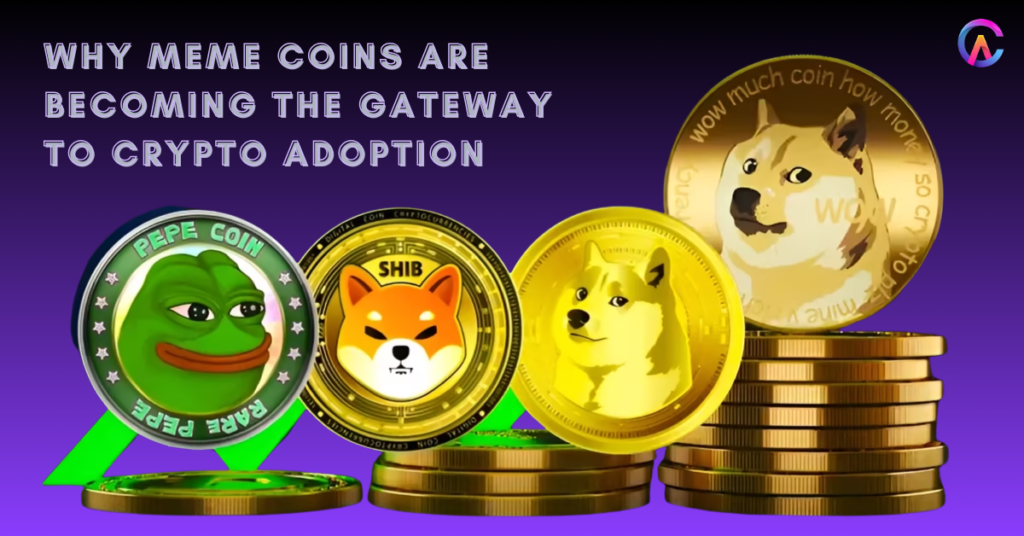
Why Meme Coins Are Becoming the Gateway to Crypto Adoption
Read 8 MinMeme coins are quickly becoming the entry point for many into the world of crypto. They break down the psychological and technical barriers that often keep everyday folks from diving into Bitcoin, Ethereum, and the more complex DeFi protocols. With their fun, affordable, and culturally relatable vibe, meme coins attract people who might never bother reading a whitepaper or delving into tokenomics. Instead, they download a wallet, join a community, and make their first trade. From there, a good number of them gradually venture into centralized exchanges, DeFi apps, NFTs, and on chain games, transforming what started as a joke into a full fledged crypto journey. Why meme coins attract first time users Traditional crypto projects can seem pretty daunting, filled with complex discussions about decentralization, consensus mechanisms, and yield strategies. Meme coins turn that narrative on its head by blending speculation with internet humor and community storytelling. People are more inclined to try out a coin associated with a dog, cat, frog, or a celebrity parody because it feels more like joining a viral trend than making a serious financial decision. Price psychology plays a big role too. While the unit price of a coin doesn’t mean much without considering its supply, users often feel that buying millions of units of a low cost meme coin offers more potential than owning a tiny slice of a blue chip asset. This lottery ticket mentality, combined with stories of early Dogecoin or Shiba Inu investors turning small amounts into life changing profits, creates a strong sense of FOMO and curiosity. That curiosity drives users to learn how to create wallets, transfer tokens, and track charts, essential skills for participating in the crypto space. Social media is also a key player in this phenomenon. Influencers, KOLs, and online communities are always sharing memes, price screenshots, and inside jokes that spread far beyond the usual crypto Twitter crowd. This virality allows meme coins to reach people who may have never set foot on a crypto news site but spend hours on TikTok, Telegram, or Reddit. Once those users start asking how to buy, they often find themselves going through the entire crypto onboarding process without ever having to begin with Bitcoin education or DeFi tutorials. The role of community and identity Crypto has always thrived on community, but meme coins take that to a whole new level. Owning a meme coin becomes a part of who you are online. People switch up their avatars, add coin tickers to their usernames, and treat Discord or Telegram channels like their own digital tribes. For many newcomers, that sense of community is way more motivating than any technical details about the coin itself. These communities host contests, airdrops, meme battles, and even raids where everyone works together to post content across different platforms in perfect sync. New users quickly grasp the basics like liquidity pools, centralized exchanges, and slippage just by joining in on these events and asking questions in the chat. What might seem dull in a textbook turns into an adrenaline rush when it’s the difference between winning a contest or missing out on a price surge. This feeling of belonging helps users push through the challenges of learning about seed phrases, network fees, and the risks of making irreversible mistakes. They don’t feel like isolated individuals facing a complicated system, instead, they’re part of a group with common goals. That group dynamic is why meme coins often outshine more serious but less social projects when it comes to bringing in new users and keeping them engaged. Meme coins as marketing funnels for the entire ecosystem When a meme coin skyrockets in popularity, centralized exchanges scramble to list it because trading volume and new account signups soar. These exchanges then promote other products to the same users, like margin trading, staking, and even educational modules on safer investing and diversification. The meme coin essentially becomes the gateway for the entire exchange’s business. On the decentralized front, meme coin liquidity pools introduce users to DEXs, bridging, and yield farming. Someone who starts by buying a token on a DEX will quickly notice options to stake LP tokens, farm rewards, or get involved in launchpads. Many DeFi protocols intentionally embrace meme liquidity because it draws in traffic and fees that can later benefit more structured products. NFTs and gaming ecosystems are definitely reaping the rewards. Meme coin communities often kick off NFT collections, games, or metaverse experiences that showcase their beloved mascots. Those who initially jumped in for a quick profit often find themselves buying NFTs, diving into game economies, or trying out cross chain bridges. In this way, meme coins become cultural brands that guide users through various aspects of Web3. Education through speculation Critics have a point when they say meme coins can be volatile, risky, and often lack solid fundamentals. However, even when these coins take a nosedive, many users walk away with invaluable knowledge. They pick up skills like securing wallets, spotting scams, reading contract addresses, and grasping the basics of tokenomics. This hard earned experience equips them to be more savvy participants when they later engage with more serious projects. Nowadays, many communities have educational channels that cover essential topics like risk management, doing your own research (DYOR), fundamental analysis, and security tips. Some teams even collaborate with educators or influencers to host live sessions that break down how liquidity works, why slippage is important, and how to steer clear of honeypots. Ironically, the fear of getting rekt drives a deeper understanding than any abstract academic material ever could. For younger users and those in emerging markets, meme coins might be their first encounter with candlestick charts or the concept of macro cycles. These experiences are shaping a generation that is more financially and technologically savvy, even if their initial trades don’t always hit the mark. The double edged sword risks and downsides While meme coins might seem appealing at first glance, they come with some pretty significant risks. A