

Author name: contact codearies

Codearies@12345678

From Analytics to Action Turning Marketing Data into ROI
Marketing

From Analytics to Action: Turning Marketing Data into ROI

Read 5 MinNowadays, marketing isn’t about guessing or wishing it works. Because we’re online all the time, info piles up fast, every tap, swipe, view, sale gets logged. Yet even with endless dashboards spitting out stats, just having data doesn’t grow your brand. What actually moves the needle? Using those reports to spot patterns, then acting on them smartly to boost income. That shift from passive charts to real moves is where top performers pull ahead, squeezing steady returns outta each ad push and platform they touch. Why Data Driven Marketing Is Essential Smart marketers get it, each buck needs results behind it. Hunches by themselves don’t hold weight when numbers show exactly what clicks, what flops, or where the next opportunity hides. Key benefits of data driven marketing include Yet the top edge stays in turning insights into steady results. Not merely summarizing what happened instead, steering what comes next. The Step by Step Journey From Data to ROI 1. Define Business and Revenue Goals Start by picking clear targets tied to keeping customers and growing your name. Ask, should we boost online sales, gather leads, get more app installs, or push foot traffic to shops? Every aim needs a unique tracking method plus distinct metrics to measure progress. 2. Collect the Right Data Thoughtfully built data flows mix Fresh, tidy data helps you see customers and potential buyers more clearly. 3. Connect Data to Campaigns Label each campaign and channel using distinct tracking links via UTM tags or ID codes, this way, marketing actions clearly link to outcomes. That bond matters big time for figuring out credit, so income doesn’t feel like a mystery, but adds up from loads of connected efforts. 4. Analyze for Insights Analytics crews use dashboards or BI software to spot trends, while uncovering possible wins. Check not only the event, yet dig into reasons, discover which messages work or where people actually respond and take action. 5. Develop Actionable Hypotheses Shift away from just sharing updates, try testing ideas by asking questions like Show what steps are taken while linking each move to the numbers they should affect. 6. Run A/B and Multivariate Tests Teams that use data keep testing nonstop. Try stuff out by changing just one or two things at a time, which helps spot what’s really working, after that, move fast once you see how it turns out. 7. Automate Decisions Where Possible Using machine learning, predictive insights alongside automation helps companies These quick systems boost returns quicker than hands on adjustments do. 8. Close the Loop and Reinforce Learnings The top marketing systems check outcomes, tweak their data setups, then apply what they learn to shape fresh ads and where to place them. Because of this steady cycle, each move builds on the last boosting returns gradually. Examples of Analytics to Action in Practice These cases show doing stuff instead of just thinking about it bridges the space from numbers to real income. Overcoming Common Data to ROI Pitfalls Getting things right means getting everyone on the same page about what stuff really is, using tools to handle tasks that pop up again while skipping confusion for simpler ways instead. How Codearies Turns Data into ROI for Your Business We at Codearies push brands past basic data, so they take steps that actually boost sales. Here’s how we support your marketing transformation Team up with Codearies, so your marketing data isn’t just stats, it becomes a springboard. Growth kicks off here, fueled by smart insights that drive real results over time. Frequently Asked Questions  Q1. About the integration aspect, is it possible for Codearies to work with my existing analytics stack. It is a true fact that we provide the customization of integrations and the dashboards for very important tools. This includes Google Analytics and Adobe and CRM platforms and also other similar systems. This capability is about adaptation. Q2. About speed, what time frame can be expected for a return on investment when one is turning the analytics information into effective action. It is seen that brands often obtain measurable gains in the conversion rate and the return on ad spend and retention rates. This improvement is generally evident within the period of four to twelve weeks following the implementation of targeted changes. Q3. The provision of support for business intelligence for both ecommerce and B2B marketing models, does Codearies maintain this support. Absolutely, we build solutions that are adaptable and they are suitable for diverse business models and the various journey maps that these businesses possess. This adaptability stands as crucial element. Q4. Concerning the data security and its compliance, is my organization’s data safe. The answer is yes. All of the solutions are constructed with the concept of privacy and best practice of security at every step of the development and the deployment process. Q5. Does Codearies provide assistance with the training of teams in analytics knowledge and the methodology of data driven decision making. Yes. We offer training which is practical and also ongoing support for the employees. The purpose is to foster a culture of action and application, so that the team moves beyond mere reporting. The focus is on the decision making ability. For business inquiries or further information, please contact us at  contact@codearies.com  info@codearies.com

What Is Whatnot The Rise of Live Social Selling Explained
Whatnot

What Is Whatnot: The Rise of Live Social Selling Explained

Read 4 MinSocial commerce has changed how consumers shop, discover, and connect with brands. In recent years, live streaming and real time social interaction have led a new shopping revolution. Whatnot is at the forefront of this change. It is an engaging live social selling platform that combines the excitement of auctions with the personal touch of social networks. As livestream shopping grows globally, Whatnot’s rapid rise highlights its impact on the future of e-commerce and community driven retail.  This detailed guide dives into Whatnot’s unique marketplace. It explores its features and communities, looks at why live social selling is booming, and explains how businesses and creators can take advantage of this trend with support from digital partners like Codearies. What Is Whatnot Whatnot is an innovative live streaming marketplace app where anyone can buy or sell products in real time through interactive video auctions. Blending the thrill of a live auction with the social engagement of a community event, Whatnot allows sellers to showcase collectibles, toys, sneakers, comics, fashion items, trading cards, vintage finds, and more. Buyers can participate through live bidding, chatting, asking questions, and making instant purchases, often from their favorite influencers, trusted sellers, or fellow enthusiasts.  Sellers go live, host themed shows, spotlight products, demonstrate features, answer questions, and take bids while viewers interact and build genuine relationships in a fun, fast paced environment. Completed deals are processed within the platform, ensuring trust and simplicity for both users and brands The Social and Community Driven Core of Whatnot Whatnot seeks to redefine e commerce as a live social experience, rather than just a transactional journey. Its most essential features include On Whatnot, passionate subcultures are forming around Pokémon cards, rare sneakers, comics, apparel, sports collectibles, and even handmade art, each with unique voices, trends, and event formats. Why Live Social Selling Is Exploding Several factors explain the rapid growth of Whatnot and livestream commerce: As attention shifts from static feeds to interactive streaming, and younger generations merge entertainment with e-commerce, social selling will continue to grow. Whatnot for Sellers, Brands, and Influencers Whatnot opens new avenues for Selling on Whatnot is about more than listing items, it involves hosting engaging shows, sharing product stories, demonstrating live, and incorporating community feedback for maximum impact. Keys to Success on Whatnot The Broader Impact and Future of Live Social Selling Live commerce is reshaping e-commerce. Beyond Whatnot, platforms like Instagram Live Shopping, TikTok Shop, YouTube Live, and Amazon Live are adopting live experiences. Whatnot’s specific focus makes it a leader in niche collectible and community commerce. The future will see How Codearies Helps You Succeed in Live Social Selling At Codearies, we support your journey into the world of live social selling through strategy, technology, and marketing expertise. With Codearies, you harness creative and technological power to stand out, grow your audience, and maximize sales on Whatnot or any live selling platform. Frequently Asked Questions Q1 What makes Whatnot different from traditional e-commerce or resale apps Whatnot emphasizes live auctions, community interaction, and creator led shopping, blending entertainment, trust, and commerce in real time. Q2 How can new sellers succeed quickly on Whatnot Success comes from preparing unique inventory, engaging with audiences during live shows, and showcasing authentic showmanship. Q3 Is Whatnot safe for buyers and sellers Yes. Whatnot provides higher protection than peer to peer marketplaces through verified profiles, secure payments, and effective moderation. Q4 Can brands use Codearies to scale live selling on multiple platforms Absolutely. We develop strategies, content, and integrations for growing on Whatnot, Instagram, TikTok Shop, and beyond. Q5 What tech support does Codearies provide for live commerce Codearies offers support from onboarding to analytics, POS integration, and creative direction, managing every technical and experiential aspect. For business inquiries or further information, please contact us at  contact@codearies.com  info@codearies.com 
The Rise of AI Powered Mobile Apps Smarter Faster Better
AI, Mobile Apps

The Rise of AI Powered Mobile Apps: Smarter, Faster, Better

Read 5 MinIn 2026, mobile apps are undergoing a change that matches the original smartphone revolution. Artificial intelligence is now embedded in almost every major app category, including health, fitness, productivity, entertainment, finance, travel, shopping, and social experiences. AI powered mobile apps no longer just respond to taps or swipes. They anticipate user needs, adjust in real time, and offer new levels of speed, convenience, creativity, and security. This shift is changing how people interact with their devices, extract value from digital services, and rethink what is possible at their fingertips. Why AI Is Transforming Mobile Apps AI in mobile apps has progressed beyond background algorithms that optimize speed or recommend content. Today’s leading apps use generative AI, computer vision, voice recognition, and real time personalization to create proactive user experiences. The main reasons for this shift include: The outcome is a new age where apps are smarter, more adaptive, and able to address both business and personal challenges on the go. Key Capabilities of Next Gen AI Mobile Apps Personalization at the Core AI algorithms examine usage patterns, preferences, and even mood to provide targeted recommendations, product suggestions, or media choices right when users need them. Conversational Interfaces Natural language processing powers true voice assistants, AI chatbots, and multilingual support, making apps more accessible for users worldwide. Apps in healthcare, fitness, food delivery, and banking are now designed to be conversational. Predictive and Proactive Features AI powered apps anticipate what users may want next, from meeting suggestions to travel alerts and shopping reminders. Intelligent Automation Tasks such as expense tracking, receipt input, shopping list creation, and document management are managed by AI, reducing user effort and increasing productivity. Augmented Reality and Computer Vision Features like visual search and AR try on tools enhance experiences in retail, gaming, and education by providing real world context and object recognition. On device AI Processing With advancements in hardware, mobile AI is becoming faster and more private, enabling core functions such as photo enhancement, voice control, and anomaly detection to work without relying on the cloud. Personal Wellness and Accessibility AI turns mobile devices into health and therapy assistants, monitoring patterns, suggesting improvements, and offering adaptive interfaces for users of all abilities. Real World Examples Fueling the Boom From Uber’s real time ride predictions and route optimization to Duolingo’s personalized language learning paths and TikTok’s recommendation engine, AI is the driving force that enhances value for users and businesses. The Competitive Edge AI Brings to Mobile Mobile developers using AI find they can stand out in an increasingly crowded app market by focusing on features, speed, value, and brand trust. Challenges and Considerations These challenges are being tackled as tools improve, regulations are created, and innovation continues to advance. How Codearies Supercharges AI Mobile App Innovation At Codearies, we assist brands and startups in harnessing AI to create next generation mobile apps that provide smarter, faster, and better experiences.   With Codearies, your AI powered app will go beyond trends and lead to sustainable business growth and exceptional user engagement. Frequently Asked Questions Q1: Can Codearies develop cross-platform AI apps for both Android and iOS?  Yes, we specialize in building native and hybrid apps using AI models that work seamlessly across devices and platforms. Q2: How does Codearies handle data privacy in AI powered mobile apps?   We design data flow architectures with encryption, minimal retention, and clear opt in controls to protect sensitive user information. Q3: Can you integrate custom AI models and existing third party solutions?  Absolutely. We can train and deploy proprietary AI, as well as integrate APIs from leading AI providers based on strategic fit.  Q4: How long does it take to deliver an AI powered mobile app? Timelines depend on feature complexity, but MVPs are typically ready in 8 to 16 weeks with ongoing improvements thereafter.   Q5: Will my AI mobile app work offline? Yes, we ensure key features remain functional without constant connectivity by blending on device AI processing and smart caching. For business inquiries or further information, please contact us at  contact@codearies.com  info@codearies.com 
How NFTs Are Powering Virtual Real Estate in the Metaverse
NFT

How NFTs Are Powering Virtual Real Estate in the Metaverse

Read 5 MinThe metaverse has become a changing digital space where ownership, creativity, and community come together. At the center of this new environment is virtual real estate, interactive pieces of digital land that individuals, brands, and communities buy, build, and monetize. In 2026, non fungible tokens (NFTs) are the backbone that gives these digital lands true scarcity, security, and tradable value. As more of our lives and business move online, NFTs are not just reshaping land ownership and exchange, they are changing what it means to build wealth and identity in the virtual world. Understanding NFTs and Virtual Real Estate NFTs are unique digital tokens built on blockchain technology that represent ownership of a single item or asset. Unlike cryptocurrencies, which are interchangeable, NFTs are one of a kind and indivisible. In metaverse platforms such as Decentraland, The Sandbox, Otherside, and Spatial, each land parcel, storefront, or custom world is minted as an NFT. These tokens provide verifiable digital ownership visible to everyone and are protected against forgery or theft.   Beyond simple proof of ownership NFTs empower buyers to Why Virtual Real Estate Is Booming in the Metaverse Demand for metaverse land is exploding for several reasons In 2025 and beyond, major brands, celebrities, and artists will launch metaverse stores, host concerts, and build gated communities that will only be accessible to NFT landowners. These projects generate headlines and offer users social status, exclusive access, and new forms of passive income.  Key Features Making NFTs Essential for Virtual Real Estate Real World Examples and Use Cases Business and Economic Impacts NFT powered virtual real estate is creating an entire digital economy. Secondary marketplaces for virtual land have daily trading volumes in the millions. Landowners lease spaces to creators and advertisers, host paid events, or open immersive shopping experiences with NFT gated digital goods. Developers offer land development and creative services. Even digital architects and interior designers are in demand. The result is an ecosystem that mirrors the real world but operates with borderless speed and endless creative freedom. Challenges and Criticisms Despite these challenges, the wave of innovation is unlikely to slow as new standards, user experience improvements, and wider cultural adoption take hold.  How Codearies Helps You Succeed in NFT Powered Virtual Real Estate At Codearies, we provide the expertise, creativity, and technology foundation to help brands, creators, investors, and communities unlock the value of NFTs in virtual real estate.  Here is how we help With Codearies, your virtual property journey from idea to marketplace to a vibrant digital destination is safe, creative, and ready for the future. Frequently Asked Questions Q1 Can anyone buy and sell virtual real estate NFTs?   Yes. Anyone with a compatible wallet and some cryptocurrency can take part in NFT based metaverse land markets with global access. Q2 Which platforms are most popular for NFT real estate?  Decentraland, The Sandbox, Otherside, Spatial, and Voxels are among the largest, but the market is expanding with new worlds focused on gaming, lifestyle, business, and art. Q3 How can I monetize my metaverse land?   You can host events, lease property, create branded experiences, or build digital storefronts to earn money through ticket sales, advertising, or user engagement.  Q4 Is it safe to invest in virtual property NFTs?   The technology is secure, but values can be volatile, and the reputation of the platform is important. Always do your research, seek expert advice, and never invest more than you can afford to lose.   Q5 Does Codearies help with design and creative development?  Absolutely. Our team can conceptualize, design, script, and deploy custom virtual buildings, art, avatars, and social experiences for your virtual land. For business inquiries or further information, please contact us at  contact@codearies.com  info@codearies.com 

AI Agents The Next Evolution in Automation and Business Intelligence
AI

AI Agents: The Next Evolution in Automation and Business Intelligence

Read 5 MinThe world of work and business is undergoing a major technological change as artificial intelligence shifts from simple task automation to autonomous AI agents. These agents act proactively, collaborate, and deliver intelligent business results. By 2026, AI agents are expected to transform not just how businesses automate but also how decisions are made, strategies are executed, and customer experiences are personalized. This evolution in automation and business intelligence creates competitive advantages for companies that embrace it, while presenting new challenges to those that do not keep pace. What Are AI Agents and How Are They Shaping the New Enterprise AI agents are digital entities that understand their environment, make independent decisions, learn from feedback, and interact with both human and digital systems to achieve specific goals. Unlike traditional automation tools that follow fixed commands, AI agents can handle uncertainty, predict future scenarios, optimize processes, and even negotiate outcomes with other AI agents or people.​ What sets AI agents apart In businesses, they are quickly evolving from narrow robotic process automation to fully autonomous systems that can manage procurement, logistics, finance, customer service, and even innovation cycles from start to finish. The Rapid Adoption of AI Agents in Business Recent studies show that over 70 percent of global organizations have implemented AI agents for various processes, including QA automation, personalized marketing, and logistics. In North America, nearly four out of five companies plan to increase their AI investments and agent deployment in the upcoming year. AI adoption is growing rapidly due to the demand for: Key Use Cases and Benefits 1 End to End Automation: Agentic AI is revolutionizing supply chains, procurement, and customer support through autonomous order processing, asset tracking, and logistics routing.   2 Self Optimizing Business Operations: AI agents track KPIs in real time, adjust campaigns or production, and even initiate preventive actions before issues arise.  3 Decision Orchestration: Agents evaluate scenarios, simulate outcomes, and guide leaders toward the best decisions, often identifying risks or opportunities before humans do. 4 Collaborative Agent Teams: Business operations can utilize multiple AI agents with specialized skills, working as a “digital team” to streamline activities in marketing, sales, finance, and HR, reducing silos and enhancing strategic efforts. 5 Customer Facing Solutions: Virtual agents manage everything from onboarding and troubleshooting to upselling and retention, boosting satisfaction and lowering service costs. 6 Autonomous Market Intelligence: Agents analyze competitor and market data, create executive summaries, and suggest next steps for both daily operations and long term strategies. The New Business Intelligence Powered by AI Agents AI agents are central to the next wave of business intelligence. Traditional data dashboards and static analytics are no longer sufficient. Autonomous agents turn raw data into real time actionable recommendations and may execute actions themselves. For instance AI powered business intelligence enables continuous improvement by connecting insights, decisions, and execution in a fast and scalable manner. Key Trends and Innovations Shaping the Future The Challenges in Deploying AI Agents Smart adoption should prioritize targeted workflows with clear returns on investment and ongoing adjustments rather than ambitious “total automation” implementations. How Codearies Future Proofs Your Business with AI Agents At Codearies, we help businesses lead the next evolution in automation and intelligence by designing, deploying, and refining powerful AI agent systems With Codearies, you can confidently leverage AI agents to transform your business and address future challenges. Frequently Asked Questions Q1 How are AI agents different from bots or traditional RPA? AI agents are self learning, proactive entities that can plan and execute multi step workflows, make decisions, and collaborate, unlike rule based bots or scripted RPA tools. Q2 What areas of business are best suited for AI agent adoption? Functions that involve high volumes of structured tasks, rich data, business intelligence, or cross functional coordination such as supply chain, finance, marketing, and support, tend to see the fastest and highest returns from agents. Q3 Do I need data scientists to deploy AI agents with Codearies? No, we offer no code and low code agent platforms and manage technical integration, making automation accessible to more than just data teams. Q4 How do you ensure AI agent security and regulatory compliance? We build secure agent infrastructures with strong auditing, role based permissions, and policy controls to meet industry standards Q5 What long term support does Codearies offer for AI agent solutions? We provide end to end support, including continuous optimization, integration with new workflows, agent retraining, and assistance with organizational change. For business inquiries or further information, please contact us at  contact@codearies.com  info@codearies.com 
The Future of Smart Contracts Beyond Ethereum in 2026
Blockchain

The Future of Smart Contracts Beyond Ethereum in 2026

Read 5 MinSmart contracts are changing how the digital world operates. They provide transparency, automation, and trustless interactions for many areas, including finance, gaming, supply chain, and healthcare. For years, Ethereum has been the leading smart contract platform, driving the rapid growth of DeFi, NFTs, tokenization, and more. However, as technology and the market progress, 2026 will see smart contracts move beyond Ethereum and thrive in a growing multichain ecosystem. What will the next stage of smart contracts look like outside of Ethereum? How will new platforms, frameworks, and trends redefine possibilities in business, security, and user experience? Ethereum’s Ongoing Evolution and Its Limits Ethereum is still the largest and most widely used smart contract platform. The network’s updates, like Ethereum 2.0 and proto danksharding, are improving scalability, security, and energy efficiency. The transition to Proof of Stake, lower gas fees, and advanced Layer 2 solutions like zk rollups, optimistic rollups, and danksharding will help Ethereum scale toward widespread use, potentially handling 100,000 transactions per second. New data structures, such as Verkle trees and stateless clients, will make running Ethereum nodes easier and more efficient.   Yet, Ethereum has limitations. High transaction fees and network congestion can be problematic, especially during peak times. The ecosystem also faces increased regulatory scrutiny, and as competition grows, other blockchains are starting to attract developers and users with their own unique advantages. The Rise of Multichain Smart Contract Platforms By 2026, the era of Ethereum being the sole playground for smart contracts will be gone. New platforms are finding their niches based on scalability, programmability, governance, or native interoperability.​ Here are the leading smart contract ecosystems that are growing quickly:  In 2026, developers will view protocol choices not as a zero sum game but as tools for different markets and use cases. Key Innovations Defining the Future of Smart Contracts The Business Value of Expanding Beyond Ethereum Choosing the Right Platform in 2026 In this multichain environment, success relies on clearly matching use cases to the right platform. Highmfrequency games or on chain AI might lean towards Solana or Avalanche. Regulated DeFi and composable DAOs could thrive on Polkadot or Cosmos. Projects needing formal verification or eco credentials may choose Cardano or Algorand. Many businesses will adopt a multichain strategy, deploying different features across Layer 1 and Layer 2 chains and using bridges or dApp aggregators to create a unified user experience.  The Path Forward for Smart Contracts By 2026, smart contracts will prioritize interoperability, modularity, and security just as much as they do any single chain’s scale. This shift will create new models in finance, insurance, digital identity, supply chain, healthcare, and entertainment, each leveraging the best features of multiple blockchains based on their needs for risk, speed, privacy, and innovation.   Developers and businesses that embrace this cross chain era and select appropriately sized platforms for each workload will receive the greatest benefits. How Codearies Empowers You in the Multichain Smart Contract Era At Codearies, we lead in smart contract innovation and help businesses move beyond Ethereum to thrive in a multichain world. Our services include: Partner with Codearies to harness the full power of next generation smart contracts and create solutions that are future proof, interoperable, and ready for global growth. Frequently Asked Questions Q1: Which blockchains should I use beyond Ethereum? We provide guidance based on your needs, considering speed, cost, regulatory fit, security, and ecosystem reach to recommend the best chains or hybrid models. Q2: Can Codearies build smart contracts that work across multiple networks? Yes, our solutions for cross chain and bridging unify assets and actions across Ethereum, Solana, Avalanche, Polkadot, Cosmos, and more. Q3: How can I make sure my smart contracts are secure as the ecosystem changes? We apply formal verification, modular design, and frequent audits using both automated and manual methods to keep your code safe. Q4: Will AI really help with smart contract development? AI now plays a central role in rapid prototyping, code translation, and risk analysis, significantly speeding up development cycles and reducing errors. Q5: What ongoing support do you provide after launch?  We offer continuous monitoring, upgrades, compliance checks, integration of new chains, and dedicated troubleshooting to keep your contracts current and effective. For business inquiries or further information, please contact us at  contact@codearies.com  info@codearies.com 
The Business Case for Utility Tokens Why More Startups Are Tokenizing in 2025
Blockchain, Utility Token

The Business Case for Utility Tokens: Why More Startups Are Tokenizing in 2025

Read 4 MinAs 2026 unfolds, utility tokens are quickly becoming essential to innovative startup business models. Once considered a fringe experiment limited to crypto focused projects, tokenization is now a proven method for unlocking new value, building vibrant communities, and driving engagement well beyond traditional points or loyalty rewards. From SaaS and fintech to gaming and online communities, startups are relying on utility tokens to drive customer growth, attract investor interest, and future proof their platforms. This guide discusses the key reasons behind the increase in utility token adoption. It includes major benefits, real world applications, and practical insights for founders ready to embrace this transformative technology. Understanding Utility Tokens in Startup Ecosystems A utility token is a digital asset on a blockchain that gives holders rights to access products, features, or services within a specific platform. Unlike security tokens, which represent investment shares, and traditional cryptocurrencies used for payments, utility tokens serve as a foundation for participation, rewards, and governance in digital communities. Common uses include The flexibility of utility tokens makes them perfect for startups at every stage, from attracting early users to scaling network effects. Why Startups Are Embracing Tokenization in 2025 1. Growth Through Incentivized Engagement  Utility tokens provide startups a powerful way to reward desired behaviors like referrals, content creation, feedback moderation, and community building. Users become deeply invested in not only using a product but also in growing its network and value. 2. Rapid Liquidity and Global Fundraising   While regulatory frameworks are evolving, compliant utility tokens still open new pathways to international capital, crowdsales, and incentive funding. Early adopters benefit from network effects, enabling founders to expand growth beyond local areas. 3. Programmability and Automation   Smart contracts linked to tokens automate access, rewards, discounts, governance, and more. Startups can scale without added manual efforts and quickly experiment with new growth opportunities. 4. Viral and Community Effects   When users can transfer, sell, stake, or gift tokens, every customer becomes a brand advocate. This virality speeds up organic growth and increases product loyalty, which is crucial in competitive markets. 5. Transparency and Trust   All token transactions are recorded on the blockchain for verifiable auditing. This transparency boosts brand integrity and allows users to confidently engage in the ecosystem. Business Benefits of Utility Token Adoption Essential Considerations for Startup Tokenization Real World Utility Token Examples These projects demonstrate how tokens can open entire markets and encourage new types of engagement that benefit both platforms and users. How Codearies Helps Startups Succeed with Utility Tokens At Codearies, we provide complete expertise in designing, developing, launching, and growing impactful utility token ecosystems. Our main offerings include: Our core offerings include Partnering with Codearies allows your startup to unlock blockchain’s growth and engagement potential safely and in line with your evolving business needs. Frequently Asked Questions Q1: Are utility tokens only for crypto startups?   No, modern SaaS marketplaces, gaming, edtech, and mobile apps all use tokens to drive engagement, reward loyalty, and enable unique business models.  Q2: How long does it take to launch a utility token project with Codearies?  From strategy to full launch, most projects take 8 to 16 weeks, depending on features and legal requirements. Q3: Do users need advanced crypto knowledge to use my tokenized app?   No, Codearies creates user friendly onboarding, wallet support, and interfaces so every user benefits with minimal learning effort. Q4: How do you ensure utility tokens comply with regulations? Our process includes legal reviews, compliance monitoring, and best practices to keep your project safe and future proof. Q5: What support does Codearies offer after launch?  We provide ongoing UX updates, security audits, marketing support, analytics, and help with scaling or integrating new partners. For business inquiries or further information, please contact us at  contact@codearies.com  info@codearies.com 
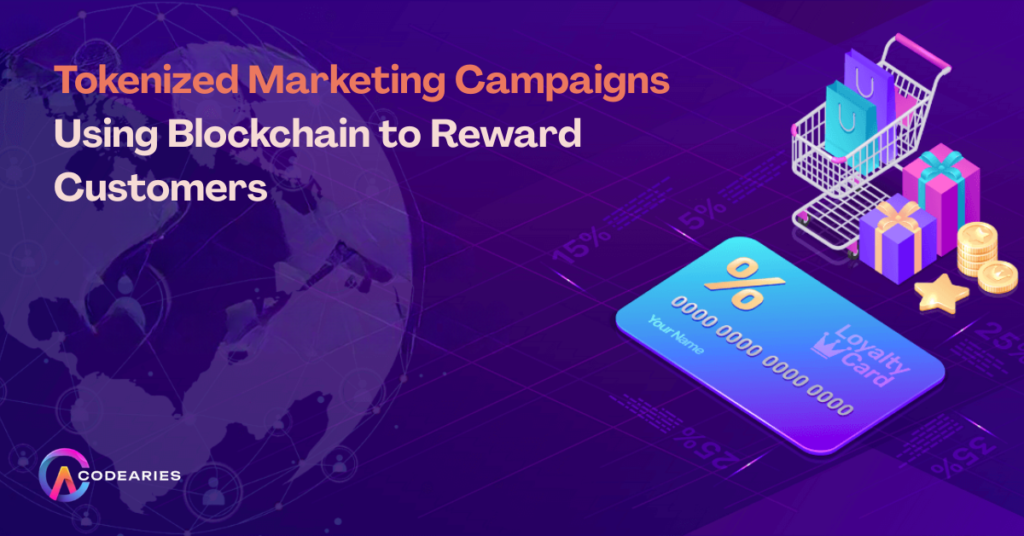
Tokenized Marketing Campaigns Using Blockchain to Reward Customers
Blockchain, Marketing

Tokenized Marketing Campaigns Using Blockchain to Reward Customers

Read 4 MinIn 2025, digital marketing is moving into a phase where transparency, accountability, and direct customer engagement are essential. One of the most exciting changes is the emergence of tokenized marketing campaigns. Brands are now using blockchain and digital tokens to reward, incentivize, and track customer actions in new ways. Whether you are a startup aiming to build loyalty or a large company trying to create viral engagement, tokenized campaigns are changing how businesses connect with their audience and provide lasting value. This guide will outline key concepts, practical steps, and real world examples to help you use this technology in your next campaign. What Are Tokenized Marketing Campaigns Tokenized marketing campaigns use blockchain to create digital assets or tokens. Users can earn, hold, trade, or redeem these tokens by participating in brand experiences. These tokens can represent loyalty points, exclusive access, discounts, collectibles, or even voting rights in community driven platforms. Unlike traditional rewards systems, tokenized campaigns are unique because they are transparent, scarce, verifiable, and, importantly, controlled by users due to blockchain’s decentralized nature. Why Blockchain and Tokens Elevate Marketing 1 Trust and Security Every transaction, from earning to redemption, is recorded on an open ledger. This gives users full visibility and protection from fraud or manipulation. 2 Interoperability and Liquidity Tokens can be used across different apps or platforms. They can even be traded or sold on secondary markets to unlock real world value. 3 Personalization and Gamification Brands can create tailored incentive programs, reward small actions, and introduce new forms of engagement, making the customer journey more interactive. 4 Ownership and Engagement Owning tokens fosters genuine brand advocates who are personally invested in a brand’s success. 5 Data Privacy and Consent Users have control over their wallets and data-sharing choices, earning rewards without revealing sensitive information to third parties. How Tokenized Marketing Campaigns Work Step by Step 1 Set Campaign Goals Decide which behaviors you want to encourage, such as sign ups, referrals, content creation, reviews, or purchases. 2 Choose Token Type and Blockchain Platform Select fungible tokens like points or stablecoins for broad rewards, or non fungible tokens (NFTs) for unique collectibles. Popular blockchains include Ethereum, Polygon, Solana, BNB Chain, and Avalanche. 3 Smart Contract Development Create and audit smart contracts to automate the rules for issuance, distribution, and redemption. 4 Define Distribution and Earning Mechanics Determine how users will earn tokens. Will they watch videos, share posts, join events, or make purchases? Consider how to prevent gaming or fraud.  5 Integrate With Your Customer Experience Connect wallets to your site or app for smooth earning and redemption. Design clear customer journeys and make onboarding easy. 6 Go to Market With Education and Support Communicate the benefits, guide users through setup, and answer questions about wallet safety and security.  7 Analyze and Evolve Monitor results, track on chain analytics, and be ready to adjust incentives or utilities as your campaign progresses. Real World Examples of Tokenized Campaigns High Impact Tactics for Tokenized Campaign Success Obstacles and Best Practices How Codearies Empowers Tokenized Marketing Campaigns At Codearies, we help brands design, launch, and grow blockchain powered marketing campaigns with real impact With Codearies, your campaign rewards real world actions and builds long term brand loyalty through blockchain technology.  Frequently Asked Questions Q1: Do users need crypto expertise to join a tokenized campaign? No, We create simple onboarding and wallet systems, so even beginners can earn and use tokens. Q2: Can tokens be used across different brands or platforms?  Absolutely, Tokens and NFTs can work together, allowing brands to run joint promotions or cross platform rewards. Q3: How fast can you launch a tokenized campaign? Most campaigns launch within 6 to 10 weeks, including planning, smart contract audits, and integration with your existing systems. Q4: Is it safe for businesses to use blockchain for promotions?  Yes, With proper security audits, legal reviews, and compliance, tokens are among the most secure and transparent incentive tools available. Q5: What if I want to integrate NFTs instead of traditional rewards?  We help create NFT drops for events, collectibles, loyalty programs, and digital passes, all seamlessly integrated into your marketing ecosystem. For business inquiries or further information, please contact us at  contact@codearies.com  info@codearies.com
Social Commerce 2025 How AI and Blockchain are Shaping Online Shopping
Uncategorized

Social Commerce 2025: How AI and Blockchain are Shaping Online Shopping

Read 4 MinIn 2025, social commerce has become one of the fastest growing sectors in global retail. What started as simple transactions through Instagram or Facebook has transformed into a multi trillion dollar industry driven by social interaction, smart technology, and trust. In this new landscape, social platforms are not just places for discovery or inspiration, they are full fledged marketplaces where purchases happen instantly, conversations drive sales, and every stage focuses on data privacy and transparency. AI and blockchain are central to this change, enabling improved personalization, security, and user experience. The Explosion of Social Commerce Social commerce is expected to make up more than 17 percent of all e commerce transactions worldwide in 2025, with a market value exceeding 1 trillion dollars and an annual growth rate of over 13 percent. In countries like India, China, and the US, shoppers frequently make purchases directly within chat apps and live streams, led mainly by Gen Z and millennials..​ Key drivers fueling this explosion include Today, 82 percent of shoppers use social media for product discovery, and more than half buy products after seeing them on social or entertainment platforms. This shift has changed marketing strategies for serious businesses.  AI Supercharges Personalization and Engagement One main reason social commerce is thriving in 2025 is due to AI Personalized shopping journeys are powered by adaptable AI, making every interaction unique, relevant, and human. Consumers now expect recommendations that suit their style, needs, and budget, no more generic ads. Blockchain Delivers Trust Transparency and Security Blockchain is a game changer for social commerce, offering a level of credibility that traditional platforms find hard to match.   By using blockchain, brands assure customers that their data, purchases, and returns are managed with integrity. Trust boosts conversion rates and repeat sales. Key Trends Defining Social Commerce in 2025 Live Shopping Takes Center Stage   Over two thirds of online shoppers want brands to host live streamed shopping events. Influencers demonstrate products, engage with chat, answer questions, and trigger purchases, all in real time. AI boosts recommendations and discounts during the stream. Shoppable Content Dominates Feeds   Customers can now buy from videos, photos, and posts with a single tap. Gen Z particularly prefers in app discovery and quick checkouts without leaving TikTok, Instagram, or WhatsApp. Unified Shopping Journeys   Social commerce completely integrates with traditional e commerce. Purchases made on social media and online stores are consolidated for consistent service, shipping, and support.  Omnichannel Customer Support   AI driven chatbots, voice assistants, and social messengers provide customers with instant support around the clock, offering answers, tracking, and recommendations. Decentralized Reviews and Ratings   Blockchain backs reviews, making them immune to spam or manipulation, creating honest feedback loops for brands and buyers.  Opportunities and Challenges Major opportunities are emerging for brands who move fast However, challenges still exist: How Codearies Helps Brands Lead in AI and Blockchain Social Commerce At Codearies, we bring the future of shopping to your business through our expertise in AI driven and blockchain enabled commerce. Here’s how we help With Codearies, your brand scales smarter and builds lasting customer trust in the changing social commerce world. Frequently Asked Questions Q1: Can Codearies help my brand start selling on social platforms?  Yes. We set up shoppable posts, live shopping, and native checkout on all leading channels and integrate AI driven product discovery. Q2: Are your blockchain solutions difficult for everyday shoppers to use?   No. We design with an easy to use interface, so buyers don’t need technical skills to pay, track, or verify authenticity.   Q3: How quickly can we see results from AI and blockchain integrations?  Most clients notice increased engagement, conversion, and repeat sales within one to two months after launch.  Q4: Can Codearies unify my social commerce and e-commerce logistics?   Absolutely. Our unified platform ensures data, order flow, and service are consistent across web and social channels.   Q5: How do you keep my customer data secure?   All solutions use advanced encryption, blockchain records, and compliance strategies to safeguard privacy and build customer confidence. For business inquiries or further information, please contact us at  contact@codearies.com  info@codearies.com 
The Rise of MQLs in AI Driven Marketing What Marketers Need to Know
AI, Marketing

The Rise of MQLs in AI Driven Marketing: What Marketers Need to Know

Read 4 MinIn the fast changing world of digital marketing, the Marketing Qualified Lead, or MQL, has become vital for effective growth strategies in 2025. As AI changes how brands attract, engage, and convert prospects, understanding and mastering MQLs is essential for marketers who want to achieve real results. This blog will discuss what MQLs are, how they work in an AI focused environment, and why having a smart MQL strategy is important for forward thinking marketing teams What Is a Marketing Qualified Lead and Why Does It Matter An MQL is a lead that has shown clear interest in your product or service by engaging with specific marketing efforts. These leads are not random visitors. They have taken actions such as downloading a whitepaper, requesting a demo, signing up for webinars, or interacting with key website materials. Their actions indicate a higher chance of turning into paid customers compared to other leads. MQLs connect marketing and sales, leading to more productive discussions and pipeline growth.   In today’s AI driven environment, MQLs are defined more precisely. Machine learning models continually evaluate and score leads and adjust for subtle patterns and context in engagement. This detail allows for more accurate identification of sales ready prospects than ever before. The Evolution of Lead Qualification From Manual to AI Enhanced Traditionally, marketing teams depended on fixed criteria and manual scoring to determine MQL status. Criteria included completed forms, opened emails, or event attendance. Now, advancements in AI allow marketing automation platforms to analyze extensive data points, including social media engagement and session duration, as well as sentiment in emails.  AI refines MQL qualification by Modern MQL systems are not simple checklists. They evolve and learn as customer behaviors change, ensuring that the sales team receives only the leads with the highest chance of conversion.  How AI Makes MQLs More Actionable Combining AI with marketing automation reveals the true power of MQLs:   1. Predictive Lead Scoring   AI models collect and assess signals from thousands of actions, including site clicks, time on page, content downloads, and intent data, to predict which leads are most likely to convert.   2. Hyper Personalized Nurturing   AI platforms automate follow up efforts using emails, SMS, or web content tailored to each MQL’s behavior and preferences, leading to increased engagement and readiness in the pipeline.   3. Faster and Smarter Handoff to Sales   AI integrates smoothly with CRM systems, placing MQLs in the hands of sales reps at the ideal moment, supported by detailed behavioral insights.   4. Closing the Feedback Loop   Machine learning constantly gathers feedback from sales on which MQLs closed or stalled, refining future lead scoring for better quality over time.   5. Enhanced Success Metrics   AI allows for in depth analysis of which campaigns, channels, and messages generate MQLs that actually produce revenue, not just contacts.  Why MQLs Are Central to Future Marketing Success Best Practices for AI Driven MQL Strategies Common Pitfalls to Avoid How Codearies Helps You Master MQLs with AI At Codearies, we help brands make the most of every marketing dollar by improving lead generation, scoring, and nurturing for the AI era. Here’s how we help With Codearies, clients benefit from a smooth, data driven pipeline that converts interest into revenue quickly and clearly. Frequently Asked Questions Q1: How does an MQL differ from a regular lead or sales qualified lead? An MQL shows meaningful engagement with your marketing but is not ready for sales outreach. A sales qualified lead (SQL) indicates direct purchase intent and is primed for sales contact. Q2: Is AI really necessary for MQL scoring? Given the complexity of today’s customer journeys and divided attention, AI provides unmatched efficiency and accuracy in scoring and segmenting leads. Q3: How soon can I see results with Codearies’ MQL optimization?  Most clients notice an increase in high quality, sales ready leads within 4 to 8 weeks after implementing smarter scoring, automation, and analytics. Q4: Will refining my MQL process improve overall sales? Yes. Better qualified and nurtured leads allow sales teams to focus more on closing deals and less on pursuing unproductive leads Q5: Can you link your MQL solutions with our existing CRM?   Certainly, We specialize in integrating with major CRMs, marketing automation, and analytics systems to create a smooth workflow. For business inquiries or further information, please contact us at  contact@codearies.com  info@codearies.com 

Scroll to Top

Have A Project In Mind?

Popuo Image